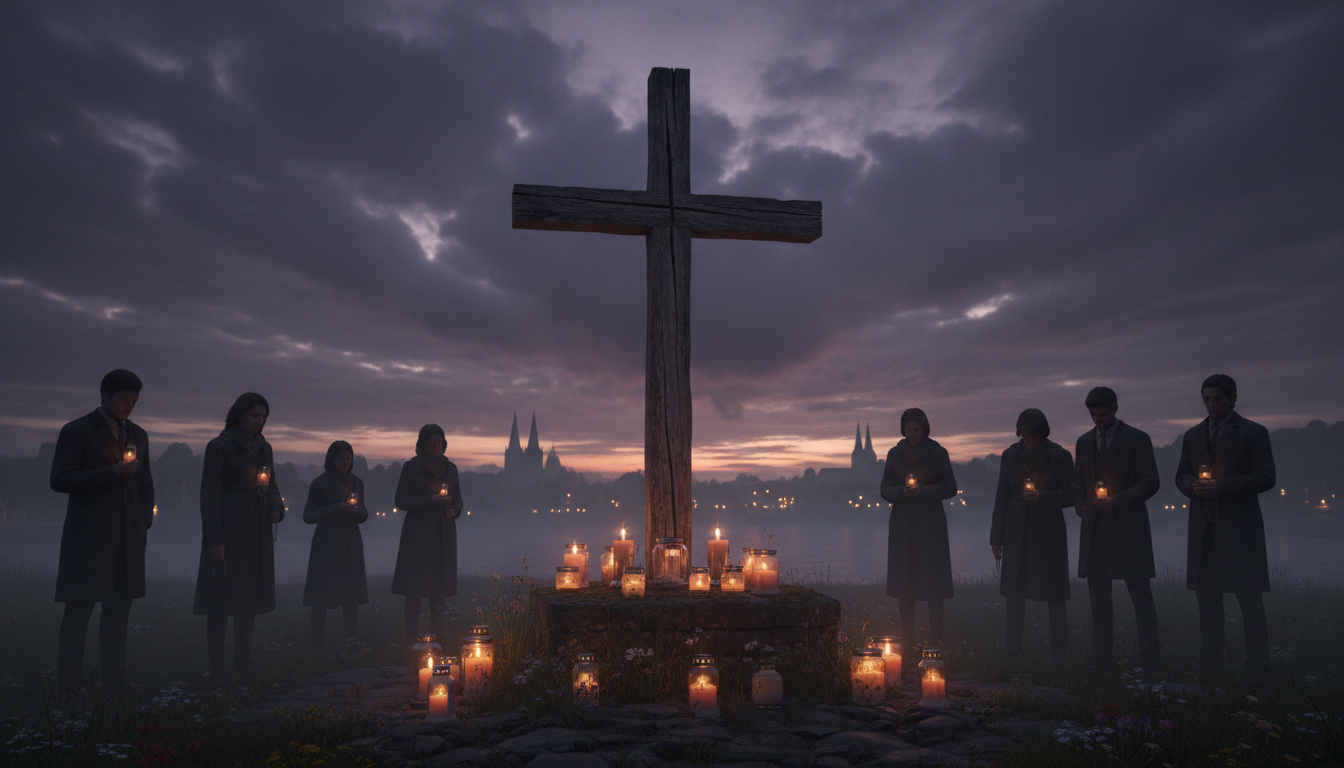
Good Friday stands as one of the most solemn milestones in the Christian calendar. Marked each year on the Friday before Easter, it commemorates the crucifixion and death of Jesus Christ. Across Christian communities worldwide, this day is observed with fasting, silence, and profound reflection on themes of sacrifice and redemption.
The history and meaning of Good Friday reach back to the earliest centuries of Christianity. Its observance weaves together biblical events, evolving traditions, and centuries of theological debate. While customs and interpretations differ, Good Friday continues to anchor the reflective heart of Holy Week for millions.
What is Good Friday? Origins, Meaning, and Significance
- Good Friday is not only a historical event but also a time for deep theological reflection.
- Observances vary widely around the world, reflecting cultural diversity within Christianity.
- The term ‘Good’ in Good Friday has evolved and is subject to various interpretations.
- There is ongoing discussion among scholars regarding the origins and evolution of the observance.
| Fact | Detail |
|---|---|
| Event | Good Friday |
| Observance | Christian Holy Week |
| Significance | Commemoration of Jesus Christ’s crucifixion |
| Typical Date | Friday before Easter Sunday |
When and How Did Good Friday Originate? Historical and Theological Perspectives
Tracing Good Friday’s Beginnings in Christian Tradition
Historical records connect Good Friday’s origins to New Testament descriptions of Jesus’ arrest, trial, and crucifixion by Roman authorities outside Jerusalem. Early Christians recognized this narrative as central to their faith, initially linking it with the Jewish Passover to emphasize Jesus as the sacrificial “Lamb of God.” By the 4th century, the Roman Catholic Church formalized Good Friday with rites and mandatory fasting, transforming disparate local customs into an integrated part of Holy Week observance. The English phrase “Good Friday” first appeared in the late 13th to early 14th centuries, rooted in terms for “holy” or “God’s” Friday.
Why Is It Called Good Friday? Exploring the Name’s Meaning
The label “Good,” despite the somber events it marks, carries various interpretations. One dominant theory holds that “Good” historically meant “holy” or “pious,” a view supported by linguists and the Oxford English Dictionary. Some scholars suggest it derived from “God’s Friday,” but there is no firm consensus. Other cultures refer to the day with explicit solemnity, such as “Sorrowful Friday” in German or “Holy Friday” in several Romance and Nordic languages. All sources agree the tone remains reflective, not celebratory, despite the name’s positive connotation. (source)
In Germany, Good Friday is called Karfreitag, meaning “Sorrowful Friday.” Orthodox Christian communities refer to it as “Great Friday” or “Holy Friday,” highlighting the day’s gravity and integration within distinctive liturgical calendars. (source)
The Significance of Good Friday in Christian Theology
Good Friday serves as a focal point for understanding sacrifice and redemption within Christian belief. The crucifixion is seen as Jesus’ ultimate atonement for humanity’s sins, marking the triumph of good over evil. The event’s redemptive meaning—culminating in the hope of resurrection on Easter Sunday—transforms a moment of apparent defeat into a foundational source of spiritual promise. (source)
How is Good Friday Observed? Traditions, Rituals, and Global Practices
Religious Rituals and Church Services
Churches worldwide mark Good Friday with distinctively somber services. Common elements include scripture readings recounting the Passion narrative, processions, and veneration of the cross. In many Western liturgical traditions, the Eucharist is omitted or replaced with simple reflections and prayers focused on suffering and sacrifice.
Fasting, Penance, and Communal Mourning
Fasting and abstinence from meat are long-established customs, with roots dating back to the 4th century. The mood is intentionally subdued, encouraging participants to reflect on loss and the potential for renewal. Traditions such as silent vigils and the lighting of candles add to the solemn character of the day.
In the United Kingdom and some other places, eating hot cross buns—spiced bread marked with a cross—has become a Good Friday custom. The cross symbolizes the crucifixion, with possible origins linking back to ancient Greek practices of marking holiday breads. (source)
Cultural Differences in Observance
The way Good Friday is observed varies significantly depending on country and denomination. In Orthodox Christianity, the date often differs owing to the Julian calendar, with services called the Lamentations. In Germany, strict laws create a day of quiet reflection. Some years, Good Friday coincides with Passover or Ramadan, giving the day added interfaith dimensions. It is also a government holiday in many regions. For additional insight on the historical background and modern observances, see The Origins and Practices of Holidays: Good Friday.
What Debates and Uncertainties Surround Good Friday?
Historical Evidence and Scholarly Debates
While the New Testament provides detailed narratives of Jesus’ crucifixion, some historical and linguistic uncertainties persist. Scholars disagree on the precise year of the original event, with most estimates between 30 and 33 AD. The debate over the meaning of the term “Good” and the evolution of observance practices is ongoing among theologians and linguists.
The question of whether “Good” comes from “God’s Friday” or is simply an archaic synonym for “holy” remains unresolved. Both theories appear in academic works, but no definitive proof for one over the other exists.
Factual Consensus and Areas of Disagreement
Consensus remains strong regarding Good Friday’s anchoring in Holy Week and its ties to the Passover timeline. However, incomplete ancient records before the fourth century and the diversity of global traditions continue to shape varying interpretations and practices. Most recent scholarship emphasizes the transformation of the cross—a Roman instrument of execution—into a symbol of victory and hope for Christian believers. Detailed historical accounts are available at Biography.
How Did the Good Friday Tradition Evolve? Key Events in Historical Sequence
- Emergence of Good Friday observances in early Christian communities, linked with Holy Week commemorations (source).
- Medieval liturgical reforms shaped processions, fasting, and church rites (source).
- The modern era saw new traditions, global spread, and diverse cultural expressions of Good Friday (source).
- Ongoing academic discussion analyzes historical sources, theological interpretations, and the changing role of ritual in contemporary society (source).
What Is Well Established—And What Remains Unclear About Good Friday?
| Established Information | Uncertainties |
|---|---|
| Linked to biblical crucifixion of Jesus Christ | Exact year of original events (estimated 30-33 AD) |
| Main part of Holy Week and precursor to Easter Sunday | Etymological roots of “Good” in the name |
| Observed through prayer, fasting, and ritual | Precise origins of some customs and regional variations |
| Globally recognized, with unique regional practices | Details of pre-4th-century observances |
| Formally established in Christian liturgy by 4th century | Variation in dates due to lunar and solar calendar differences |
What Broader Context Shapes Good Friday’s Observance?
Biblical narratives, primarily from the Gospels, establish Good Friday as a day of sacrifice and divine mercy. Over centuries, its observance has absorbed cultural patterns, creating a tapestry of rituals, foods, and social customs. The theological legacy centers on themes of forgiveness and the foreshadowing of resurrection, distinguishing Good Friday within the wider span of Holy Week.
For deeper exploration of the holiday’s meanings and evolving practices, see The Significance of Good Friday in Christianity: History and Meaning.
Which Scholarly Sources and Insights Support Our Understanding of Good Friday?
“The actual origin of the term ‘Good Friday’ is uncertain, but its meaning in Christian theology is clear: it is the day on which the crucifixion is commemorated, anchoring the core promise of salvation.”
HistoryExtra
“The link to Passover in early Christian communities highlights both historical connection and the theological claim that Jesus is the ultimate sacrificial lamb.”
Chase Oaks Church
How Does a Modern Perspective Summarize Good Friday?
From its biblical inception to current global observance, Good Friday unites history, theology, and cultural expression. Although some uncertainties remain, the day endures as a touchstone of reflection and hope within Christianity. For comprehensive detail about Good Friday’s story and tradition, explore The Significance of Good Friday in Christianity: History and Meaning. Additional analyses can be found at Religion News and Christianity Today.
Frequently Asked Questions About Good Friday
How did Good Friday get its name?
How does Good Friday relate to the overall Holy Week?
Are there differences in how Good Friday is observed worldwide?
What are typical foods or customs associated with Good Friday?
Is Good Friday a public holiday everywhere?
What is the theological importance of Good Friday?
How do Orthodox Christians observe Good Friday?

Arthur Oliver Howard Fletcher is a staff writer for NationalReport.uk, covering UK national news, politics, the economy and public services. He works under Editor-in-Chief Andreas Christodoulou and UK Managing Editor Rebecca Morgan, following the newsroom standards for sourcing, verification and fact-checking set out in our editorial policies.