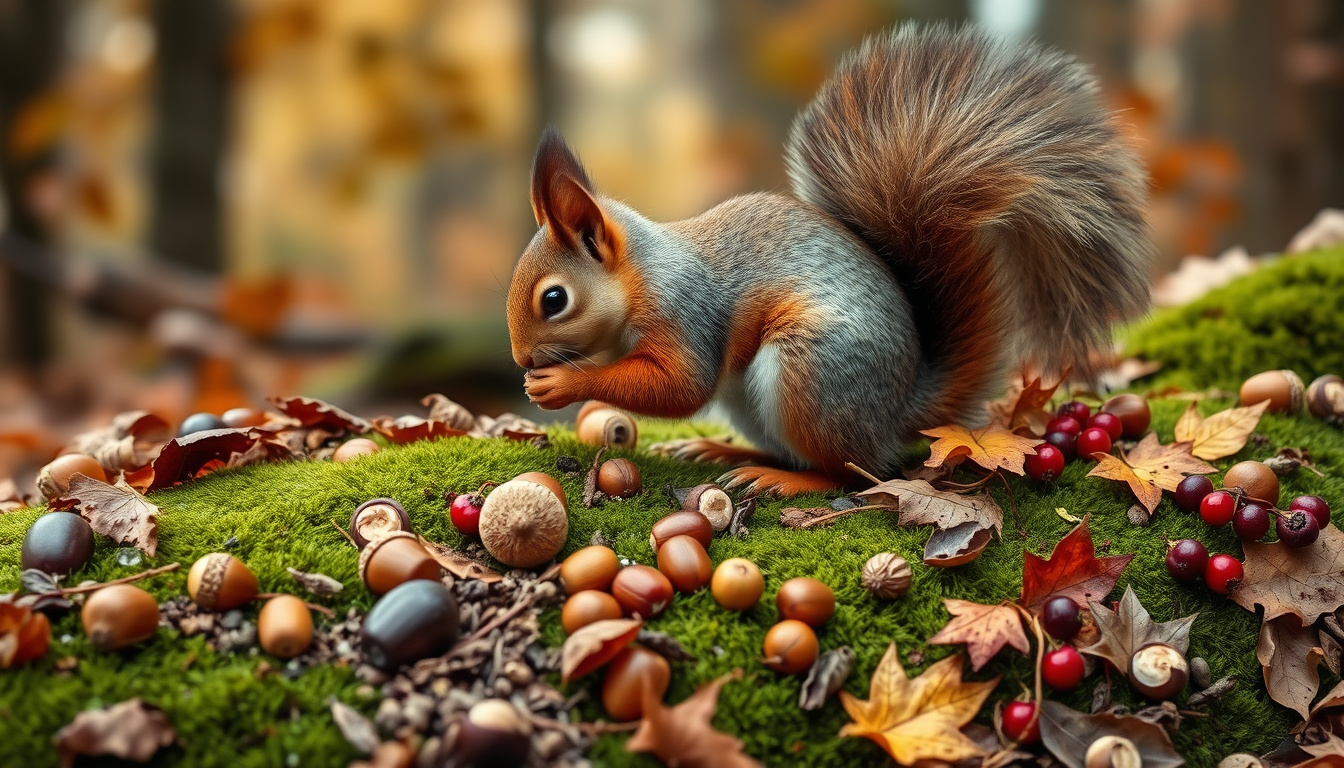
Anyone who’s watched a squirrel wrestle an acorn into a hole knows these rodents take their meals seriously. But what’s actually on the menu—and what’s secretly dangerous—might surprise you. This guide breaks down what squirrels eat in the wild, which human foods can harm them, and how to coexist with them without causing harm.
Primary Foods: Nuts, seeds, fruit · Other Items: Fungi, grains, vegetables · Occasional Protein: Insects, eggs · Natural Sources: Trees, woodland · Supplements: Roots, bulbs, bark
Quick snapshot
- How caching behavior varies across tree squirrel species in northern climates
- Long-term health impacts of garden-fed versus wild-fed squirrels
- Exact poisoning incident reports and dates for common toxic foods
- 2022–2023 study tracked European ground squirrel diet shifts seasonally
- California ground squirrels exhibit clear spring-to-summer dietary transitions
- Gray squirrel food habits documented in Bluegrass region (pre-1950s baseline)
- Winter brings increased reliance on cached nuts and bark
- Squirrel-human feeding conflicts peak in suburban areas
- Wildlife agencies increasingly warn against casual feeding practices
The following table summarizes the core dietary patterns and safety considerations based on documented squirrel research.
| Label | Value |
|---|---|
| Main Diet | Nuts, seeds, fungi |
| Protein Sources | Insects, eggs, small birds |
| Habitat Food | Woodland trees |
| Seasonal Shift | Greens → seeds/nuts |
| Safe Garden Items | Apples, carrots, leafy greens |
| Toxic Foods | Chocolate, avocado, onions |
What do squirrels eat in the wild?
In the wild, tree squirrels are opportunistic foragers with a strong preference for high-fat foods. Gray squirrels in hardwood forests rely heavily on oak, hickory, elm, and maple trees for their caloric needs.
Nuts and seeds
Nuts form the backbone of most squirrel diets. According to Mass.gov (state wildlife authority), nuts such as oak acorns, hickory nuts, beechnuts, and walnuts may comprise up to three quarters of a gray squirrel’s annual diet. Red squirrels focus more narrowly on conifer seeds, fungi, buds, and inner bark.
If you’re watching a squirrel bury an acorn, you’re witnessing a survival strategy—gray squirrels cache thousands of nuts each fall and rely on these stores through winter when fresh food becomes scarce.
Fruits and vegetables
Squirrels raid gardens and farm fields for fruits, vegetables, seeds, and grains. Beyond nuts, they eat wild fruits, berries, leaf buds, and even tree bark when necessary. A Critter Control wildlife report notes they also consume bird eggs and scavenge where opportunity allows.
Fungi and grains
Fungi play a significant role, particularly for red squirrels. Research from the NCBI PMC database documented European ground squirrels eating grasses like Cynodon and Carex–Cyperus (each making up more than 20% of their diet). Under scarcity conditions, these squirrels even adapted to consume the toxic Solanum elaeagnifolium—demonstrating remarkable dietary flexibility.
The implication: squirrels aren’t picky, but their choices have consequences. Foods with poor calcium-to-phosphorus ratios (Ca:P) like peanuts (1:6) can cause metabolic bone disease if eaten frequently, while acorns (1:2) are safer in moderation.
What foods are poisonous to squirrels?
Many foods that seem harmless to humans are actually toxic to squirrels. Exotic Nutrition (wildlife nutrition specialists) maintains a detailed database of hazardous foods that every feeder should know.
Common toxic human foods
Avocado contains persin, a fungicidal toxin harmful to rodents—even the pit and skin pose danger. Onions damage red blood cells in squirrels. Chocolate is perhaps the most well-known poison: theobromine causes heart problems, seizures, or death, according to Dallas Wildlife Tips (wildlife experts).
Salty foods like chips, pretzels, and salted nuts lead to dehydration and salt toxicity. Dairy products are harmful because squirrels are lactose intolerant, resulting in stomach upset. Processed sugary foods (candy, bread, cookies) contribute to obesity and metabolic bone disease.
Raw peanuts can harbor aflatoxin, a toxic mold that causes severe illness. Bitter almonds contain cyanide—even one nut can be lethal. Brazil nuts deliver dangerous levels of selenium. Fruit pits and seeds (apple seeds, cherry pits) contain cyanide compounds.
Garden plants to avoid
Moldy or spoiled foods carry toxins that cause seizures or death. If you’re growing a garden, be aware that squirrels may sample plants that are toxic to them. The Edward Noble food safety guide (rodent nutrition resource) provides Ca:P ratios showing that corn (1:50) is extremely unhealthy for squirrels—far worse than peanuts (1:6) or even acorns (1:2).
The pattern: even healthy-seeming foods can be harmful based on their nutritional profile, not just toxicity. Watch for signs of distress if a squirrel has eaten something unusual.
Should I feed the squirrels in my garden?
This is where many well-meaning people go wrong. The U.S. Fish and Wildlife Service (federal wildlife agency) explicitly warns that feeding wild animals—whether intentional or accidental—can harm their health and human safety.
Pros and cons of feeding
Upsides
- Supplemental food may help during harsh winters when natural sources are scarce
- Observing squirrel behavior can be educational and enjoyable
- Proper feeders can reduce mess and attract squirrels away from gardens
Downsides
- Squirrels may lose fear of humans, creating safety issues
- Artificial feeding disrupts natural foraging instincts and migration patterns
- Supplemental foods often lack proper Ca:P ratios, causing long-term health problems
- Concentrated feeding sites spread disease among wildlife populations
What this means: the risks of habituation and nutritional imbalance typically outweigh the benefits of supplemental feeding in most suburban settings.
Safe feeding alternatives
If you choose to feed squirrels, Exotic Nutrition recommends unsalted raw nuts like pecans and walnuts in moderation. Squirrels also enjoy apples, berries, carrots, and leafy greens from gardens—but limit sugary fruits. Insects like dried mealworms provide necessary protein.
The pattern: woodland areas naturally provide the food squirrels need. If your property borders wild spaces, maintaining natural cover and food sources is preferable to direct feeding. Invest in a squirrel-proof feeder if you want to provide supplemental nutrition without creating dependency.
Do squirrels remember humans?
Squirrels have surprisingly good memories. Research and observation by Wildlife Online shows squirrels remember cached food locations for weeks or months. But what about remembering humans?
Evidence from observations
Wildlife experts note that squirrels remember people who feed them. They associate specific humans with food rewards and will approach those individuals repeatedly. Grey squirrels use deceptive caching to protect food supplies—they may fake burying a nut if they sense they’re being watched, according to Ark Wildlife (UK wildlife specialists).
Implications for feeding
This memory capability cuts both ways. Squirrels that receive food from humans may become bold or aggressive in seeking more. Ground squirrels forage primarily during early morning or late afternoon to avoid heat, but feeding schedules can shift their natural patterns. The UCANR (university agricultural extension) observes that California ground squirrels change their diet based on seasonal availability—human feeding can disrupt these natural adaptations.
What to watch: if a squirrel approaches you without hesitation, it may have been fed by humans before. This isn’t necessarily friendly behavior—it can indicate habituation that puts both the animal and people at risk.
What smell do squirrels hate the most?
Deterring squirrels without harming them often comes down to smell. Squirrels have keen olfactory senses and will avoid foods or areas that smell unpleasant to them.
Top deterrent scents
The most effective natural deterrents include spicy compounds (capsaicin from chili peppers), strong aromatic herbs (peppermint, lavender, eucalyptus), predator urines (fox or coyote), and citrus peels. Mothballs (naphthalene) are effective but controversial due to toxicity concerns.
How to apply them
For garden protection, place cotton balls soaked in essential oils around planting areas. Sprinkle capsicum-based powders near vulnerable plants. Commercial predator urine products are available from wildlife control suppliers. Reapply after rain since effectiveness decreases when scents dissipate.
Using smell deterrents allows you to protect gardens without poisoning squirrels or disrupting their natural foraging. This approach works best as part of an integrated strategy that also includes securing trash, blocking entry points to structures, and removing attractive food sources.
The trade-off: smell deterrents require consistent reapplication and may need rotation as squirrels adapt. Combine multiple deterrent methods for best results rather than relying on scent alone.
How to support squirrels safely
Supporting squirrels doesn’t necessarily mean direct feeding. Creating habitat that naturally supports their dietary needs is often more beneficial.
- Plant native oak, hickory, and maple trees that produce nuts
- Allow fallen fruits and berries to remain in your yard
- Leave dead trees (snags) that host fungi and insects squirrels eat
- Provide water sources during dry periods
- Avoid pesticides that reduce insect populations squirrels rely on for protein
For those who still want to offer supplemental food: focus on items with appropriate Ca:P ratios. Acorns, while technically containing tannins, are generally safe in moderation. Avoid peanuts entirely given their 1:6 ratio and mold contamination risk. Corn should never be offered given its extremely poor 1:50 calcium-to-phosphorus balance.
“Gray squirrels have diverse diets, however, nuts such as oak acorns, hickory nuts, beechnuts, and walnuts may comprise three quarters of their annual diet.”
“Avocado and Onion – These foods contain substances that can be toxic to squirrels.”
Related reading: bird eggs · berries
Squirrels adapt their diets seasonally much like beaver foraging habits, shifting toward bark, cambium, and aquatic plants in winter months.
Frequently asked questions
What do squirrels eat and drink?
Squirrels primarily drink water but obtain moisture from their food. Their diet includes nuts, seeds, fruits, fungi, insects, and occasionally eggs. They avoid salty or processed foods and need clean water sources, especially during dry seasons.
What nuts do squirrels eat?
Squirrels eat a wide variety of nuts including acorns, walnuts, pecans, hickory nuts, beechnuts, and almonds. Avoid bitter almonds (toxic cyanide content) and ensure any nuts offered are unsalted and raw. Peanuts should be avoided due to poor Ca:P ratio and mold risk.
What is the 5 7 9 rule for squirrels?
This refers to nutritional guidelines: aim for foods with calcium-to-phosphorus ratios closer to 1:1 or 1:2 (like acorns at 1:2) rather than poor ratios like peanuts (1:6) or corn (1:50). Consult wildlife nutrition resources for specific food safety information.
Are squirrels good or bad to have around?
Squirrels play important ecological roles: dispersing seeds, controlling insect populations, and serving as prey for predators. They can damage gardens and occasionally enter homes. Managing their population through habitat modification rather than removal often works best.
Why put a potato in the bird feeder?
This is an old folk remedy to deter squirrels—the potato’s strong smell supposedly repels them. While squirrels may avoid potatoes, this method is unreliable. Better deterrents include squirrel-proof feeders with spring-loaded mechanisms or baffles.
What do squirrels eat in winter?
In winter, squirrels rely heavily on cached nuts and seeds they buried during autumn. They also eat tree bark, buds, and any remaining fruits. Their foraging shifts to lower-energy activities as they conserve calories and stay closer to their winter nests (dreys).
What do squirrels eat bananas?
Squirrels can eat bananas in small amounts as they’re not toxic. However, bananas are high in sugar and offer poor nutritional value compared to nuts and seeds. Limit sugary fruits in squirrel diets to prevent health issues like obesity and metabolic bone disease.

Arthur Oliver Howard Fletcher is a staff writer for NationalReport.uk, covering UK national news, politics, the economy and public services. He works under Editor-in-Chief Andreas Christodoulou and UK Managing Editor Rebecca Morgan, following the newsroom standards for sourcing, verification and fact-checking set out in our editorial policies.