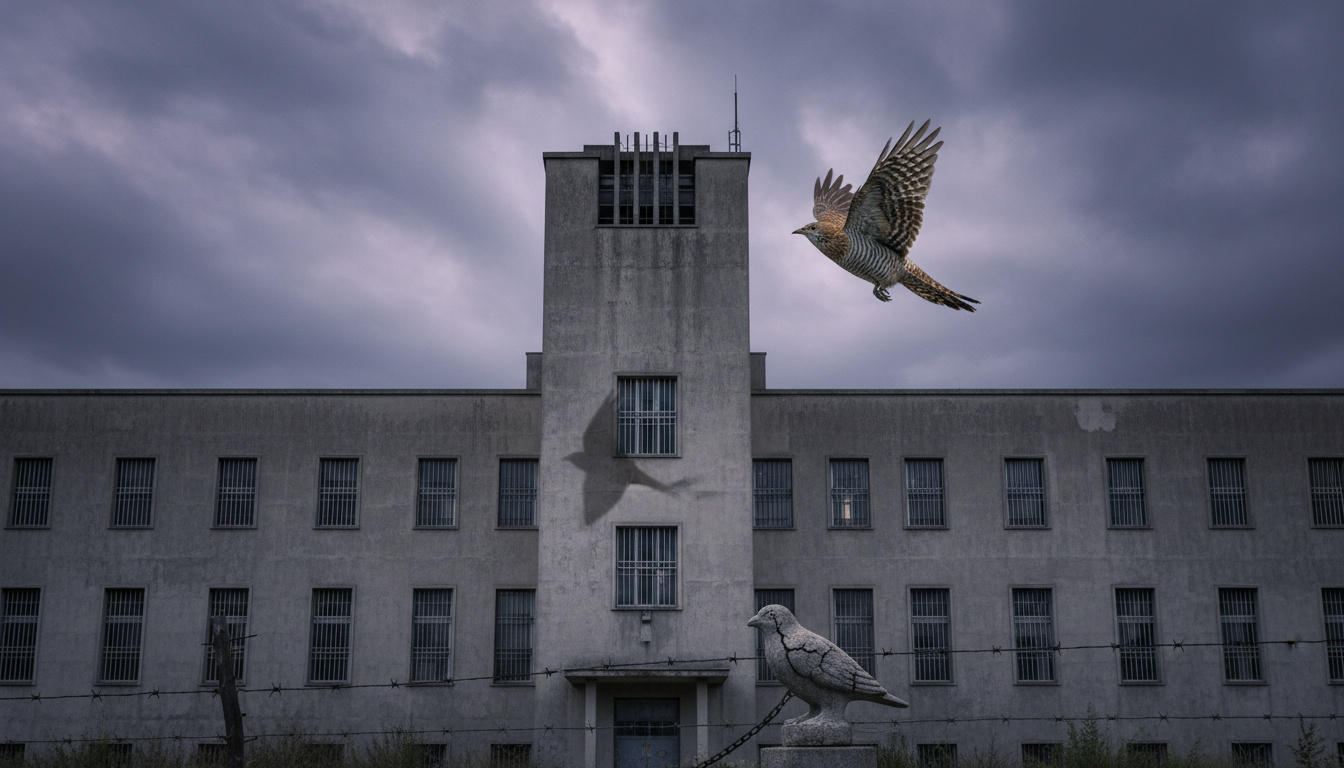

Ken Kesey’s 1962 novel One Flew Over the Cuckoo’s Nest remains a defining work of American counterculture literature. The story of Randle Patrick McMurphy’s rebellion against the authoritarian Nurse Ratched in an Oregon psychiatric hospital has transcended its pages to become a landmark 1975 film and enduring stage production. Decades after its initial publication, questions persist about the differences between the book and its adaptations, the inspiration behind the characters, and where audiences can experience this examination of institutional power.
The narrative originally emerged from Kesey’s own experiences working as a night aide at a Veterans Administration hospital while participating in government-sponsored psychedelic drug experiments. Through the eyes of Chief Bromden, a Native American patient feigning deafness, the novel presents a hallucinatory critique of what Bromden calls “the Combine”—a mechanized system of social control. The 1975 film adaptation directed by Miloš Forman shifted this perspective dramatically, creating distinct interpretations that continue to fuel debate about which version best captures Kesey’s vision.
The work exists across three primary formats—novel, film, and stage play—each offering different access points to the central conflict between individual liberty and institutional authority.
What is One Flew Over the Cuckoo’s Nest book?
The 1962 novel establishes the foundational narrative through Chief Bromden’s subjective, paranoid perspective. Set in a psychiatric ward dominated by Nurse Mildred Ratched, the story follows Randle Patrick McMurphy, a rebellious patient who fakes insanity to serve his prison sentence in the hospital rather than on a work farm. Unlike the film adaptation, the book presents McMurphy as a more violent figure who manipulates and cons his fellow patients, while Kesey’s prose explores themes of institutionalization, emasculation, and the machinery of conformity through Bromden’s unreliable narration.
| Book | Movie | Play | Key Fact |
|---|---|---|---|
| 1962 novel by Ken Kesey | 1975 film dir. Miloš Forman | Stage adaptation by Dale Wasserman | Set in Oregon psychiatric hospital |
- Countercultural critique of psychiatric institutions and authority structures
- Narrated through Chief Bromden’s hallucinatory, paranoid perspective
- Introduces the concept of “the Combine” as a mechanized system of social control
- McMurphy portrayed as more violent and manipulative than in the film
- Includes darker plot elements including patient suicide omitted from the 1975 film
- Became a counterculture landmark alongside works by Kerouac and Ginsberg
| Attribute | Book | Movie | Play |
|---|---|---|---|
| Author/Director | Ken Kesey | Miloš Forman | Dale Wasserman (script) |
| Release Year | 1962 | 1975 | 1963 (Broadway) |
| Narrator | Chief Bromden (first-person) | Objective third-person | Varies by production |
| McMurphy Characterization | Violent, manipulative, con man | Humorous, charismatic rebel | Faithful to novel’s spirit |
| Chief’s Role | Protagonist and narrator | Supporting character | Supporting role |
| Setting | Oregon psychiatric ward | Oregon State Mental Hospital | Stage representation of ward |
| Key Plot Elements | Cheswick suicide included | Cheswick suicide omitted | Institutional brutality with humor |
| Academy Awards | N/A | 5 wins including Best Picture | N/A |
What is the One Flew Over the Cuckoo’s Nest movie?
Miloš Forman’s 1975 film adaptation represents one of cinema’s most celebrated translations of literary material. Shot on location at the Oregon State Mental Hospital with real patients serving as extras, the production starred Jack Nicholson as McMurphy and Louise Fletcher as Nurse Ratched. The film fundamentally alters the narrative perspective, eliminating Chief Bromden’s interior monologue in favor of an objective viewpoint that centers McMurphy as the protagonist.
Cast and Production
Forman’s direction emphasized naturalistic performances over the novel’s psychedelic elements. Nicholson’s portrayal softened McMurphy into a charismatic trickster rather than the violent operator Kesey depicted. Fletcher’s interpretation of Nurse Ratched earned her the Academy Award for Best Actress, creating an iconic villain whose quiet authoritarianism dominated every scene she entered. The screenplay by Bo Goldman eliminated several of the book’s darker elements, including the suicide of patient Cheswick and much of Chief Bromden’s backstory regarding his Native American heritage and the “Combine.”
Critical Reception
The film achieved unprecedented critical success, winning five Academy Awards including Best Picture, Best Director, Best Actor (Nicholson), Best Actress (Fletcher), and Best Adapted Screenplay. This sweep marked only the second time in history a film won the top five categories. EBSCO Research notes that this success established Forman’s reputation and led to his subsequent adaptations including Hair (1979) and Amadeus (1984).
Who is the author of One Flew Over the Cuckoo’s Nest?
Ken Kesey published the novel in 1962, drawing from direct experience working as a night aide at a Veterans Administration hospital in California while simultaneously participating in government-sponsored psychedelic drug experiments at the Menlo Park VA hospital. These dual exposures to institutional psychiatric care and expanded consciousness informed the book’s surreal, critical perspective on mental health treatment.
From Experience to Fiction
Kesey’s employment involved observing the daily routines of psychiatric wards, including medication distribution and group therapy sessions. His access to both the institutional machinery and the subjective experiences of patients through the CIA’s Project MKULTRA experiments provided the raw material for the novel’s exploration of authority and perception. Comparative analysis indicates Kesey intended a “blunt study of the institutional process,” using the ward as a microcosm for oppressive social structures.
Literary Context
The novel appeared alongside other counterculture landmarks including Jack Kerouac’s On the Road and Allen Ginsberg’s Howl, cementing Kesey’s position within the Beat and psychedelic movements. Unlike the romanticized wanderlust of Kerouac’s work, Kesey’s narrative focused on the involuntary confinement of those society deemed unfit, offering a darker critique of American conformity.
What is the meaning of One Flew Over the Cuckoo’s Nest?
The narrative operates on multiple interpretive levels, functioning simultaneously as a critique of 1960s psychiatric methodology, an allegory for authoritarian social control, and a meditation on individual resistance. At its core, the story examines the tension between institutional efficiency and human dignity, questioning whether psychological “treatment” serves healing or merely enforces compliance.
Chief Bromden’s narration introduces an unreliable, hallucinatory quality absent from the film. His concept of “the Combine”—a vast mechanized system grinding individuals into conformity—serves as the novel’s central metaphor for institutional oppression. Film analysis confirms this subjective lens creates layers of paranoia and insight impossible to replicate in objective cinema.
Institutionalization versus Freedom
The ward represents a closed system where punishment masquerades as therapy. Nurse Ratched embodies bureaucratic power exercised through emasculation—literalized in the book through McMurphy’s eventual lobotomy. The patients’ “voluntary” commitment reveals the psychology of captivity; even those free to leave remain imprisoned by internalized authority. Literary comparisons note the book’s unflinching examination of psychiatric violence, including forced medication and electroshock therapy, critiques softened in the film adaptation.
Sources consistently favor the novel for thematic fidelity. The film “white-washes” Kesey’s vision by eliminating Cheswick’s suicide and reducing Chief Bromden from hero to helper. Detailed comparison argues these omissions significantly dilute the critique of institutional brutality, transforming a tragedy about systemic violence into a story of individual martyrdom.
While the film positions McMurphy as the central hero, the novel reserves this role for Chief Bromden. His journey from feigned deafness to final liberation through literally lifting the hydrotherapy console and escaping into the woods represents the story’s true arc of recovery. The film’s objective camera cannot access his interiority, fundamentally altering the meaning from institutional survivor’s tale to rebel’s tragedy.
What is the One Flew Over the Cuckoo’s Nest play adaptation timeline?
The theatrical adaptation predates the famous film by over a decade, with Dale Wasserman’s script first appearing off-Broadway in 1963. Kirk Douglas starred as McMurphy in this initial production, which failed to achieve commercial success despite Douglas’s star power. The play found greater success in subsequent Broadway productions and continues to receive revivals through licensing by Concord Theatricals.
- : Viking Press publishes Ken Kesey’s novel, establishing the source material.
- : Dale Wasserman’s stage adaptation premieres off-Broadway starring Kirk Douglas; the production closes without achieving commercial success.
- : Broadway version opens later that year, establishing the play as a viable theatrical property distinct from the eventual film.
- : Miloš Forman’s film adaptation releases, shooting on location at Oregon State Mental Hospital with real patients as extras.
- : The play remains in circulation with recent productions including stagings at London’s Old Vic and regional theaters worldwide.
What facts are established versus uncertain?
While core production details and plot points remain well-documented, certain specifics resist verification or remain subject to interpretation.
| Established Facts | Uncertain or Unconfirmed Details |
|---|---|
| Ken Kesey authored the 1962 novel based on VA hospital work | Exact page count of original edition (estimated ~300 pages but unconfirmed) |
| Miloš Forman directed the 1975 film winning 5 Academy Awards | Specific dialogue from “medication time” scenes (referenced in searches but not transcribed) |
| Jack Nicholson played McMurphy; Louise Fletcher played Nurse Ratched | Full details of recent Old Vic production (referenced but not fully documented) |
| Chief Bromden narrates the novel; film uses objective perspective | Complete cast list including all patient roles (some sources mention Danny DeVito and Christopher Lloyd briefly but without full verification) |
| 1963 stage play by Dale Wasserman; 1975 film adaptation | Specific streaming availability by region (varies by platform and licensing) |
What is the background and context?
The narrative emerged from specific historical conditions of 1960s America, when psychiatric institutions operated with limited oversight and experimental treatments remained common. Kesey’s exposure to these environments through his employment at the Menlo Park VA hospital provided an insider’s perspective on daily ward operations, from mandatory medication lines to group therapy sessions designed more for control than cure.
The novel’s countercultural significance parallels works like All the Bright Places in its examination of mental health systems, though Kesey’s critique targets institutional authority rather than individual illness. The portrayal of the ward as a microcosm for societal oppression reflected growing sixties skepticism toward bureaucratic power and conformity. Unlike contemporary narratives that might focus on pharmacological solutions, Kesey’s work questions whether the institution itself constitutes the greater pathology.
What sources document this work?
“Kesey intended a blunt study of the institutional process.”
— Comparative literary analysis
The 1975 film represents “a shift from Chief’s narration to McMurphy-focused view,” fundamentally altering the story’s meaning through objective rather than subjective perspective.
— Film adaptation studies
Summary: Why does this story endure?
Ken Kesey’s 1962 novel established an enduring framework for examining institutional authority through the conflict between Randle McMurphy and Nurse Ratched. While the 1975 film adaptation by Miloš Forman achieved greater cultural saturation and critical acclaim, including five Academy Awards, it necessarily sacrificed the novel’s hallucinatory perspective and darker thematic elements. The stage play by Dale Wasserman preserves theatrical immediacy and continues to find audiences decades later. Together these iterations form a complex cultural document questioning the boundary between treatment and control. For readers interested in similar examinations of social navigation, Leonard and Hungry Paul offers a contrasting, quieter meditation on human connection within systems.
Frequently Asked Questions
Where can I watch One Flew Over the Cuckoo’s Nest?
The 1975 film is available on various streaming platforms hosting classic cinema, though specific availability varies by region and current licensing agreements. YouTube offers comparative analysis videos including book versus movie examinations.
Who is Chief in One Flew Over the Cuckoo’s Nest?
Chief Bromden serves as the novel’s narrator, a Native American patient feigning deafness who introduces the concept of “the Combine.” Will Sampson portrayed him in the 1975 film, though the adaptation reduces his role from protagonist to supporting character.
Who is Billy in One Flew Over the Cuckoo’s Nest?
Billy Bibbit appears as a stuttering patient who suffers under Nurse Ratched’s authority. His arc highlights the emasculation and infantilization of patients within the institutional setting.
Who is Ratched in One Flew Over the Cuckoo’s Nest?
Nurse Mildred Ratched functions as the primary antagonist, symbolizing corrupt institutional power. Louise Fletcher’s portrayal in the 1975 film earned her the Academy Award for Best Actress.
What is the page count of One Flew Over the Cuckoo’s Nest?
Available sources do not specify the exact page count of the original 1962 edition. While standard paperback editions typically run approximately 300 pages, this figure remains unverified in the documentation reviewed.
What happens during medication time?
Medication distribution scenes establish the oppressive daily routines of the ward, though specific dialogue from these sequences is not transcribed in available research materials.

Arthur Oliver Howard Fletcher is a staff writer for NationalReport.uk, covering UK national news, politics, the economy and public services. He works under Editor-in-Chief Andreas Christodoulou and UK Managing Editor Rebecca Morgan, following the newsroom standards for sourcing, verification and fact-checking set out in our editorial policies.