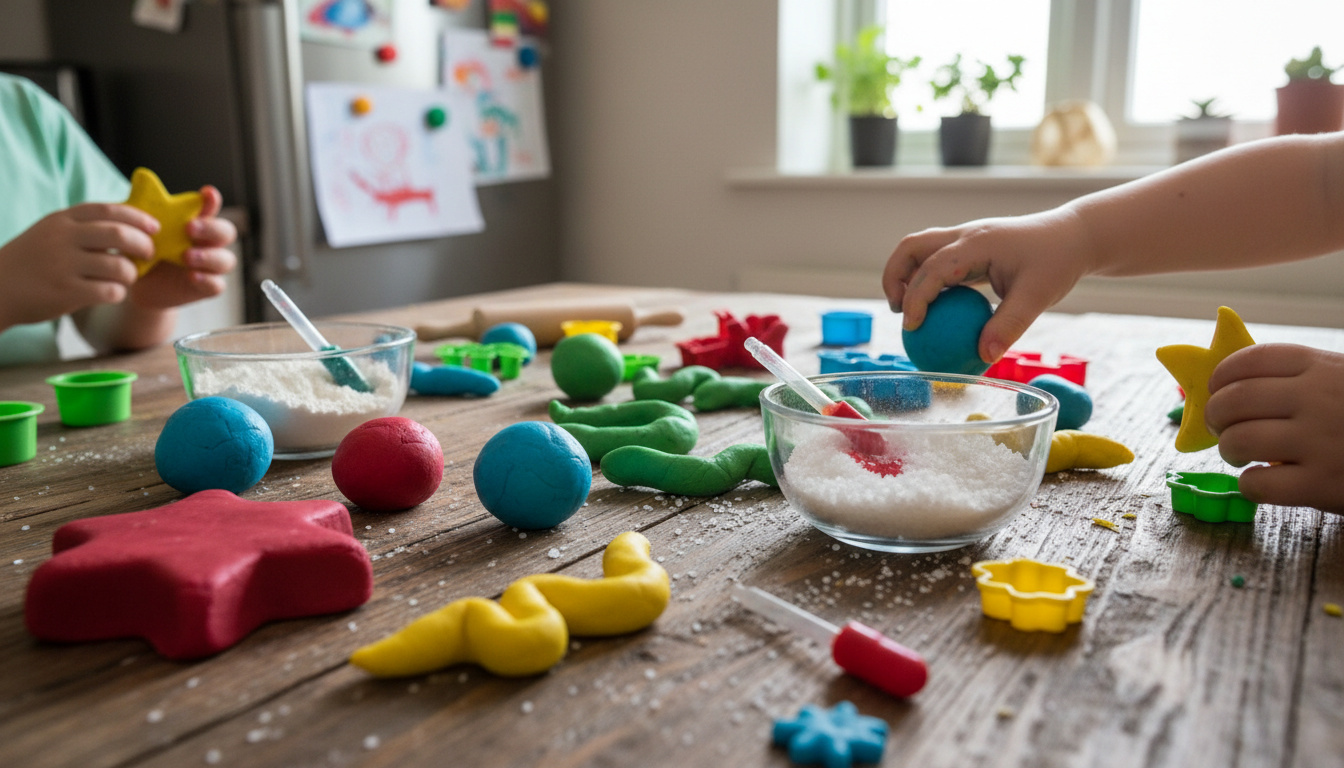
Homemade playdough offers a practical alternative to commercial products, requiring only basic pantry staples and eliminating the need for stovetop cooking. Parents and caregivers can prepare a batch in under fifteen minutes using flour, salt, oil, and warm water, creating a modeling material that remains soft for months when stored properly.
The appeal extends beyond cost savings. Kitchen-made versions allow complete control over ingredients, ensuring that toddlers who occasionally taste their art supplies encounter only edible, non-toxic substances. This accessibility makes the activity particularly valuable for families seeking sensory play options without specialized craft store visits.
Multiple tested methods exist, ranging from simple no-cook approaches to variations incorporating cream of tartar for enhanced elasticity. Understanding the precise ratios and chemical interactions between salt and flour helps achieve the desired consistency without frustration.
What Ingredients Do You Need to Make Playdough?
Classic No-Cook
Flour, salt, oil, and warm water. No heat required. Ready in 15 minutes.
Cream of Tartar Version
Adds longevity and stretch. Uses boiling water instead of warm.
Gluten-Free Option
Substitutes rice or GF flour blends. Cornstarch helps binding.
Cornstarch Variation
Added after initial mix for extra softness and reduced stickiness.
- Basic recipes cost under one dollar per batch compared to four to six dollars for commercial containers.
- Salt acts as a preservative, allowing properly sealed dough to remain usable for up to three months.
- No-cook methods permit children to participate in mixing without burn risks from hot liquids.
- All base ingredients are kitchen-safe and edible, eliminating toxicity concerns if accidentally ingested.
- Gel food coloring integrates more effectively than liquid varieties, producing vibrant hues without excess moisture.
- Cream of tartar improves elasticity but remains optional; recipes work without it.
| Ingredient | Standard Amount | Function | Substitutes |
|---|---|---|---|
| All-purpose flour | 1 cup | Provides structure and body | Gluten-free flour blends (avoid King Arthur brand for binding issues) |
| Salt | 1/2 cup | Preserves dough and adds texture | Salt cannot be omitted without reducing shelf life |
| Vegetable or canola oil | 1 tablespoon | Prevents sticking, adds pliability | Olive oil or coconut oil |
| Warm water | 1/2 cup | Activates gluten and binds ingredients | Boiled water (for cream of tartar versions) |
| Cream of tartar | 1-2 teaspoons | Increases elasticity and longevity | Lemon juice (in cooked recipes only) |
| Food coloring | 2-6 drops | Adds visual appeal | Natural coloring brands or gel varieties |
How to Make No-Cook Playdough Step by Step
The no-cook method produces consistent results without requiring stove access or boiling water, making it accessible for classroom settings and quick toddler activities. Little Eats and Things demonstrates that children can safely assist with every stage when using warm tap water rather than heated liquids.
The Basic No-Cook Method
Combine one cup of all-purpose flour with one-half cup of salt in a large mixing bowl. Add one tablespoon of oil and one-half cup of warm water. If coloring the entire batch, add two to three drops of food coloring to the water before mixing. Stir until the mixture forms a shaggy, sticky dough.
Transfer the dough onto parchment paper, aluminum foil, or a silicone mat. Allow it to rest untouched for five to fifteen minutes. This resting period is crucial; the salt requires time to absorb excess moisture before kneading begins.
Do not add extra flour during the initial sticky phase. The dough transforms significantly as the salt hydrates, developing a workable texture without additional dry ingredients. Premature flour addition results in crumbly, dry playdough.
Kneading and Finishing
After the resting period, knead the dough vigorously for two minutes. It will initially resist manipulation but will gradually become smooth and pliable. The Imagination Tree notes that vigorous kneading for two full minutes eliminates residual stickiness.
Adding Cornstarch for Texture
For those preferring a softer, less tacky texture, The Soccer Mom Blog recommends preparing the base dough without cornstarch initially, then kneading cornstarch in after the fifteen-minute resting period. Add small amounts until the dough no longer sticks to clean hands.
How to Customize and Color Your Playdough
Customization transforms basic dough into themed sensory materials. Color integration requires specific techniques to maintain proper hydration levels.
Integrating Food Coloring
Gel food coloring produces the most vibrant results. Divide the finished dough into portions for multiple colors. Flatten each portion slightly and create a well in the center. Place five to six drops of gel coloring into the depression, then fold the dough over itself and knead until the color distributes evenly. Wear gloves to prevent stained hands during this process.
Adding color introduces moisture. If the dough becomes tacky after incorporating dye, knead in small amounts of additional flour until the desired texture returns.
Natural Color Options
While synthetic dyes offer consistency, some caregivers prefer natural alternatives. What Great Grandma Ate suggests exploring natural food coloring brands available in specialty stores. Note that natural colors typically produce more muted, earth-toned results compared to synthetic counterparts.
Adding Scents
Essential oils introduce aromatherapy elements to sensory play. Treehouse Schoolhouse recommends adding twenty to thirty drops of child-safe essential oils such as lavender or citrus after the dough has cooled and set. Mix thoroughly to distribute the fragrance.
Is Homemade Playdough Safe and How Long Does It Last?
Safety considerations center on ingredient toxicity and bacterial growth prevention. Understanding storage parameters ensures the material remains suitable for repeated use.
Safety for Young Children
Basic recipes containing only flour, salt, oil, and water are considered edible and non-toxic. What Great Grandma Ate confirms these ingredients present no poisoning risk if toddlers taste small amounts during play. However, “edible” does not mean “nutritious”; the high salt content makes intentional consumption unadvisable.
Some gluten-free flour brands, particularly King Arthur varieties, may not bind effectively, resulting in grainy textures that crumble during manipulation. Bob’s Red Mill gluten-free flour blends demonstrate better cohesion for gluten-free versions.
For comprehensive safety standards regarding children in learning environments, see My Child at School – 2025 Safety Standards Guide.
Storage and Longevity
Proper storage determines shelf life. Storefinished dough in resealable plastic bags or airtight containers. The Soccer Mom Blog reports that properly sealed playdough remains soft for up to three months. Exposure to air causes rapid dehydration and hardening.
Check containers weekly for seal integrity. If the dough begins to dry at the edges, remove the affected portion and knead in one teaspoon of water or oil to restore flexibility.
What Is the Shelf Life of Homemade Playdough?
-
The dough reaches optimal pliability immediately after kneading. Colors are most vibrant. Source
-
Texture remains ideal if stored in airtight containers. Salt continues preserving the material.
-
Usable life continues with proper sealing. Check for mold if condensation occurs in containers.
-
Discard if dried, moldy, or developing unpleasant odors. Salt inhibits but does not prevent bacterial growth indefinitely.
What Is Established and What Remains Unclear About Playdough?
| Established Facts | Uncertain or Variable Factors |
|---|---|
| Recipes using only flour, salt, oil, and water are non-toxic and safe if accidentally ingested by children. | Exact timeframe for mold development varies based on room humidity and initial ingredient contamination levels. |
| Salt absorbs moisture during the resting period; dough starts sticky and firms up after 5-15 minutes. | Precise absorption rates differ slightly between flour brands and ambient kitchen temperatures. |
| Properly sealed playdough lasts up to 3 months before drying out. | Whether natural coloring fades faster than synthetic dyes under continuous play conditions. |
| Cream of tartar increases elasticity but is optional for functional dough. | Long-term effects of essential oil exposure on plastic storage containers. |
Why Choose Homemade Playdough Over Commercial Products?
Commercial modeling compounds often contain preservatives, synthetic fragrances, and colorants that trigger sensitivities in some children. Kitchen preparation eliminates these variables while providing identical tactile benefits. The process also introduces children to measurement concepts and chemical transformations, offering educational value beyond the finished product.
From a practical standpoint, homemade versions accommodate immediate needs. Running out of material during a rainy afternoon no longer requires store visits; pantry staples suffice. This immediacy supports spontaneous creative play, particularly valuable for families managing schedules similar to those discussed in How Long to Cook a 1.5 kg Chicken in Air Fryer – 45-50 Min Times and Tips, where precise timing matters in household management.
Additionally, large batches scale economically. A quadrupled recipe using four cups of flour yields enough material for multiple children or classroom settings at roughly one-quarter the cost per ounce of retail products.
What Do Recipe Developers Recommend?
“The key to the perfect consistency lies in the waiting period. Those crucial minutes allow the salt to absorb liquid, transforming a sticky mess into workable dough.”
— Little Eats and Things
“Adding glycerine gives the dough a lovely sheen and extra stretch, making it feel professional despite being made from kitchen staples.”
— The Imagination Tree
“For gluten-free families, the cornstarch addition makes all the difference in achieving that smooth, non-crumbly texture that mimics traditional wheat-based dough.”
— What Great Grandma Ate
Final Thoughts on Creating Playdough at Home
Mastering homemade playdough requires attention to hydration ratios and patience during the resting phase. The no-cook method delivers consistent, safe results using ingredients already present in most kitchens. With proper storage in airtight containers, families can maintain fresh, pliable modeling material for months, supporting ongoing sensory development and creative expression while maintaining strict control over chemical exposure. For additional household safety guidance, refer to My Child at School – 2025 Safety Standards Guide.
Common Questions About Homemade Playdough
How do I fix playdough that is too sticky?
Let the dough sit for 5-15 minutes to allow salt absorption. If still sticky, knead in small amounts of flour or cornstarch gradually.
Can I make playdough in the microwave?
No-cook recipes eliminate microwave needs. Heating is unnecessary and may cook the flour, altering texture. Knead in warm water to soften old dough instead.
What is the best container for storing playdough?
Airtight plastic containers or heavy-duty resealable bags work best. Remove excess air before sealing to prevent drying.
Is cream of tartar absolutely necessary?
Cream of tartar improves elasticity and longevity but is optional. Recipes without it produce functional dough that lasts weeks rather than months.
Can I double or triple the recipe?
Yes, scale all ingredients proportionally. Large batches require mixing in separate bowls to ensure even salt distribution.
How long does it take to make playdough from start to finish?
Active mixing takes 5 minutes, but the resting period of 5-15 minutes is essential for proper texture. Total time is approximately 20 minutes.

Arthur Oliver Howard Fletcher is a staff writer for NationalReport.uk, covering UK national news, politics, the economy and public services. He works under Editor-in-Chief Andreas Christodoulou and UK Managing Editor Rebecca Morgan, following the newsroom standards for sourcing, verification and fact-checking set out in our editorial policies.