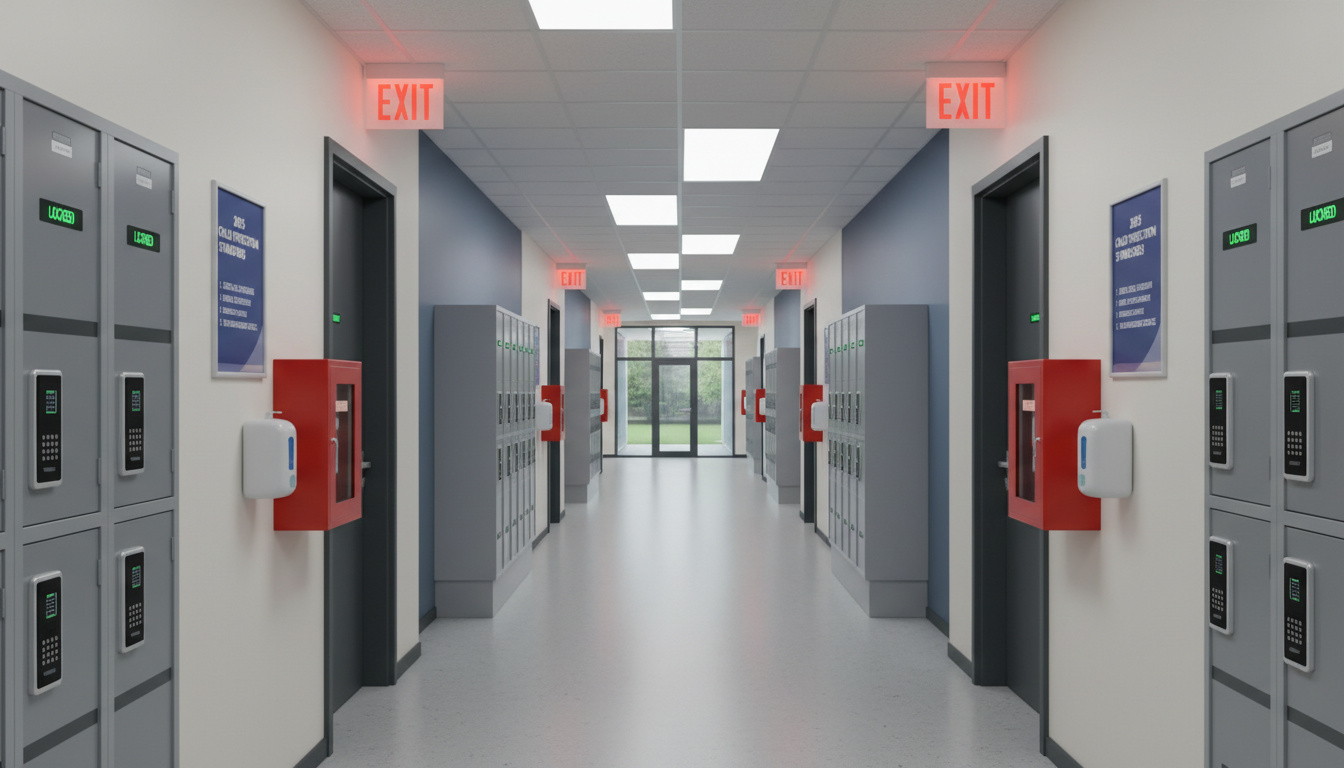
Understanding current facility security standards has become essential for parents navigating the 2025 school year. The Partner Alliance for Safer Schools released the seventh edition of its K-12 safety guidelines in July 2025, introducing significant changes to how educational institutions approach physical and digital protection. These updates coincide with a federal back-to-school campaign emphasizing layered security strategies.
The 2025 standards represent a shift from isolated safety measures to comprehensive, interconnected systems. While specific operational procedures vary by district, national guidelines now establish minimum expectations for infrastructure hardening, visitor management, and cybersecurity protocols. Parents monitoring these developments should recognize that facility security encompasses both physical barriers and digital defense layers.
What Security Standards Changed for Schools in 2025?
Reinforced doors, windows, and locking mechanisms
Controlled entry processes and identification protocols
Emergency alarm and notification infrastructure
Digital infrastructure protection layers
- Cybersecurity Integration: The seventh edition marks the first time digital infrastructure occupies a dedicated layer in facility safety planning.
- Physical Barrier Emphasis: Guidelines now require reinforced doors and windows as foundational security elements.
- System Integration: Standards reject isolated security measures in favor of interconnected, layered approaches.
- Visitor Protocol Updates: Current recommendations require comprehensive entry management rather than single-point check-ins.
- Emergency Alert Standards: Panic alarm recommendations have been updated to reflect modern emergency response protocols.
| Safety Element | Implementation Focus | Source Type |
|---|---|---|
| 2025 PASS Edition | 7th Edition released July 2025 | Security Industry |
| Physical Barriers | Doors, windows, locks reinforcement | Safety Guidelines |
| Access Control | Visitor management processes | Security Protocol |
| Emergency Alerts | Panic alarm systems | Emergency Systems |
| Digital Protection | Cybersecurity infrastructure layer | Tech Security |
| Federal Guidance | Prevention resources and tools | Government Campaign |
How Do Layered Security Measures Protect Students?
The 2025 standards recommend that districts implement comprehensive visitor management processes, though specific identification verification and escort procedures remain determined by individual school districts based on local infrastructure.
Physical Infrastructure Improvements
Schools are implementing reinforced entry points under the 2025 guidelines. The updated PASS standards recommend hardened doors and windows as primary barriers against unauthorized access. These physical elements form the foundation of the new layered security model, requiring integration with electronic access controls.
Digital Safety Integration
For the first time, cybersecurity receives equal standing with physical safeguards. The guidelines establish digital infrastructure as a critical security layer, protecting student data and facility operational technology from external threats. This inclusion reflects the increasing connectivity of modern school environments.
What Federal Resources Support School Safety?
While federal resources provide assessment frameworks and best practices, specific district adoption timelines and budget allocations for these tools vary significantly across jurisdictions.
Prevention and Assessment Tools
SchoolSafety.gov serves as the federal government’s clearinghouse for educational safety. The platform launched a 2025 back-to-school campaign providing threat assessment frameworks that help administrators evaluate risks before escalation. These resources emphasize early intervention and systematic evaluation protocols.
Bullying and Emergency Planning
The federal campaign includes structured protocols for bullying prevention alongside comprehensive emergency planning guides. The clearinghouse consolidates evidence-based practices for crisis response, though implementation details remain subject to local board decisions and state regulations.
Parents seeking additional family planning resources may review Yorkshire Wildlife Park Tickets – Price Guide For Families for related outing information.
When Did the 2025 Safety Standards Take Effect?
- : The Partner Alliance for Safer Schools releases the seventh edition of K-12 safety guidelines, introducing the cybersecurity layer.
- : Security Industry Association announces public availability of the updated PASS standards.
- : SchoolSafety.gov initiates the back-to-school safety campaign distributing prevention resources nationwide.
- : Districts begin phased implementation of cybersecurity and physical hardening measures for the 2025-2026 academic year.
Which Safety Elements Are Standardized vs. Variable?
| Established National Standards | District-Specific Variables |
|---|---|
| Layered security approach required | Specific hardware brands and vendor selection |
| Physical hardening of entry points recommended | Renovation completion timelines and funding schedules |
| Cybersecurity as critical protection layer | IT infrastructure upgrade priorities |
| Panic alarm system integration | Installation dates and testing frequencies |
| Visitor management protocols | Check-in procedures and staffing levels |
Why Did Security Guidelines Update in 2025?
The 2025 updates reflect an evolution from point solutions to comprehensive, layered defense strategies. Industry analysis indicates these changes address vulnerabilities between physical and digital security in increasingly connected educational environments.
Facility security has become a central concern for parents monitoring educational environments. The inclusion of cybersecurity as a fundamental layer acknowledges that threats now extend beyond physical boundaries into network systems and data protection.
Who Develops School Safety Standards?
The Partner Alliance for Safer Schools, in collaboration with security industry stakeholders, maintains the K-12 safety guidelines. Federal oversight and resource coordination occur through SchoolSafety.gov, the designated clearinghouse for threat assessment and emergency planning.
— Based on 2025 PASS Guidelines and Federal Resources
What Should Parents Remember About School Security?
The 2025 PASS guidelines introduce mandatory cybersecurity layers alongside reinforced physical barriers for educational facilities. While federal resources provide assessment frameworks, specific implementation timelines and budget allocations remain local decisions. Parents should contact district offices directly for facility-specific security completion dates. Those monitoring cognitive health developments may reference ADHD Symptoms In Women – Diagnosis, Treatment, Lifestyle for additional context.
Frequently Asked Questions About School Security
What is the PASS 7th Edition?
Released July 2025, the seventh edition of the Partner Alliance for Safer Schools guidelines adds cybersecurity as a dedicated protection layer alongside physical security measures for K-12 facilities.
Does my child’s school follow these federal guidelines?
PASS guidelines are recommendations, not mandates. Implementation varies by district, with local boards determining adoption timelines and specific security investments.
What constitutes a layered security approach?
Layered security combines physical barriers (doors, windows, locks), visitor management, panic alarm systems, and cybersecurity protections in an integrated framework.
Are panic alarm systems now required in all schools?
While the 2025 guidelines recommend panic alarm integration, specific requirements depend on state legislation and local district policies rather than federal mandate.
How can parents verify their school’s security compliance?
Parents should contact district administrative offices directly, as specific implementation schedules and architectural modifications are managed locally beyond national guideline recommendations.

Arthur Oliver Howard Fletcher is a staff writer for NationalReport.uk, covering UK national news, politics, the economy and public services. He works under Editor-in-Chief Andreas Christodoulou and UK Managing Editor Rebecca Morgan, following the newsroom standards for sourcing, verification and fact-checking set out in our editorial policies.