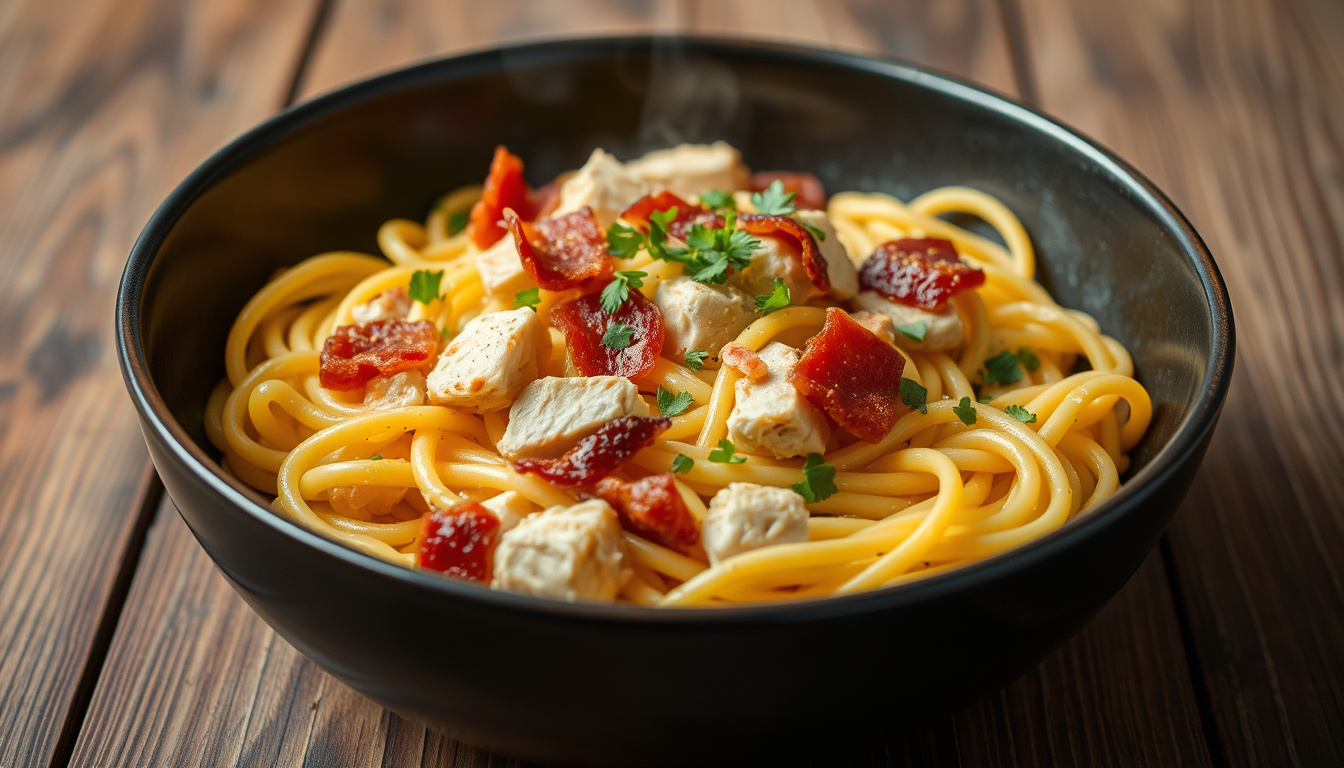

Chicken and bacon pasta ranks among the most satisfying weeknight meals available. The combination of protein-rich chicken, crispy bacon, and comforting pasta creates dishes that appeal to nearly every palate. Whether prepared with a rich cream sauce, a lighter tomato base, or baked until golden, these recipes deliver both simplicity and flavour.
This guide explores the most popular variations, from quick 15-minute preparations to oven-baked family favourites. Each version offers distinct advantages depending on available time, dietary preferences, and kitchen experience. Understanding the core techniques helps home cooks adapt recipes confidently to their own tastes.
Chicken Bacon Pasta No Cream
Uses cream and parmesan for richness. Typically takes 30 minutes to prepare and contains approximately 600 calories per serving.
Relies on tomato passata or pesto for sauce depth. Lighter option at roughly 450 calories per serving with more vegetables included.
Finished in the oven with a crispy breadcrumb or cheese topping. Family-friendly presentation that travels well for gatherings.
Prepared warm then cooled completely. Tossed with vinaigrette and fresh vegetables for a pasta salad ideal for meal prep or picnics.
- Chicken and bacon pasta without cream relies on tomato-based sauces for depth and body
- Wholewheat pasta adds fibre and nutrients compared to refined white varieties
- Crispy bacon texture contrasts pleasantly with tender chicken and al dente pasta
- Vegetables like leek, celery, carrot, and courgette boost nutritional content significantly
- Free-range chicken and higher-welfare bacon improve both flavour and ethical sourcing
- Parmesan and starchy pasta water create natural thickening without dairy cream
- Balsamic vinegar adds acidity that balances richness in no-cream preparations
| Variation | Prep Time | Calories (est.) | Key Ingredients |
|---|---|---|---|
| Classic Creamy | 30 minutes | 600 cal | Double cream, parmesan, bacon |
| No Cream | 25 minutes | 450 cal | Passata, vegetables, olive oil |
| Bake | 35 minutes | 520 cal | Cream, cheese, breadcrumbs |
| Tuscan Style | 20 minutes | 480 cal | Sun-dried tomatoes, spinach, herbs |
Chicken and Bacon Pasta Bake
Baked pasta dishes offer distinct advantages over stovetop versions. The oven finish creates a golden, slightly crispy top layer that many find irresistible. Family gatherings and potluck dinners often favour baked pasta because it travels well and can be assembled ahead of time.
The baking process also allows flavours to meld together during cooking. Ingredients combine more thoroughly than in quick stovetop methods, resulting in a unified dish where sauce, pasta, and proteins integrate seamlessly. This technique works particularly well when using cream-based sauces or when incorporating vegetables that benefit from extended cooking.
Basic Baked Pasta Technique
Begin by cooking pasta until just shy of al dente, as it will continue cooking during the baking process. Combine with your sauce, protein, and vegetables in a large baking dish. Top with breadcrumbs mixed with melted butter or olive oil, along with grated cheese for maximum crispiness.
Cover the dish with foil and bake at 180°C (350°F) for approximately 20 minutes. Remove the foil for the final 10 minutes to allow the topping to brown. The result should be bubbling around the edges with a golden crust on top.
For the best golden topping, mix panko breadcrumbs with melted butter, garlic powder, and dried Italian herbs before sprinkling over the pasta. This combination crisps beautifully under the broiler.
Chicken Bacon Pasta Tomato
Tomato-based chicken and bacon pasta offers several advantages over cream versions. The sauce tends to be lighter, more acidic, and better suited for warmer months when heavy cream feels inappropriate. Tomatoes also provide beneficial nutrients including lycopene, vitamin C, and potassium.
Passata serves as an excellent foundation for tomato pasta sauces because it has a smooth consistency and intense flavour without the seediness of chopped tomatoes. Simmering passata with aromatic vegetables and herbs creates depth that rivals cream-based alternatives. A splash of balsamic vinegar or red wine during cooking enhances the natural sweetness of tomatoes.
Building Tomato Sauce Depth
Start by sautéing onion and garlic in olive oil until softened. Add chopped carrots, celery, and any other vegetables to build flavour layers. These aromatics release their sweetness into the oil, creating a flavour base that supports the tomatoes.
Pour in the passata and add herbs such as thyme, rosemary, and bay leaves. Allow the sauce to simmer for at least 15 minutes to concentrate flavours. Season with salt, pepper, and a pinch of sugar to balance acidity. The sauce should coat the back of a spoon without sliding off immediately.
Reserve a cup of starchy pasta cooking water before draining. Adding this liquid to tomato sauce helps it cling better to pasta while adding subtle starchiness that mimics cream’s body. Those building their sauce technique might also explore chicken stock recipe methods for additional flavour foundations.
Simple Chicken and Bacon Pasta
Simple preparations appeal to busy home cooks who want maximum flavour with minimal effort. One-pan methods reduce washing up while keeping all cooking contained in a single vessel. The approach works particularly well for weeknight dinners when time feels scarce.
Jamie Oliver’s 15-minute chicken and bacon pasta recipe exemplifies this philosophy. The method combines multiple cooking stages in one pan while pasta cooks separately in salted water. This multitasking approach streamlines the process significantly compared to traditional sequential cooking.
The recipe uses wholewheat fusilli for added nutrition and texture. Chicken breasts are diced and fried until golden, then combined with crispy bacon, chilli, garlic, and aromatic herbs. A vegetable ragù made with leek, celery, carrot, courgette, and red peppers forms the sauce base, simmered with passata until integrated. Find the full recipe at jamieoliver.com.
Essential Simple Pasta Techniques
Always salt your pasta water aggressively—it should taste noticeably salty. This seasoning transfers into the pasta itself, providing foundational flavour that cannot be replicated later. Use a large pot with ample water to prevent pasta from clumping. For a delicious twist, try this recipe for найкращий чічаррон зі свинини.
Brown protein properly before adding other ingredients. Chicken pieces should develop a visible golden crust before being stirred or combined with vegetables. Bacon should be crispy before adding delicate vegetables to prevent steaming rather than frying.
Never rinse pasta after draining. The starchy coating on pasta helps sauce adhere. Save pasta cooking water before draining to adjust sauce consistency as needed.
Chicken and Bacon Pasta Jamie Oliver
Jamie Oliver has influenced home cooking in the United Kingdom significantly with his approachable recipes and emphasis on fresh ingredients. His chicken and bacon pasta recipe reflects this philosophy, prioritising vegetables, whole grains, and higher-welfare proteins over processed alternatives.
The recipe serves four people and requires only 15 minutes total preparation and cooking time. Rated as “Not Too Tricky,” it presents an achievable challenge for intermediate cooks while remaining accessible to beginners. The combination of healthy vegetables with quality proteins creates a balanced meal that satisfies without feeling heavy.
Key ingredients include 320g dried wholewheat fusilli, two 150g skinless free-range chicken breasts, three smoked streaky bacon rashers, and 700g passata for the sauce. The vegetable ragù incorporates leek, celery, carrot, courgette, and jarred red peppers with thyme. Fresh herbs including rosemary and bay leaves add aromatic complexity, while pine nuts provide textural contrast and healthy fats. Balsamic vinegar and Parmesan finish the dish.
Recipe Timeline
- Prepare vegetables by processing leek, celery, carrot, courgette, and red peppers into the ragù mixture.
- Heat olive oil in a casserole pan and fry vegetables with thyme sprigs until softened.
- Boil salted water and cook fusilli until al dente according to package instructions.
- Dice chicken breasts and fry in a separate pan until golden on all sides.
- Add sliced bacon to the chicken pan, followed by chilli, crushed garlic, rosemary, bay leaves, and pine nuts.
- Drizzle balsamic vinegar into the chicken mixture and cook briefly.
- Pour passata into the vegetable pan and simmer to create the sauce base.
- Combine drained pasta with sauce, using reserved starchy water to achieve desired consistency.
- Top with the chicken-bacon mixture and serve with freshly grated Parmesan.
What Remains Established and What Remains Unclear
| Established Information | Information That Remains Unclear |
|---|---|
| Jamie Oliver’s recipe uses passata rather than cream | Exact calorie count per serving varies by source |
| Recipe takes 15 minutes total preparation and cooking | Whether Tesco stocks a branded version of this dish |
| Serves 4 people with the specified quantities | Specific nutritional breakdown beyond general categories |
| Uses wholewheat pasta, free-range chicken, higher-welfare bacon | Availability of recipe variations at major UK supermarkets |
| Tomato-based sauce with vegetables creates the ragù | Whether oven-baking this specific recipe is recommended |
| Nutrition information includes calories, fat, saturates, sugars, salt, protein, carbs, and fibre | Standard portion sizes across different recipe sources |
Why Chicken and Bacon Work Together
The pairing of chicken and bacon creates complementary flavours that neither ingredient achieves alone. Chicken provides a neutral, tender protein canvas that absorbs surrounding flavours readily. Bacon contributes smoky, salty, umami-rich notes that enhance everything it touches.
When cooked properly, bacon renders its fat and develops a crispy texture that contrasts with chicken’s softer consistency. This textural interplay makes each bite more interesting than either ingredient alone would provide. The fat released from bacon also flavours surrounding vegetables and sauce, reducing the need for additional cooking oil.
Both ingredients cook relatively quickly, making them ideal for weeknight meals. Chicken breasts typically require 6-8 minutes per side over medium-high heat, while bacon achieves crispy results in 3-4 minutes per side. This speed allows home cooks to prepare complete meals without extended kitchen time.
Sources and Perspectives
“One for all those days when nothing but a creamy pasta will do.”
RecipeTin Eats reviewing chicken and bacon pasta variations
“A balanced, veg-packed meal that satisfies without feeling heavy.”
Jamie Oliver recipe description
The recipe landscape for chicken and bacon pasta spans professional publications like BBC Good Food, home cooking enthusiasts on personal blogs, and celebrity chef resources including Jamie Oliver’s collection. Each source brings distinct priorities—BBC Good Food emphasises nutrition data and family-friendly approaches, while personal blogs often focus on maximum flavour and comfort.
Recipe freshness varies considerably across sources. Some platforms update content regularly while others maintain older versions that may reflect different ingredient availability or cooking techniques. Checking publication dates helps readers understand whether recipes reflect current ingredient prices or kitchen equipment capabilities.
Summary
Chicken and bacon pasta offers remarkable versatility across multiple preparation styles. The choice between creamy, tomato-based, baked, or simple preparations depends largely on personal preference, dietary requirements, and available time. Recipes without cream appeal to those seeking lighter options while still delivering satisfying flavour.
Jamie Oliver’s approach demonstrates how accessible these meals can be, completing in 15 minutes with quality ingredients. The combination of wholewheat pasta, vegetables, and higher-welfare proteins creates nutritional advantages over more indulgent versions. For further recipe exploration, browse Jamie Oliver’s pasta collection.
How many calories are in pasta with chicken?
A typical serving of chicken and bacon pasta contains approximately 450-600 calories depending on portion size, ingredients used, and whether cream or tomato-based sauce is employed.
What are the best creamy pasta recipes with chicken and bacon?
The most popular creamy variations include classic cream and parmesan sauces, no-cream alternatives using passata or pesto, and tomato-based options that maintain richness without dairy.
How do you make a chicken Tuscan pasta recipe?
A Tuscan-style chicken pasta uses Mediterranean ingredients like sun-dried tomatoes, artichokes, spinach, and herbs such as rosemary and thyme, typically finished with parmesan.
Can you make an easy creamy pesto chicken pasta?
Yes, combining pre-made pesto with grilled chicken, bacon, and cooked pasta creates a quick weeknight dinner. Add cream or cream cheese for extra richness.
How do you make chicken and bacon pasta salad?
Prepare pasta, chicken, and bacon as usual, then cool completely. Toss with a light vinaigrette, cherry tomatoes, cucumber, and leafy greens for a cold pasta salad.

Arthur Oliver Howard Fletcher is a staff writer for NationalReport.uk, covering UK national news, politics, the economy and public services. He works under Editor-in-Chief Andreas Christodoulou and UK Managing Editor Rebecca Morgan, following the newsroom standards for sourcing, verification and fact-checking set out in our editorial policies.