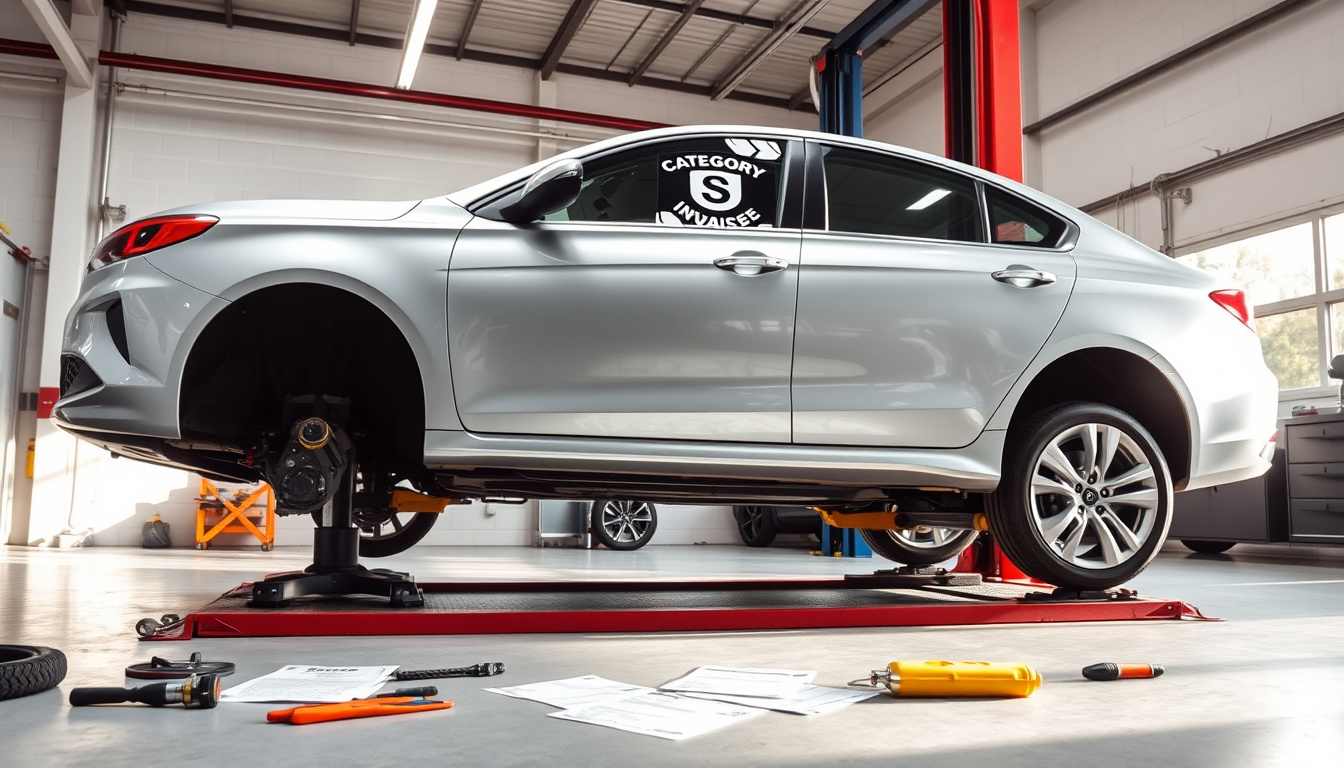

A Cat S car has sustained structural damage to its core components, yet remains repairable. These vehicles occupy a distinct space in the UK car market, offering significant purchase discounts while carrying permanent markers on their history. Understanding what these designations mean—and the obligations they create—can mean the difference between a genuine bargain and an expensive mistake.
The classification system was overhauled in 2017 to bring greater clarity to buyers navigating the used car market. What once were categories simply labeled C and D now carry more descriptive names, yet confusion persists. This guide explains exactly what a Cat S vehicle is, how it differs from other write-off categories, and what buyers should consider before purchasing one.
What Is a Cat S Car?
A Cat S vehicle has suffered damage to its structural elements—the chassis, main frame, crumple zones, or other safety-critical components designed to protect occupants during collisions. The designation indicates the car was written off by an insurer not because repairs were impossible, but because the cost of those repairs approached or exceeded the vehicle’s market value. Unlike Cat N vehicles, which have sustained only cosmetic or non-structural damage, Cat S cars require specialist engineering assessments before they can legally return to the road.
Cat S does not mean “scrap.” The category applies to repairable vehicles with structural damage. A car labeled Cat S has been professionally assessed as fixable, though the repairs require specialist structural work and official sign-off before the vehicle can be driven again.
Overview: Cat S at a Glance
Structural damage to chassis, frame, crumple zones, or suspension mounting points
Repairable but requires specialist structural engineering assessment
DVLA re-registration mandatory before returning to the road
Typically 20–40% lower than equivalent undamaged vehicles
What Qualifies as Structural Damage
Structural components are those specifically engineered to absorb impact energy and maintain the vehicle’s integrity during a crash. According to guidance from motor industry sources, the following damage types typically trigger a Cat S classification:
- Chassis or main frame bending, crushing, or misalignment
- Damage to crumple zones, which are designed to collapse in a controlled manner during impact
- Deformation of suspension mounting points affecting the car’s geometry
- Damage to A-pillars (the posts between the windshield and front doors)
- Damage to B-pillars (structural posts between front and rear doors)
- Roof damage resulting from rollovers or external forces
- Bending or compromise of the floor pan
- Damage to engine mounting points that affects structural stability
- Severe front or rear-end collision deformation affecting core components
It is important to note that damage to bumpers, fenders, body panels, or headlights alone does not constitute structural damage. These components are considered non-structural and would typically result in a Cat N classification instead. CarPlus explains this distinction in detail.
Cat S vs Cat N: Side-by-Side Comparison
| Aspect | Cat S | Cat N |
|---|---|---|
| Damage Type | Structural (frame, chassis, crumple zones) | Non-structural (cosmetic, electrical, steering) |
| DVLA Re-registration | Required before returning to road | Not required |
| Inspection Requirement | Must pass accredited engineer inspection | Not mandatory |
| Repair Feasibility | Repairable but expensive | Repairable with standard methods |
| Value Impact | 20–40% reduction compared to undamaged equivalent | Lower depreciation than Cat S |
Both categories can legally be repaired and returned to the road, but they differ substantially in inspection requirements, resale value, and insurance considerations. The insurance implications alone make understanding this distinction essential for any prospective buyer.
Vehicles labeled Cat C or Cat D predate the 2017 system overhaul. Cat C vehicles (structural damage equivalents to modern Cat S) should be treated with the same caution, requiring full documentation, DVLA re-registration, and independent inspection before purchase.
Should I Buy a Cat S Car?
Purchasing a Cat S vehicle is not a straightforward decision. The attractive price discounts come bundled with ongoing obligations, higher operating costs, and a permanent marker that follows the car through every subsequent sale. Weighing the genuine advantages against the practical drawbacks requires careful consideration of your specific circumstances.
The Case For: Advantages of Cat S Vehicles
When properly repaired, Cat S vehicles represent fully roadworthy machines that can serve their owners reliably for years. The advantages are tangible for buyers working within constrained budgets:
- Significant purchase discounts: Cat S vehicles typically sell for 20–40% less than undamaged equivalents, according to market data from CarHealth. For expensive models, this can represent thousands of pounds in savings.
- Legally roadworthy when repaired correctly: The Category S designation is not a permanent prohibition on use. Once repairs are completed by qualified engineers and the vehicle passes official inspection, it can be registered with the DVLA and driven legally.
- Daily usability: A properly repaired and registered Cat S car functions identically to any other vehicle for daily driving needs, provided the repairs were executed to appropriate standards.
- Availability of higher-specification models: The discounts sometimes allow buyers to access model variants, trim levels, or vehicle ages that would otherwise fall outside their budget.
The Case Against: Risks and Drawbacks
The reduced purchase price does not tell the whole story. Prospective buyers should account for the following ongoing costs and complications:
- Specialist insurance requirements: Insurers treat Cat S vehicles as higher risk, resulting in premiums that can be substantially higher than standard policies. Finding coverage at competitive rates often requires approaching specialist providers.
- Permanent value depreciation: The 20–40% reduction relative to undamaged vehicles does not disappear after repairs. This discount persists through subsequent sales and limits the potential buyer pool when you eventually sell.
- Cost of professional structural repairs: Structural repair work by qualified engineers is expensive. Costs can approach or even exceed the vehicle’s actual value, particularly for vehicles already several years old.
- Permanent history marker: The Category S designation is recorded permanently in the vehicle’s history and cannot be removed, regardless of repair quality. This disclosure affects future insurance quotes and private sale prospects.
- Obligation to disclose: Sellers are legally required to inform buyers of the vehicle’s write-off history. Attempting to conceal this information can result in legal liability.
What Is a Cat S Car Worth?
Valuing a Cat S vehicle requires calculating several variables: the pre-damage market value of the specific model, the extent and quality of repairs completed, current mileage, and service history. Industry data suggests that properly repaired Cat S vehicles typically achieve 60–80% of the value that an identical undamaged vehicle would command.
For example, if a vehicle in excellent condition would sell for £15,000, a properly repaired Cat S equivalent might achieve £9,000–£12,000 depending on repair quality and documentation. The variance is significant, which is why obtaining independent assessments before purchase is critical.
Before committing to purchase any Cat S vehicle, insist on complete repair documentation proving professional structural work. An independent structural inspection by a qualified engineer is essential to verify that repairs meet safety standards. These checks help identify whether the vehicle was properly repaired and whether it poses ongoing safety risks.
What Is a Cat S Car Repair Like?
Repairing a Cat S vehicle is fundamentally different from addressing cosmetic damage. The work requires specialist knowledge of structural engineering, precision measurement equipment, and often custom parts or fabrication. Understanding the repair process helps buyers evaluate whether the asking price genuinely represents value.
The Economic Threshold for Write-Offs
Insurers typically declare a vehicle a Category S write-off when estimated repair costs reach 50–70% of the vehicle’s current market value. This decision is economic rather than technical—the car can technically be fixed, but the cost of parts, labor, administration, and often a hire vehicle during repairs exceeds what the insurer determines the vehicle is worth.
This threshold explains why repaired Cat S vehicles sometimes carry repair costs that rival or exceed the vehicle’s post-repair value. Buyers who do not conduct thorough due diligence may find themselves in negative equity almost immediately after purchase.
What Is a Cat S Car Repair Cost?
Repair costs for Cat S vehicles vary enormously based on the extent of damage, the specific model, and the quality of parts used. According to analysis from automotive specialists, structural repairs involving chassis realignment, crumple zone replacement, and suspension recalibration can run to several thousand pounds even for smaller vehicles.
For luxury or performance vehicles, costs escalate rapidly. Specialized diagnostic equipment, OEM (original equipment manufacturer) parts, and engineer labor combine to produce bills that may approach the vehicle’s pre-damage value. This is precisely why comprehensive repair documentation is essential—it provides evidence that repairs were completed properly rather than inadequately.
The Inspection and Re-registration Process
Once structural repairs are complete, the vehicle must undergo inspection by an accredited engineer before the DVLA will re-register it for road use. This inspection verifies that:
- Structural components have been repaired to manufacturer specifications
- Alignment measurements fall within acceptable tolerances
- Safety systems function correctly following the repair
- Documentation supports the repair quality claimed
The DVLA re-registration process involves submitting the engineering inspection certificate alongside the V5C registration document. Only after this process completes can the vehicle legally return to the road. Auto Express provides detailed guidance on this process.
Before purchasing any Cat S vehicle, verify the following: engineering inspection certificate, DVLA re-registration confirmation, itemized repair invoices, photographs of pre-repair damage, and any available warranty documentation from the repairer. Absence of these documents should prompt serious caution.
Cat S Car Insurance Explained
Insuring a Cat S vehicle presents distinct challenges that prospective buyers must factor into their budget calculations. Standard insurance policies frequently decline coverage for write-off vehicles, or they apply loadings that substantially increase premiums. Understanding this market dynamic is essential for anyone considering a purchase.
Why Cat S Insurance Costs More
Insurers categorize Cat S vehicles as elevated risk based on several factors. The damage history suggests the vehicle was involved in an incident significant enough to cause structural deformation. Even after professional repairs, insurers perceive a higher likelihood of underlying issues, hidden damage, or compromised safety systems.
Additionally, the reduced resale value of Cat S vehicles affects insurance calculations. Insurers must account for potential write-off scenarios in future claims, which influences premium pricing. The combined effect of damage history perception and value calculation produces premiums that can be 20–50% higher than equivalent undamaged vehicles.
Finding Appropriate Coverage
Buyers of Cat S vehicles should approach specialist motor insurance providers rather than attempting to obtain coverage through standard channels. Specialist insurers understand the unique risk profiles of write-off vehicles and can offer policies tailored to their characteristics.
When obtaining insurance quotes, be prepared to provide detailed documentation of repairs, engineering inspection certificates, and DVLA re-registration confirmation. Insurers that specialize in this segment typically request this documentation before quoting, and the absence of proper documentation may result in declined coverage or significantly higher premiums.
It is worth noting that some lenders will not finance Cat S vehicles, and those that do often apply higher interest rates. If financing is part of your purchase plan, confirm lender appetite for write-off vehicles before committing to a purchase.
Obtain insurance quotes before finalizing a Cat S purchase. Premium differences between providers can be substantial, and discovering that coverage will cost significantly more than anticipated can materially affect whether the purchase represents genuine value.
The Evolution of Write-Off Categories
Understanding the historical context of vehicle write-off classifications helps explain why the current system exists and what buyers should know about legacy vehicles still circulating in the market.
Timeline: From Cat C to Modern Categories
- Pre-2017: The UK insurance industry used Categories A, B, C, and D. Category A and B vehicles were designated for destruction or scrap, while Categories C and D covered vehicles deemed economically unviable to repair but potentially repairable. Category C represented structural damage equivalent to modern Category S.
- 2017 system overhaul: The Association of British Insurers (ABI) introduced the current classification system (S and N replacing C and D) to provide clearer information to buyers. The 2017 changes prioritized safety over economics, meaning Category S now covers any structural damage regardless of repair cost estimates.
- Current emphasis: The industry has shifted toward encouraging proper repair of Category S vehicles rather than treating them as destined for scrap. Accredited engineer inspections and DVLA re-registration processes ensure vehicles returning to the road meet safety standards.
The ABI salvage code now provides the framework that guides how insurers categorize write-offs. This standardization ensures consistency across the industry and helps buyers understand the severity of damage when evaluating vehicles.
Facts and Misconceptions About Cat S Vehicles
Confusion around write-off categories has generated numerous misconceptions that can lead buyers astray. Separating established facts from persistent myths helps prospective purchasers make informed decisions.
| Category | Information |
|---|---|
| Established Fact | Cat S vehicles can be safely repaired and legally driven once they pass professional inspection and are re-registered with the DVLA. The category indicates repairable damage, not scrap. |
| Established Fact | Structural repairs require specialist engineering expertise and equipment. General automotive repair shops may not have the capability to properly address chassis or frame damage. |
| Established Fact | The permanent history marker cannot be removed. Any subsequent sale or insurance quote will disclose the write-off history. |
| Misconception | The vehicle is unroadworthy or unsafe after repair. When repairs are completed professionally and verified through independent inspection, the vehicle can meet the same safety standards as an undamaged car. |
| Misconception | Cat S vehicles are always cheaper to insure. In practice, premiums reflect the damage history and typically cost more than equivalent undamaged vehicles. |
| Uncertain | Future value appreciation. While Cat S vehicles typically sell for less than undamaged equivalents, the rate at which values converge or diverge over time is unclear and likely varies by model, repair quality, and market conditions. |
The Broader Context: Why Write-Off Categories Exist
The write-off classification system serves both economic and safety functions within the motor insurance industry. Insurers use these categories to process claims efficiently, manage salvage disposal, and provide transparent information to subsequent buyers.
From an economic perspective, writing off a vehicle makes sense when repair costs exceed the vehicle’s market value. The alternative—paying for expensive repairs that exceed the vehicle’s worth—would increase costs across the entire insurance system, ultimately affecting all policyholders through higher premiums.
From a safety perspective, the 2017 reforms specifically prioritized ensuring that structural damage was properly identified and addressed. Vehicles with compromised crumple zones or misaligned chassis present genuine safety risks that cosmetic repairs cannot address. The current system requires professional verification before Cat S vehicles return to the road, providing a safety net that earlier categories lacked.
The system also supports the salvage and repair industry by providing clear signals about which vehicles are suitable for repair and which should be destined for scrap. This differentiation helps direct resources efficiently and ensures that potentially dangerous vehicles do not return to the road without proper verification.
Sources and Industry Guidance
The information in this guide draws on established industry sources that provide authoritative guidance on vehicle write-off categories and buyer obligations.
“Structural damage means damage to the chassis or structural parts of the vehicle. Cosmetic damage does not fall into this category and would typically result in a Cat N classification.”
— CarPlus Magazine, What Is Cat S Category
“Cat S vehicles can be repaired and driven on the road, but they require specialist motor insurance designed for write-off vehicles.”
— Howden Insurance, Cat S Car Insurance Guide
Additional authoritative sources include the DVLA vehicle tax checking service and specialist vehicle history providers such as HPI, which maintain records of write-off classifications that buyers should verify before any purchase.
Summary: Key Points to Remember
A Cat S vehicle has suffered structural damage but remains repairable. The purchase price discount of 20–40% relative to undamaged equivalents can represent genuine value, but only when buyers account for higher insurance costs, specialist repair requirements, and the permanent history marker that follows the vehicle. Before purchasing, obtain complete repair documentation, verify DVLA re-registration, and consider arranging an independent structural inspection.
For buyers willing to navigate these considerations, Cat S vehicles can provide reliable transportation at significantly reduced cost. The key lies in thorough due diligence before committing to any purchase. Understanding the distinction between what is written off and what is scrap—between Cat S and Cat N—forms the foundation of making an informed decision. Understanding these categories also matters for other vehicle maintenance considerations, such as ensuring you have the right tools for oil filter maintenance as part of ongoing ownership.
Frequently Asked Questions
What does Cat S stand for in car categories?
Cat S stands for “Category S” and indicates a vehicle written off by an insurer due to structural damage. The S denotes “structural.” It replaced the older Category C designation in the 2017 classification overhaul.
Can a Cat S car be legally driven on UK roads?
Yes, once the vehicle has been professionally repaired, passed an accredited engineer inspection, and been re-registered with the DVLA. Until these steps are completed, the vehicle cannot legally be driven.
What is the difference between Cat S and Cat N?
Cat S vehicles have sustained structural damage to core safety components. Cat N vehicles have only non-structural damage such as cosmetic or electrical issues. Cat S requires DVLA re-registration and mandatory engineering inspection; Cat N does not.
Will a Cat S car ever be worth as much as an undamaged equivalent?
Industry data suggests Cat S vehicles typically retain 60–80% of the value of undamaged equivalents even after professional repairs. The permanent history marker means full value parity is unlikely regardless of repair quality.
What checks should I perform before buying a Cat S car?
Verify DVLA re-registration, request complete repair documentation including engineering inspection certificates, run an HPI or equivalent vehicle history check, and consider arranging an independent structural inspection before purchase.
Why is Cat S insurance more expensive?
Insurers view Cat S vehicles as higher risk due to their damage history, even after professional repairs. Premiums reflect the damage history, reduced resale value, and perceived ongoing risk, often resulting in costs 20–50% higher than equivalent undamaged vehicles.
Is a Cat C vehicle the same as a Cat S?
Yes, essentially. Cat C predates the 2017 system change and represents structural damage equivalent to modern Cat S. Vehicles with Cat C classifications should be treated with the same caution and verification requirements as Cat S vehicles.

Arthur Oliver Howard Fletcher is a staff writer for NationalReport.uk, covering UK national news, politics, the economy and public services. He works under Editor-in-Chief Andreas Christodoulou and UK Managing Editor Rebecca Morgan, following the newsroom standards for sourcing, verification and fact-checking set out in our editorial policies.