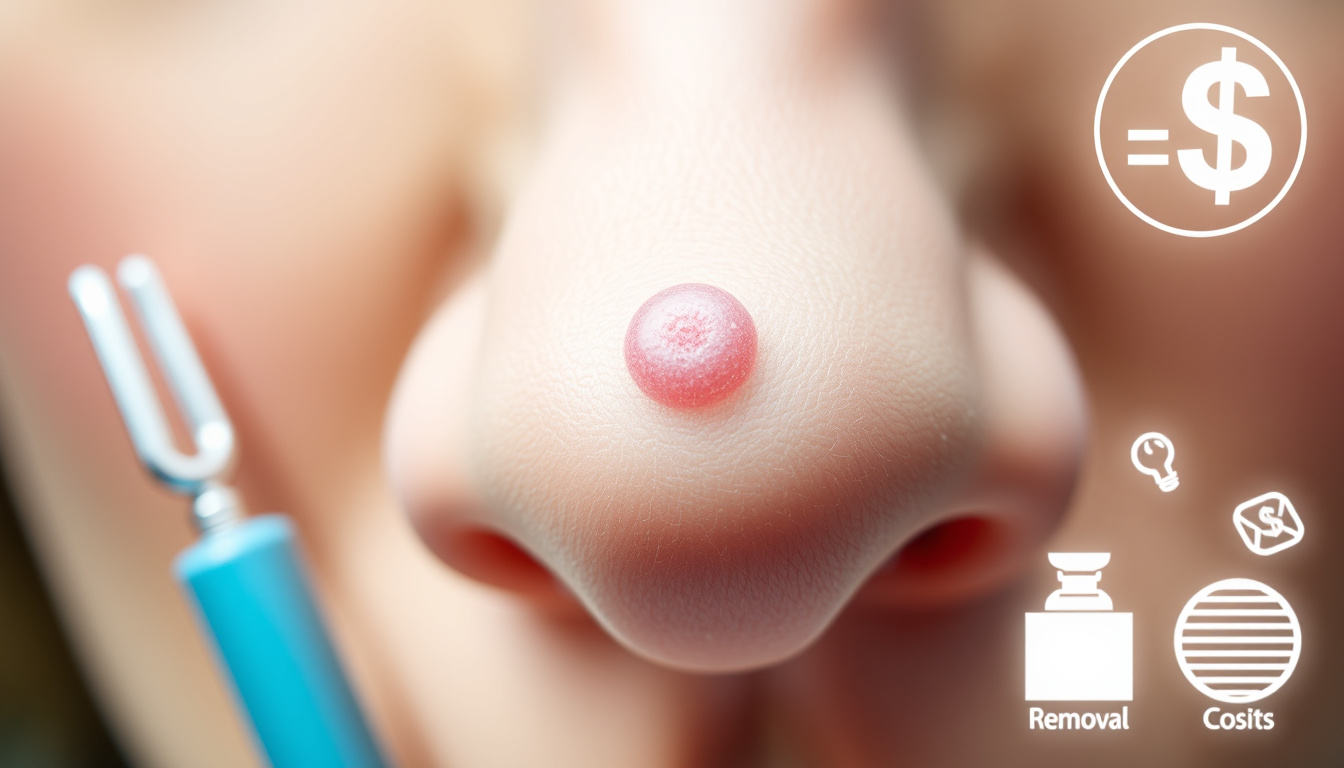

A fibrous papule of the nose is a small, harmless growth that appears on or around the nose. These firm, dome-shaped bumps typically measure between 3 and 6 millimetres in diameter and may be skin-coloured, white, or slightly reddish. Though entirely benign, they can be a cosmetic concern for those who develop them. Understanding what these growths are, how they develop, and what options exist for removal can help individuals make informed decisions about their skin health.
Medical sources consistently describe these papules as noncancerous nodules that do not require treatment for health reasons. However, many people seek professional removal for aesthetic purposes. The growths tend to appear in early to mid-adulthood and may persist for months or years. In some cases, they can reduce or disappear spontaneously over time without any intervention.
This guide provides a comprehensive overview of fibrous papules of the nose, including their appearance, treatment options, associated costs, and important safety considerations. All information presented here is based on established medical knowledge and reputable clinical sources.
Fibrous Papule of the Nose Removal
Professional removal remains the most effective approach for those wishing to address a fibrous papule of the nose. Several outpatient techniques exist, each with distinct characteristics and recovery considerations. A dermatologist or qualified surgeon typically performs these procedures using local anaesthesia in an office setting.
- Dome-shaped, sessile papules that are skin-coloured, white, or reddish in appearance
- Onset typically occurs in early to mid-adulthood
- Common removal methods include shave excision and laser therapy
- Procedures are performed outpatient with local anaesthesia
- Growths rarely recur after proper professional removal
- May spontaneously reduce or disappear over months to years without treatment
- Diagnosis can be made clinically or confirmed via biopsy
| Attribute | Details |
|---|---|
| Appearance | Dome-shaped, skin-coloured, white, or reddish nodule |
| Size | Typically 3-6 mm in diameter |
| Texture | Firm and solid upon touch |
| Location | Tip, bridge, or sides of the nose |
| Causes | Not fully understood; possibly related to abnormal vessel growth |
| Symptoms | None; typically asymptomatic |
| Duration | Months to years; may resolve spontaneously |
| Malignant Potential | None; entirely benign |
| Recurrence After Removal | Rare with proper technique |
| Need for Treatment | Not medically necessary; cosmetic preference drives most removals |
Shave Excision and Biopsy
Shave excision involves carefully shaving the papule off at its base, often followed by cauterisation to control bleeding. This technique is relatively quick and typically requires minimal recovery time. The procedure allows for tissue sampling if a biopsy is warranted to confirm the diagnosis. According to dermatology resources, shave excision remains one of the most commonly performed removal methods for these growths.
Laser Therapy Options
Laser therapy, particularly using CO2 or focused laser systems, offers precise vaporisation of the papule with a relatively low risk of scarring. This approach can be particularly appealing for patients concerned about visible marks after removal. Recovery typically involves minor redness and swelling that subsides within days or weeks.
Electrosurgery and Cryotherapy
Electrosurgery, also called electrodessication or hyfrecation, uses electrical current to cut or burn away the growth. This method produces minimal bleeding and downtime, making it a popular choice among practitioners. Cryotherapy, which freezes the papule using liquid nitrogen, is less commonly recommended due to a higher risk of temporary skin discoloration in the treated area.
Before pursuing any removal method, consulting a dermatologist or qualified surgeon ensures proper diagnosis and reduces the risk of complications. This is particularly important because other growths can resemble fibrous papules but require different management approaches.
Fibrous Papule Removal Cost
Understanding the financial aspect of fibrous papule removal helps patients plan accordingly. Costs vary considerably depending on several factors, including the chosen removal method, geographic location, and the specific provider performing the procedure. Insurance typically does not cover these procedures since they are considered cosmetic rather than medically necessary.
According to available pricing data, laser or surgical removal procedures may start at approximately $2,995 for the primary treatment. Additional consultation fees typically apply before any procedure takes place. More minimally invasive in-office treatments generally cost less than more extensive surgical approaches, though exact pricing varies by clinic and region.
When budgeting for removal, patients should consider that initial consultation fees are separate from the procedure cost itself. Some clinics, such as those reviewed in provider directories, itemise these charges separately. Without broad pricing data available across the industry, prospective patients benefit from contacting multiple providers to compare costs for their specific situation.
Geographic location, provider experience, facility fees, and the complexity of the individual case all influence the final cost. Patients should request a detailed breakdown of all charges during their initial consultation to avoid unexpected expenses.
Remove Fibrous Papule of the Nose at Home
Attempting to remove a fibrous papule of the nose without professional supervision is strongly discouraged by medical experts. No safe home remedies exist for addressing these growths. Self-removal attempts carry significant risks including infection, scarring, and potential regrowth of the papule.
These growths extend deeper than surface-level skin issues, making them unsuitable for home extraction methods. The tissue involved connects to underlying structures that require professional handling. Attempting to pop, cut, or burn the papule at home can lead to complications that ultimately require more extensive professional treatment to correct.
For those concerned about the appearance of a growth on their nose, the safest course of action is to maintain gentle skincare practices. Regular cleansing with a mild cleanser and moisturising can help maintain overall skin health. However, these practices will not remove an existing fibrous papule. Professional evaluation remains the only reliable path to safe removal.
Self-removal of fibrous papules can result in infection, permanent scarring, incomplete removal leading to regrowth, and potential damage to surrounding healthy tissue. Always seek evaluation from a qualified healthcare provider before considering any removal approach.
Fibrous Papule of the Nose Pictures and Pathology
While this article does not include direct images, clinical descriptions consistently characterise fibrous papules of the nose as dome-shaped, sessile growths measuring 3 to 6 millimetres in diameter. Their colouration typically matches surrounding skin, though they may appear white or slightly reddish depending on individual skin tone and vascularity.
Video resources from medical providers demonstrate the appearance of these growths before and after removal procedures. These visual guides can help individuals better understand what to expect during evaluation and treatment, though direct comparison with a healthcare professional remains essential for accurate self-assessment.
Clinical and Pathological Features
From a pathological standpoint, a fibrous papule is diagnosed as a benign, firm nodule. Clinical diagnosis is often sufficient for experienced dermatologists, though a biopsy can provide confirmation when desired. The growth remains stable over time without progressive enlargement or changes in pigmentation.
The Cleveland Clinic notes that these papules are noncancerous and do not affect overall health. They will not turn malignant, though their appearance may impact self-esteem for some individuals. Understanding this benign nature can provide reassurance for those newly diagnosed with the condition.
Distinguishing from Other Growths
Differentiating a fibrous papule from other nasal growths requires professional evaluation. Basal cell carcinoma and other skin lesions can sometimes resemble these benign papules, which is why proper assessment before any removal is essential. Resources on How to Identify a Wart and similar conditions can provide general awareness, but clinical diagnosis should always be performed by a qualified healthcare provider.
Any new growth on the nose that changes in size, colour, or texture, or that bleeds without injury, warrants professional evaluation. While fibrous papules are benign, other conditions require different management approaches. For a comprehensive review of its effectiveness and features, consider the Medicube Age-R Booster тест. Medicube Age-R Booster тест
What We Know and What Remains Unclear
Medical science has established clear parameters around fibrous papules of the nose, though certain aspects continue to be researched. Being transparent about what is definitively known versus what remains uncertain helps readers maintain realistic expectations and understand the current limits of medical knowledge.
| Established Information | Information That Remains Unclear |
|---|---|
| Completely benign with no malignant potential | Exact underlying cause in most cases |
| Does not require treatment for health reasons | Precise biological mechanisms triggering development |
| Can be safely removed via multiple professional methods | Why some individuals develop these and others do not |
| Rarely recurs after proper removal | Definitive prevention strategies |
| May resolve spontaneously over time | Factors influencing spontaneous resolution |
| Typically appears in early to mid-adulthood | Potential genetic predisposition factors |
The exact cause of fibrous papules of the nose remains incompletely understood. While medical literature often cites possible abnormal vessel growth as a contributing factor, researchers continue to study the precise mechanisms involved in their development. This uncertainty does not affect treatment approaches, which remain highly effective regardless of the underlying cause.
Clinical Context and Differential Diagnosis
Understanding how fibrous papules relate to other similar conditions provides important clinical context. These growths fall into a category of benign nasal skin lesions that dermatologists routinely evaluate and treat. Distinguishing them from other conditions requires knowledge of their characteristic features and proper clinical assessment.
The DermNet NZ resources indicate that fibrous papules are among the most common benign growths encountered on the nose. Their distinctive dome-shaped appearance and firm texture help differentiate them from surrounding tissue. When diagnosis is uncertain, a simple biopsy can provide definitive confirmation.
Related skin conditions that may prompt evaluation include various benign and malignant growths. Resources such as guides on What Does Scabies Look Like demonstrate the importance of accurate diagnosis, as symptoms of different conditions can appear superficially similar while requiring entirely different treatment approaches.
Expert Sources and Clinical Guidance
Medical consensus regarding fibrous papules of the nose comes from multiple authoritative sources. The Cleveland Clinic describes these growths as harmless skin lesions that do not require treatment but can be removed cosmetically through various methods. This characterisation reflects the broader medical understanding of the condition.
DermNet NZ, a leading dermatology resource, notes that fibrous papules of the nose are benign, firm nodules that are commonly seen in dermatology practice. These growths remain stable over time and do not pose health risks to affected individuals.
Specialty providers and clinical researchers continue to contribute to the body of knowledge surrounding these growths. Resources from pathology outlines and specialty dermatology clinics supplement hospital-based information, providing comprehensive coverage for those seeking detailed understanding of the condition.
Practitioners performing removal procedures consistently report high patient satisfaction rates when the growths are properly diagnosed and appropriately treated using established techniques.
Summary and Next Steps
A fibrous papule of the nose is a benign, harmless growth that does not require medical treatment but can be removed for cosmetic purposes. Professional removal options include shave excision, laser therapy, electrosurgery, and cryotherapy, each with distinct advantages. Costs vary by method and provider, with starting prices around $2,995 for some procedures. Home removal is unsafe and strongly discouraged by medical professionals.
For those considering removal, consulting a dermatologist or qualified surgeon provides the safest path forward. Professional evaluation ensures accurate diagnosis, appropriate treatment selection, and minimal risk of complications. While these growths may resolve spontaneously over time, those seeking immediate improvement can achieve excellent results through established outpatient procedures.
Is a fibrous papule of the nose cancerous?
No. A fibrous papule of the nose is entirely benign and has no malignant potential. It will not develop into cancer and does not affect overall health, though it may be addressed for cosmetic reasons.
How long does a fibrous papule of the nose last?
Fibrous papules can persist for months to years. In some cases, they may spontaneously reduce or disappear over time without any intervention. When removed professionally, recurrence is rare.
Can a fibrous papule be popped like a pimple?
No. Unlike pimples, fibrous papules extend deeper into the skin and involve fibrous tissue that cannot be safely extracted at home. Attempting to pop or squeeze them risks infection, scarring, and complications requiring professional treatment.
What does a fibrous papule of the nose look like?
Clinical descriptions describe these growths as dome-shaped, firm nodules measuring 3 to 6 millimetres in diameter. They are typically skin-coloured, white, or slightly reddish and appear on the tip, bridge, or sides of the nose.
Will insurance cover fibrous papule removal?
Insurance typically does not cover removal of fibrous papules because the procedures are considered cosmetic rather than medically necessary. Patients should check with their specific insurance provider regarding coverage policies.
Are there any safe home remedies for fibrous papules?
No safe home remedies exist for fibrous papules. Medical professionals strongly advise against self-removal attempts, as these can lead to infection, scarring, and incomplete removal. Gentle skincare practices may support overall skin health but will not remove the growth.
What happens if I do not treat a fibrous papule?
Without treatment, a fibrous papule will likely remain stable and cause no health problems. Some papules may gradually reduce in size or disappear on their own over extended periods. No action is required unless the growth becomes bothersome or its appearance changes.

Arthur Oliver Howard Fletcher is a staff writer for NationalReport.uk, covering UK national news, politics, the economy and public services. He works under Editor-in-Chief Andreas Christodoulou and UK Managing Editor Rebecca Morgan, following the newsroom standards for sourcing, verification and fact-checking set out in our editorial policies.