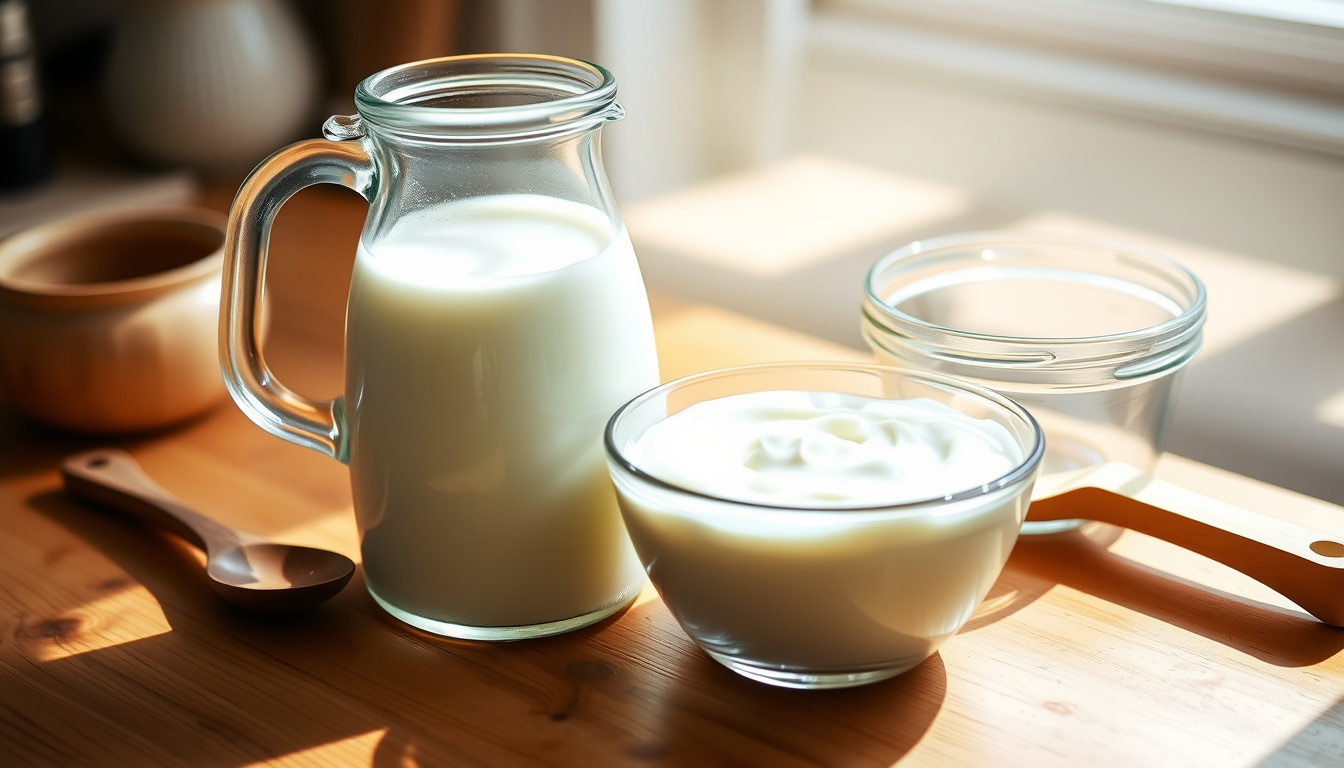

Buttermilk brings a tangy richness to baked goods and savory dishes alike. While store-bought versions work well, homemade alternatives take just minutes to prepare with ingredients already sitting in most kitchens. Understanding how to make buttermilk opens up possibilities for everything from fluffy pancakes to crispy fried chicken.
Two primary approaches dominate homemade buttermilk preparation. The first uses milk combined with an acidic liquid like lemon juice or vinegar, allowing the mixture to curdle naturally. The second thins plain yogurt with milk or water to achieve a similar consistency. Both methods replicate the acidity and texture that make buttermilk essential in certain recipes.
This guide covers the most common techniques, specific measurements including how to make 100ml buttermilk for smaller batches, and regional variations used in Indian and UK kitchens.
How to Make Buttermilk with Milk and Lemon Juice
The milk and lemon juice method ranks as the most popular approach for homemade buttermilk. The acid reacts with the milk proteins, creating that characteristic tangy flavor and slightly thickened texture.
Milk + Lemon/Vinegar
5-10 minutes
Thin with water or milk
No rest needed
Larger batches with whole milk
30 minutes rest
Spiced Indian masala versions
Varies by recipe
Key insights for success:
- Use whole milk for the richest results, especially when preparing buttermilk for fried chicken
- Fresh lemon juice produces slightly better flavor than bottled varieties
- Curdling and slight clumping indicates the acid is working properly
- Room temperature milk curdles faster than cold milk
- Non-dairy milks like almond or soy work as alternatives
- Skim milk should be avoided as it does not thicken well
- Store unused homemade buttermilk in the refrigerator for up to three days
| Method | Ingredients Ratio | Rest Time |
|---|---|---|
| Milk + Lemon Juice | 1 tbsp (15ml) per 240ml (1 cup) | 5-30 minutes |
| Milk + White Vinegar | 1 tbsp per cup | 5-30 minutes |
| Milk + Apple Cider Vinegar | 1 tbsp per cup | 5-30 minutes |
| Plain Yogurt + Milk | 80ml yogurt + 20ml milk (for 100ml) | No rest needed |
| Greek Yogurt + Milk | Equal parts | Stir only |
| Yogurt + Water | 200ml yogurt + 50ml water | No rest needed |
Measuring 100ml of Buttermilk from Milk
For smaller quantities, calculating proportions ensures accurate results. Add 4ml (approximately ¾ teaspoon) of fresh lemon juice or white vinegar to a measuring cup, then fill with milk until reaching 100ml total volume. Stir gently and allow the mixture to rest at room temperature until visibly curdled and slightly thickened.
For ¼ cup (60ml), use ¾ teaspoon acid. For ½ cup (120ml), use 1½ teaspoons (½ tablespoon). Adjust proportionally for larger batches, as outlined by Sugar Spun Run.
Buttermilk Substitute from Yogurt
Yogurt-based substitutes offer a creamier alternative that works particularly well in Indian cooking. Plain or Greek yogurt thinned with milk or water creates a rich mixture without requiring any resting time.
Plain Yogurt Method
Combine plain yogurt with milk or water and stir until smooth. For approximately 250ml of substitute, mix 200ml of plain yogurt with 50ml of liquid. This ratio produces a consistency close to traditional buttermilk while adding the tanginess needed for recipes.
Greek Yogurt Method
Greek yogurt’s thicker consistency requires equal parts yogurt and milk. Mix 80ml of Greek yogurt with 80ml of milk for a 100ml batch. The mixture is ready immediately and requires no resting period, making it convenient when time is limited.
Yogurt naturally contains cultures that provide tanginess similar to cultured buttermilk. When thinned properly, it delivers the creamy texture needed for marinades, especially in Indian fried chicken recipes featuring spices like turmeric or garam masala, according to BBC Good Food.
How to Make Buttermilk for Fried Chicken
Fried chicken recipes rely on buttermilk’s acidity to tenderize meat while its texture helps breading adhere properly. Larger batches using the milk and acid method work best for coating and marinating.
Using Milk and Lemon for Fried Chicken
For fried chicken applications, whole milk produces superior richness compared to lower-fat alternatives. Prepare a cup or more using the standard ratio of 1 tablespoon lemon juice or vinegar per cup of milk. Allow the mixture to rest for up to 30 minutes to develop maximum acidity before using it in your marinade or coating.
The yogurt-based substitute works equally well for fried chicken, particularly in Indian-style preparations. The natural creaminess helps distribute spices evenly while tenderizing the meat. No additional resting time is needed when using the yogurt method.
Skim milk should not be used for homemade buttermilk substitutes, as it does not thicken adequately. Whole milk or semi-skimmed milk produces much better texture and results in fried chicken recipes, according to BBC Good Food.
Regional Variations: Indian and UK Buttermilk Recipes
Different culinary traditions have developed their own approaches to buttermilk, influenced by available ingredients and flavor preferences.
Indian Buttermilk (Chaas or Masala Buttermilk)
Traditional Indian buttermilk often starts with yogurt thinned to a drinkable consistency. Spices like roasted cumin, coriander, green chili, and fresh mint transform the base into a refreshing beverage. Some versions incorporate black salt for an umami depth. When used in cooking, the yogurt-based substitute pairs excellently with spiced marinades for chicken.
UK Buttermilk
In the United Kingdom, homemade buttermilk substitutes typically follow the quick milk and lemon method. Rest times tend toward the shorter end of the spectrum—around 5 to 10 minutes suffices for most recipes. The result works well in scones, cakes, and as a coating base for simple seasoned fried chicken.
Both Indian and UK fried chicken styles can use interchangeable buttermilk substitutes. The tangy liquid tenderizes meat effectively in spiced masala coatings and simple seasoned flour applications alike, as noted by Bigger Bolder Baking.
The Process: From Mixing to Ready-to-Use
Understanding the timeline helps set expectations when preparing homemade buttermilk substitutes.
- Add acid to container: Measure fresh lemon juice or vinegar into your mixing vessel.
- Pour in milk: Add milk to reach your desired total volume.
- Stir gently: Mix briefly to combine the ingredients.
- Rest at room temperature: Allow 5 to 30 minutes depending on desired acidity level.
- Check texture: The mixture should appear slightly curdled and thickened.
- Use immediately or refrigerate: Apply to your recipe or store for up to three days.
For yogurt-based substitutes, the process simplifies to combining ingredients and stirring until smooth—no waiting required.
What Works and What Remains Uncertain
Several aspects of homemade buttermilk substitutes are well-established through cooking publications and food science sources.
| Established Information | Areas of Uncertainty |
|---|---|
| Whole milk produces the best texture | Exact protein interaction mechanisms |
| Rest time affects acidity development | Optimal storage duration beyond 3 days |
| Yogurt method requires no resting | Dairy-free yogurt substitution ratios |
| Skim milk yields poor results | Impact on baked goods rise and texture |
| Fresh lemon juice outperforms bottled | Long-term taste comparison studies |
Why Buttermilk Works in Recipes
Buttermilk serves multiple functions in cooking that explain its widespread use across cuisines. The acidic nature of buttermilk tenderizes proteins in meat, making it particularly valuable for fried chicken preparations. When combined with flour in batters, the slight acidity creates chemical reactions that promote browning and crispiness.
In baking, buttermilk’s acidity reacts with leavening agents like baking soda to produce carbon dioxide, resulting in lighter, fluffier textures in cakes and breads. The tangy flavor also balances sweetness in batters and doughs.
Homemade substitutes replicate these functional properties by mimicking the acidity and texture of traditional cultured buttermilk. While technically different from true cultured buttermilk made through fermentation, the substitutes perform equivalently in most recipe applications.
What the Experts Say
“Leave the mixture at room temperature for 5 to 10 minutes for a quick substitute, or up to 30 minutes for fuller acidity.”
— BBC Good Food, Best Buttermilk Substitutions Guide
“Stir the milk and lemon juice together, then let it sit for about 5 minutes until it becomes slightly curdled.”
— Tastes Better From Scratch, How to Make Buttermilk
Putting It All Together
Homemade buttermilk substitutes offer a practical solution when recipes call for this ingredient. The milk and lemon juice method works for most applications, requiring just 5 to 30 minutes of resting time. The yogurt-based approach provides a ready-to-use alternative that excels in creamy applications and Indian cooking.
For smaller quantities like 100ml, the measurements are straightforward: 4ml of acid with milk to reach the total volume. Scaling up or down follows the same proportional approach. Whether preparing buttermilk for fried chicken, baking, or a refreshing beverage, these techniques deliver reliable results with pantry staples.
Experiment with both methods to discover which works best for your specific recipes and preferences. Those interested in expanding their cooking repertoire might also explore related techniques like How to Make Chicken Stock – Easy Homemade Recipe for building a foundation of homemade kitchen ingredients.
Frequently Asked Questions
How do I make 100ml of buttermilk from milk?
Add 4ml (approximately ¾ teaspoon) of lemon juice or vinegar to a container, then fill with milk to reach 100ml total. Stir gently and rest at room temperature for 5 to 30 minutes until slightly curdled.
What is the best substitute for buttermilk in fried chicken?
The milk and lemon juice method works best for fried chicken, especially when using whole milk. The yogurt-based substitute also works well, particularly for Indian-style recipes.
How do I make Indian-style buttermilk?
Indian buttermilk often starts with yogurt thinned to a drinkable consistency. Traditional versions include spices like roasted cumin, coriander, green chili, and fresh mint. For cooking applications, thin plain yogurt with milk.
How do I make UK-style buttermilk?
UK buttermilk substitutes typically follow the quick milk and lemon method with shorter resting times of 5 to 10 minutes. The result works well in scones, cakes, and as a coating for simple seasoned fried chicken.
Can I use bottled lemon juice instead of fresh?
Fresh lemon juice produces slightly better flavor than bottled varieties. However, bottled juice works adequately as a substitute when fresh lemons are unavailable.
How long can I store homemade buttermilk?
Store unused homemade buttermilk in the refrigerator for up to three days. The texture and tanginess may diminish over time.
Can I use plant-based milk to make buttermilk?
Plant-based milks like almond or soy can work for homemade buttermilk substitutes. However, results may vary compared to dairy milk, and the curdling effect may be less pronounced.

Arthur Oliver Howard Fletcher is a staff writer for NationalReport.uk, covering UK national news, politics, the economy and public services. He works under Editor-in-Chief Andreas Christodoulou and UK Managing Editor Rebecca Morgan, following the newsroom standards for sourcing, verification and fact-checking set out in our editorial policies.