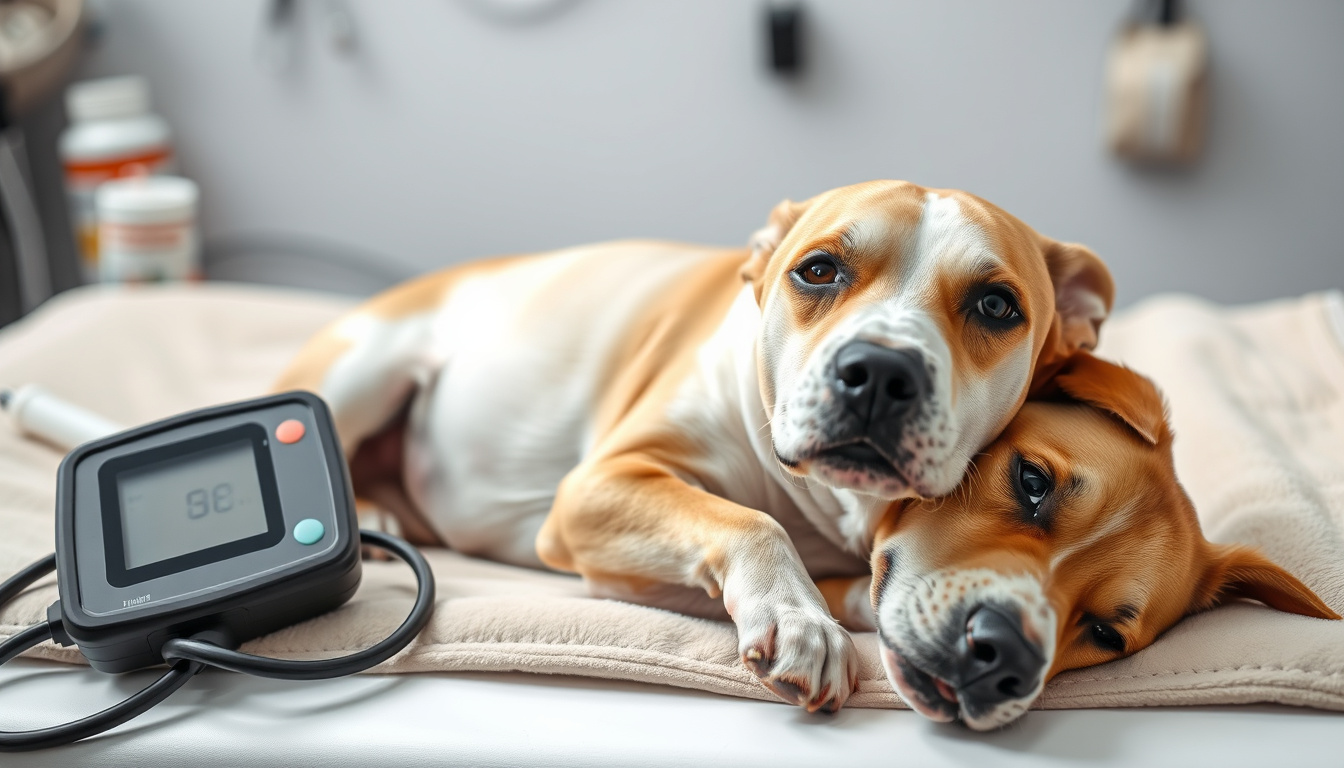

If your dog has suddenly started drinking from every puddle in sight and waking you up at 3 a.m. for a bathroom break, you might be facing Cushing’s disease. Roughly 85-90% of cases stem from a benign pituitary tumor, and while the diagnosis can feel overwhelming, the right care plan can give your dog two to three more good years.
Dogs with Cushing’s disease that drink and urinate excessively: 80-90% ·
Pituitary tumor as the underlying cause: 85-90% of cases ·
Average survival time after diagnosis with treatment: 2-3 years ·
Dogs that develop Cushing’s disease from long-term steroid use: Iatrogenic ·
Commonly affected breeds: Boxer, Poodle, Dachshund, Beagle
Quick snapshot
- Cushing’s is caused by excess cortisol — Cornell University College of Veterinary Medicine (veterinary research institution)
- Pituitary-dependent form accounts for 85-90% of cases — Cornell University College of Veterinary Medicine (veterinary research institution)
- Average survival with treatment is 2-3 years — Cornell University College of Veterinary Medicine (veterinary research institution)
- Exact trigger for pituitary tumor development remains unknown — MSD Veterinary Manual (veterinary reference publisher)
- Individual prognosis varies widely depending on type and response to treatment (MSD Veterinary Manual (veterinary reference publisher))
- Whether Cushing’s itself directly causes pain is still debated among vets (MSD Veterinary Manual (veterinary reference publisher))
- Diagnosis to stabilization: 3-6 months of dose adjustments — Cornell University College of Veterinary Medicine (veterinary research institution)
- Average survival: 2-3 years with treatment (Cornell University College of Veterinary Medicine (veterinary research institution))
- Quality-of-life decline typically accelerates in final 3-6 months (Cornell University College of Veterinary Medicine (veterinary research institution))
- Schedule ACTH stimulation test for diagnosis — Cornell University College of Veterinary Medicine (veterinary research institution)
- Begin trilostane or mitotane therapy under vet guidance (Cornell University College of Veterinary Medicine (veterinary research institution))
- Establish monitoring schedule every 3-6 months — Tucson Vet Calls (veterinary practice)
Four key facts about Cushing’s prevalence and costs, one pattern: the numbers reveal both how common this condition is and the financial commitment it demands.
| Metric | Value |
|---|---|
| Prevalence in dogs | 1-2% of all dogs |
| Commonly affected breeds | Boxer, Poodle, Dachshund, Beagle, Boston Terrier |
| Typical age at diagnosis | 8-12 years |
| Treatment cost per month | $50-$200 (depending on medication and dosing) |
How long do dogs live with Cushing’s?
The most common question from owners: how much time are you looking at? The answer depends heavily on the type of Cushing’s disease your dog has and how well they respond to treatment.
For pituitary-dependent Cushing’s — the form that accounts for 85-90% of cases — dogs on medication typically survive 2-3 years after diagnosis, according to the Cornell University College of Veterinary Medicine (veterinary research institution). With surgery or radiation therapy, that window can stretch to 2-5 years. For adrenal-dependent Cushing’s, the numbers are tighter: medical management yields about 15 months of survival, while surgical removal of the adrenal tumor offers 1.5-4 years but carries a 10-25% mortality risk (Cornell University College of Veterinary Medicine).
What are the final stages of Cushing’s disease in dogs?
- Severe muscle wasting, especially along the spine and hind legs — Lap of Love Veterinary Hospice (veterinary hospice organization)
- Recurrent urinary tract infections and skin infections — MSD Veterinary Manual (veterinary reference publisher)
- Vomiting and diarrhea from medication side effects or disease progression
- Complete loss of bladder and bowel control — Cloud 9 Vets (veterinary practice, UK)
- Constant fatigue and reluctance to move — ToeGrips (pet mobility resource)
What are the three stages of Cushing’s disease in dogs?
Veterinarians often describe Cushing’s progression in three broad phases. Stage 1 is the early phase when symptoms like increased thirst and urination first appear. Stage 2 involves more obvious physical changes: potbelly, hair loss, muscle weakness. Stage 3 is advanced disease with complications like recurrent infections, diabetes, and significant mobility loss (MSD Veterinary Manual).
Pituitary dogs buy 2-3 years with meds; adrenal dogs on meds get only 15 months. The surgical option is riskier but offers longer survival — a trade-off every owner must discuss with their vet.
Are dogs with Cushing’s in pain?
This question keeps owners up at night. The direct answer from veterinary consensus: Cushing’s disease itself is not typically painful. The excess cortisol circulating in the body doesn’t cause the kind of nerve pain or joint inflammation that other diseases produce. But the secondary conditions that Cushing’s creates can cause significant discomfort.
- Urinary tract infections are common and painful — MSD Veterinary Manual (veterinary reference publisher)
- Skin infections and thinning skin can become sore and itchy
- Muscle wasting leads to joint strain and difficulty standing
- Panting and overheating cause distress
When should I euthanize a dog with Cushing’s disease?
This is the hardest call an owner faces. Veterinary guidance from Lap of Love Veterinary Hospice (veterinary hospice organization) emphasizes quality-of-life assessment. Euthanasia becomes a serious consideration when appetite, hydration, hygiene, skin health, and sleep are all severely affected. Cloud 9 Vets (veterinary practice, UK) points to uncontrollable urination and excessive drinking as key euthanasia factors — when a dog can no longer stay clean or comfortable despite medication adjustments.
A dog that has lost control of its own body — soiling its bed, unable to stand, panting constantly even at rest — is likely suffering more from the complications of Cushing’s than from the disease itself. That’s the moment to ask your vet: “What’s kinder now?”
The trade-off for owners: the disease itself isn’t painful, but the complications can be. If your dog shows three or more signs of poor quality of life — uncontrolled urination, weakness to the point of being unable to rise, persistent panting, recurrent infections — it may be time to discuss humane euthanasia with your veterinarian.
How can I help my dog with Cushing’s disease?
Managing Cushing’s is a marathon, not a sprint. The goal isn’t to cure the disease — it’s incurable — but to control symptoms and maintain quality of life for as long as possible.
Medication compliance
- Trilostane (Vetoryl) is the most common lifelong medication — ToeGrips (pet mobility resource)
- Mitotane (Lysodren) is an alternative, used less frequently now
- Side effects include poor appetite, vomiting, and lethargy — Cloud 9 Vets (veterinary practice, UK)
- Dose adjustments are common, especially in the first 6 months
Diet and exercise
- Low-fat, moderate-fiber diets are recommended to manage cortisol’s metabolic effects
- Moderate exercise as tolerated — walking is fine but avoid strenuous activity
- Monitor water intake and bathroom breaks closely
Your dog needs a medication schedule as strict as your own health regimen. Missing doses can trigger a cortisol rebound that sets back weeks of progress. Set alarms, use a pill organizer, and never adjust doses without your vet.
Is it okay to walk a dog with Cushing’s disease?
Yes, walking is encouraged. Cornell University College of Veterinary Medicine advises moderate exercise as tolerated. The key word is “moderate” — dogs with Cushing’s tire more easily due to muscle wasting and may overheat because of panting. Short, frequent walks are better than long ones. Watch for signs of exhaustion: excessive panting, stopping frequently, or lying down mid-walk. If any of those appear, it’s time to head home.
Regular vet monitoring schedule
- ACTH stimulation tests every 3-6 months to adjust medication dosages — Tucson Vet Calls (veterinary practice)
- Blood work to monitor liver enzymes and electrolytes
- Urine cultures if infections are suspected
- Blood pressure checks (Cushing’s can cause hypertension)
The catch for owners: monthly treatment costs of $50-$200 add up, and the monitoring visits are non-negotiable. Skipping a recheck can lead to under- or over-dosing, which is dangerous.
What causes Cushing’s disease in dogs?
The root cause is excess cortisol — a stress hormone produced by the adrenal glands. But what drives that overproduction depends on where the problem starts.
Pituitary-dependent Cushing’s accounts for 85-90% of spontaneous cases. A benign tumor in the pituitary gland signals the adrenal glands to produce too much cortisol (Cornell University College of Veterinary Medicine). Adrenal-dependent Cushing’s makes up 10-15% of cases, caused by a tumor on one of the adrenal glands themselves (MSD Veterinary Manual). The third form, iatrogenic Cushing’s, results from long-term steroid use — typically in dogs treated for allergies, arthritis, or autoimmune conditions.
The exact trigger that causes pituitary tumors to form remains unknown. Genetic factors likely play a role, as certain breeds — Boxers, Poodles, Dachshunds, Beagles, and Boston Terriers — are disproportionately affected (Cornell University College of Veterinary Medicine).
What triggers Cushing’s disease in dogs?
- Age: most dogs are 8-12 years old at diagnosis — Cornell University College of Veterinary Medicine (veterinary research institution)
- Breed predisposition: terriers, beagles, boxers, poodles — MSD Veterinary Manual (veterinary reference publisher)
- Long-term steroid medication for other conditions
- Obesity is a risk factor but not a direct cause
What this means: you can’t prevent Cushing’s disease in most cases. But knowing the breeds and age ranges helps owners and vets watch for early warning signs.
How to test for Cushing’s disease in dogs?
Diagnosis is a multi-step process that rules out other conditions first. No single test is definitive on its own.
What are the first signs of Cushing’s disease in dogs?
- Excessive drinking and urination (80-90% of dogs show this) — Cornell University College of Veterinary Medicine (veterinary research institution)
- Increased appetite and food stealing
- Potbelly appearance from liver enlargement and muscle wasting — MSD Veterinary Manual (veterinary reference publisher)
- Hair loss and thinning skin
- Excessive panting
Step 1: Initial screening. A urine cortisol/creatinine ratio test can help rule out Cushing’s if results are normal. If elevated, further testing is needed (Cornell University College of Veterinary Medicine).
Step 2: Confirmatory testing. Two main tests are used:
- ACTH stimulation test — measures how the adrenal glands respond to a synthetic hormone
- Low-dose dexamethasone suppression test — checks how the pituitary-adrenal axis responds to a steroid
Step 3: Differentiation. An abdominal ultrasound can determine whether the problem is in the pituitary or adrenal gland (MSD Veterinary Manual). This step matters because treatment and prognosis differ between the two types.
How common is Cushing’s disease in dogs?
Cushing’s disease affects approximately 1-2% of all dogs (Cornell University College of Veterinary Medicine). That may sound low, but given the millions of dogs in the U.S., it’s a condition most general practice vets encounter regularly. The disease is underdiagnosed because many owners attribute the early signs — drinking more, peeing more, a bigger appetite — to normal aging.
The trade-off in testing: the diagnostic workup costs $200-$500, but skipping it means treating the wrong condition or missing a different endocrine disorder altogether.
Treatment approaches and quality of life
Managing Cushing’s isn’t about eliminating the disease — it’s about managing the symptoms and monitoring the inevitable progression. The table below contrasts the two main treatment pathways.
Upsides
- Medication can control excessive thirst and urination within weeks — Cornell University College of Veterinary Medicine (veterinary research institution)
- Improved appetite regulation and more stable energy levels
- Reduced risk of skin infections and urinary tract infections
- Dogs often regain a normal sleep-wake cycle once cortisol is controlled
Downsides
- Lifelong medication required with no break — ToeGrips (pet mobility resource)
- Medication side effects: vomiting, diarrhea, loss of appetite, lethargy — Cloud 9 Vets (veterinary practice, UK)
- Monthly costs of $50-$200 for medication — GoodRx (pet health resource)
- Frequent vet visits for cortisol monitoring
- Disease eventually progresses despite treatment
The pattern: the first year is the hardest adjustment. Dogs that stabilize well can enjoy a solid year of good quality before the disease begins to advance again.
Living with Cushing’s: a timeline
The path through Cushing’s disease follows a recognizable arc, though every dog moves through it at a different pace.
What this means: commit to the treatment plan and quality-of-life checks, or accept a shorter, less comfortable path for your companion.
Expert perspectives
“Increased drinking and urination occur in 80-90% of dogs with Cushing’s syndrome.”
Cornell University College of Veterinary Medicine (veterinary research institution)
“Clinical signs include polyuria/polydipsia, alopecia, and muscle weakness.”
MSD Veterinary Manual (veterinary reference publisher)
Both sources agree: the hallmark signs are visible and predictable. That consistency makes Cushing’s one of the more recognizable endocrine disorders in older dogs.
Summary: What this means for your dog
Two to three years is not nothing. With consistent medication, careful monitoring, and a willingness to adjust as the disease progresses, many dogs with Cushing’s enjoy a quality of life that makes the effort worthwhile. The hard truth is that this disease will eventually win — but the timeline is yours to manage. For an owner facing monthly medication costs of $50-$200, regular vet visits, and the emotional weight of watching their dog age faster, commit to the treatment plan and quality-of-life checks, or accept a shorter, less comfortable path for your companion.
Related reading: **Why Am I Always Cold – Anemia, Thyroid and Vitamin Causes** · **What Does Scabies Look Like – Spot Rash Burrows Early**
For a complete breakdown of symptoms and treatment options, Cushings disease in dogs offers detailed veterinary insights.
Frequently asked questions
Can Cushing’s disease be cured in dogs?
No, Cushing’s disease is not curable. It can be managed with lifelong medication, and in some cases, surgery can remove the underlying tumor. But the disease itself cannot be reversed. Treatment focuses on controlling symptoms and maintaining quality of life — Cornell University College of Veterinary Medicine (veterinary research institution).
Is Cushing’s disease hereditary?
There is evidence of breed predisposition — Boxers, Poodles, Dachshunds, Beagles, and Boston Terriers are overrepresented. However, no clear hereditary pattern has been established. The exact genetic factors that contribute to pituitary tumor formation remain unknown — MSD Veterinary Manual (veterinary reference publisher).
What is the difference between Cushing’s disease and Cushing’s syndrome?
Cushing’s disease specifically refers to the pituitary-dependent form caused by a pituitary tumor. Cushing’s syndrome is the broader term that includes all causes of excess cortisol, including adrenal tumors and long-term steroid use — Cornell University College of Veterinary Medicine (veterinary research institution).
Can diet alone cure Cushing’s disease?
No. Diet can help manage symptoms — a low-fat, moderate-fiber diet is recommended — but it cannot cure the disease. Medication is required to control cortisol production. Some owners explore herbal supplements, but none have been proven effective in clinical trials — Cornell University College of Veterinary Medicine (veterinary research institution).
Should I vaccinate my dog with Cushing’s disease?
This should be discussed with your veterinarian. Dogs with Cushing’s have suppressed immune systems and may not mount a strong response to vaccines. Some vets recommend avoiding unnecessary vaccinations while the dog is on immunosuppressive medications. Core vaccines may still be appropriate, but the timing should be carefully considered — MSD Veterinary Manual (veterinary reference publisher).
How often should a dog with Cushing’s see the vet?
Every 3-6 months for ACTH stimulation tests and general health monitoring. During the initial dose-adjustment phase, visits may be more frequent. Regular monitoring is essential to avoid under- or over-dosing of medication — Tucson Vet Calls (veterinary practice).
Can Cushing’s disease cause seizures in dogs?
Indirectly, yes — but it’s rare. Cushing’s itself doesn’t cause seizures, but pituitary tumors that grow large enough can press on the brain and trigger neurological symptoms including seizures. Additionally, electrolyte imbalances from medication side effects can lower the seizure threshold. If your dog has seizures, it needs immediate veterinary attention — Cornell University College of Veterinary Medicine (veterinary research institution).

Arthur Oliver Howard Fletcher is a staff writer for NationalReport.uk, covering UK national news, politics, the economy and public services. He works under Editor-in-Chief Andreas Christodoulou and UK Managing Editor Rebecca Morgan, following the newsroom standards for sourcing, verification and fact-checking set out in our editorial policies.