Newspaper: Origins, Types, Formats, Economics and History
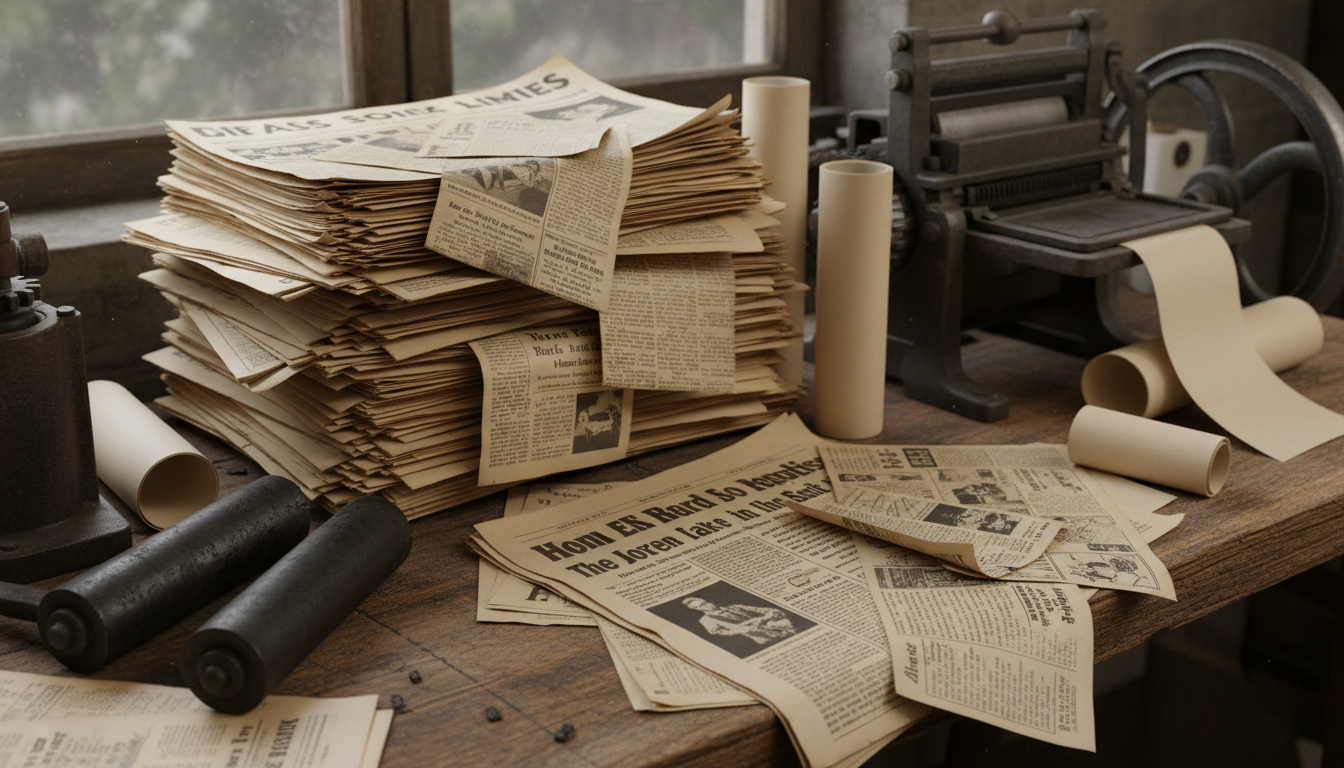
A newspaper is a periodical publication, typically issued daily, weekly, or at regular intervals. It delivers news, views, features, opinions, and advertisements on topics like politics, crime, business, entertainment, and sports.
Newspapers have evolved over centuries, from ancient public notices to modern print and digital formats. They remain a key source of information despite competition from other media.
Understanding their definition, history, types, and economics reveals their enduring role in society.
What is a newspaper?
| Core Aspect | Key Feature |
|---|---|
| Publication Schedule | Daily, weekly, or regular intervals |
| Content Focus | News, views, features, opinions, ads |
| Topics Covered | Politics, crime, business, entertainment, sports |
| Production Medium | Print on cheap paper, plus digital |
- Newspapers provide structured updates on current events.
- They blend factual reporting with opinions and ads.
- Formats range from broadsheets to tabloids.
- Geographic scope varies from local to national.
- Frequency includes daily and weekly editions.
- Revenue relies on advertising and subscriptions.
- Digital shifts challenge traditional print models.
| Format | Description | Examples |
|---|---|---|
| Broadsheet | Large pages with in-depth serious news for educated readers | Financial Times, Daily Mail, The New York Times, The Wall Street Journal |
| Tabloid | Smaller size focusing on sensational stories, celebrities, sports | New York Post, The Sun (UK) |
| Berliner | Mid-size at 12.4 x 18.5 inches, between tabloid and broadsheet | No specific examples noted |
| National Dailies | Country-wide coverage | Financial Times |
| Metropolitan | Local or regional focus | Metro Daily |
| Suburban/Small Town | Community-specific news | Daily Herald |
| Ethnic | Language-specific for communities | Le Droit |
| Frequency Options | Daily, weekly, semi-weekly, bi-weekly, monthly | Various |
| Modern Formats | Print, microfilm, electronic, commuter editions | N/A |
How did newspapers originate?
Ancient and medieval roots
Newspapers trace back to ancient Rome’s Acta Diurna in 59 BC. This posted public records of political, social, military, and event updates on metal or stone in forums.
Manuscript newsletters circulated in the late Middle Ages among traders, including the Fugger family.
Acta Diurna served as the first known public news bulletin, predating printed forms.
Emergence of printed newspapers
The modern printed newspaper began in Europe. Germany’s Relation aller Fürnemmen und gedenckwürdigen Historien in 1605 is recognised as the first. Weekly sheets appeared in Venice from 1566 and Strasbourg.
Wikipedia notes English corantos from 1621 evolved into news books by the 1640s.
What types and formats of newspapers exist?
Newspapers differ by format, geography, and content. Broadsheets offer serious, in-depth coverage on large pages. Tabloids favour compact, sensational content on celebrities and sports.
Berliners provide a mid-size option. Geographic varieties include national, metropolitan, suburban, and ethnic papers.
Berliner measures 12.4 x 18.5 inches, balancing readability and portability.
National dailies like Financial Times cover broad audiences, while ethnic papers serve specific linguistic groups.
Frequency spans daily to monthly, with modern options like commuter editions featuring short articles. For more on types of newspapers, see detailed lessons.
How do newspapers generate revenue and face challenges?
Main revenue stems from advertising, including display, inserts, and classifieds, plus subscriptions. They use cheap paper for affordability.
Radio from the 1920s, TV in the 1950s, and digital media now erode print circulation. Newspapers adapt but persist.
Fiveable highlights ongoing threats from new media.
What is the timeline of newspaper development?
- 59 BC: Acta Diurna posts public news in Rome.
- Mid-1400s: Gutenberg’s press enables mass printing.
- 1566: Weekly sheets in Venice.
- 1605: First printed newspaper in Germany, Relation aller Fürnemmen und gedenckwürdigen Historien.
- 1621: English corantos appear.
- 1702: The Daily Courant, first daily newspaper.
- 1752: Canada’s Halifax Gazette.
- 1780: First newspaper in India.
- 1785: The Times sets quality standards.
- 1791: The Observer launches.
- 1830s: New York Sun boosts US growth with high-speed presses.
What facts about newspapers are established and what remains unclear?
| Established Information | Information that Remains Unclear |
|---|---|
| Acta Diurna as ancient precursor (59 BC) | Precise influence on later forms |
| Gutenberg press (mid-1400s) revolutionised production | Exact path of spread to colonies |
| Germany 1605 as first printed newspaper | Priority over Venice 1566 sheets |
| Broadsheet vs tabloid formats defined | Future dominance of digital over print |
| Advertising as primary revenue | Long-term survival amid digital shift |
| Types include geographic and frequency variants | Specific circulation declines by region |
What context surrounds newspapers?
Newspapers spread globally after the 17th century, reaching Europe, America, Asia, and the Middle East by the 19th century. High-speed presses and advertising made them mass-accessible.
They inform public discourse on diverse topics. Britannica newspaper definition underscores their periodical nature.
Which sources inform our understanding of newspapers?
A newspaper is a periodical publication, typically issued daily… that delivers news, views, features, opinions, and advertisements.
Newspapers vary by format, geography, and content focus, including broadsheets and tabloids.
Additional insights from Quintype and Australia Insight.
What summarises the essence of newspapers?
Newspapers, from Roman origins to digital eras, deliver timely information via varied formats and frequencies. They face economic pressures but endure as vital media.
What was Acta Diurna?
Rome’s 59 BC public news sheets on metal or stone, covering politics and events.
What enabled mass newspaper production?
Gutenberg’s mid-1400s printing press.
What distinguishes broadsheets from tabloids?
Broadsheets: large, serious; tabloids: small, sensational.
How do newspapers earn money?
Mainly advertising and subscriptions.
What threatens print newspapers?
Radio, TV, and digital media.
What is a Berliner format?
Mid-size newspaper, 12.4 x 18.5 inches.
When was the first daily newspaper?
1702, The Daily Courant in England.

Arthur Oliver Howard Fletcher is a staff writer for NationalReport.uk, covering UK national news, politics, the economy and public services. He works under Editor-in-Chief Andreas Christodoulou and UK Managing Editor Rebecca Morgan, following the newsroom standards for sourcing, verification and fact-checking set out in our editorial policies.