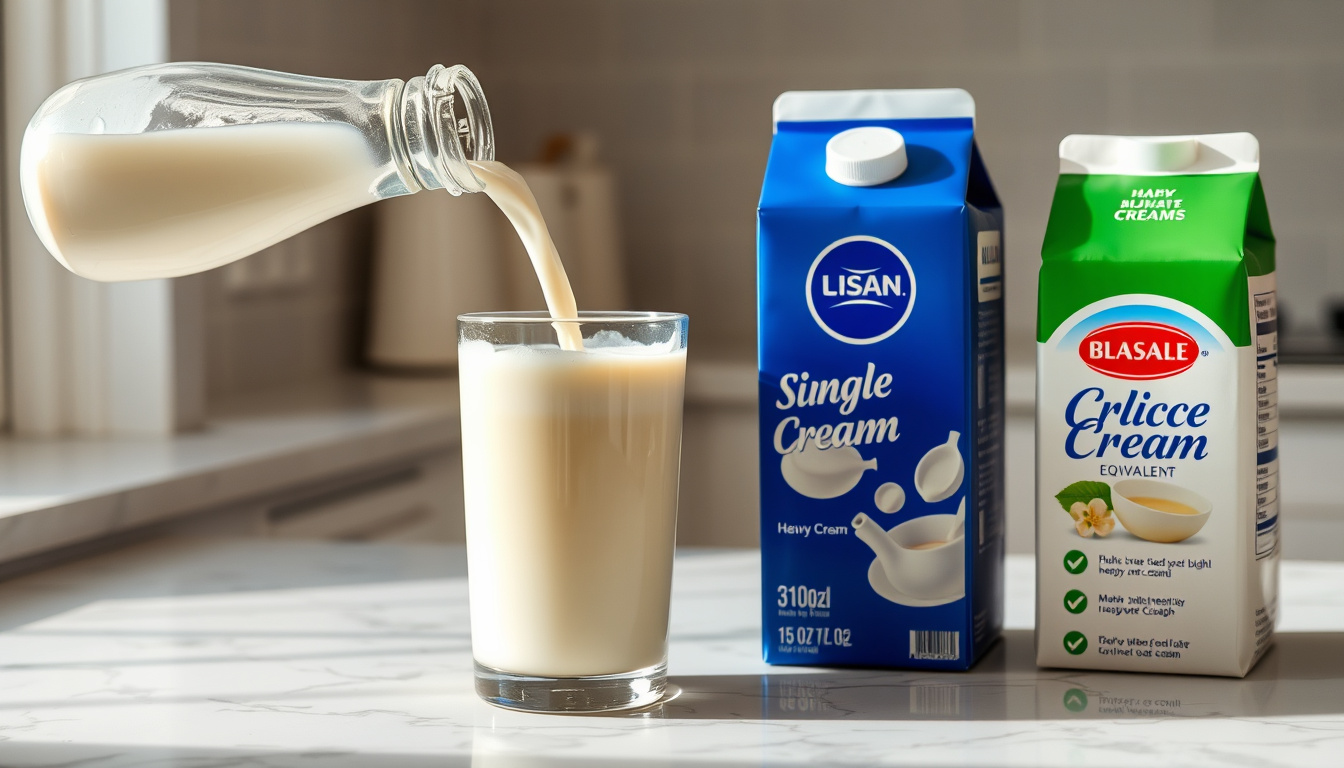
Half-and-half is a dairy product commonly used in American kitchens and coffee shops. It combines equal parts whole milk and light cream, creating a liquid that falls somewhere between regular milk and single cream in richness. Understanding what goes into this versatile ingredient helps home cooks and coffee lovers make informed decisions about cooking and beverage preparation.
This guide covers the composition of half-and-half, practical substitutes for both American and British kitchens, and answers common questions about its nutritional content and everyday uses.
What Is Half-and-Half Made Of?
The name says it all. Half-and-half is a simple blend of two dairy products mixed in equal proportions. The standard recipe combines whole milk with light cream, resulting in a product that contains between 10% and 12% fat. This fat content places it above regular whole milk but below traditional light cream, making it unsuitable for whipping.
Half-and-half consists of 50% whole milk and 50% light cream, delivering approximately 10-12% fat content in every serving.
The composition can be visualised as follows:
- 50% whole milk
- 50% light cream (or single cream in UK terms)
- Total fat: 10-12%
This straightforward combination explains why half-and-half delivers more richness than milk alone while remaining lighter than traditional cream varieties. Food writers and recipe sites consistently describe it as occupying this middle ground in dairy products.
Key Facts at a Glance
| Aspect | Details |
|---|---|
| Fat Content | 10-12% |
| Main Ingredients | Equal parts whole milk and cream |
| Whippable | No |
| Storage (unopened) | 1-2 weeks refrigerated |
Key Insights on Half-and-Half
- Fat range spans 10-12%, placing it between milk and light cream
- Richer than regular milk but lighter than single cream
- Cannot be whipped due to insufficient fat content
- Available in most American supermarkets alongside other dairy products
- Sometimes called “half cream” in British retail contexts
What Is a Good Half-and-Half Substitute?
Several practical alternatives exist when half-and-half is unavailable. The best substitute often depends on whether you prioritse matching the fat content, availability, or dietary requirements. According to the Food Standards Agency, understanding dairy fat percentages helps consumers make safer food choices.
Homemade Substitutes
The most straightforward approach involves mixing dairy products to replicate the 10-12% fat content. Several reliable combinations work well in most recipes calling for half-and-half.
| Method | Ingredients |
|---|---|
| Option 1 | ½ cup whole milk + ½ cup light cream (single cream) |
| Option 2 | ¾ cup whole milk + ¼ cup heavy cream (double cream) |
| Option 3 | ⅔ cup skim milk + ⅓ cup heavy cream |
| Butter Method | 4 tsp melted unsalted butter + whole milk to make 1 cup |
The butter method works particularly well in coffee and baking applications, though the texture may differ slightly from traditional half-and-half in sauces or soups.
Ready-Made Alternatives
Pre-made options provide convenience when time is limited. These products typically require no preparation and can be swapped directly into most recipes.
- Low-fat pouring cream (9% fat) for closest UK match
- Single cream diluted with milk
- Evaporated milk mixed with whole milk in equal parts
Recipes calling for half-and-half in perfect fluffy scrambled eggs or custards work well with these substitutions, though results may vary slightly in texture. The BBC Good Food egg recipe collection offers additional inspiration for dairy-based breakfast dishes.
What Is Half-and-Half in the UK?
British consumers encounter half-and-half less frequently than their American counterparts, but several equivalent products exist in UK supermarkets. The terminology and product availability differ across the Atlantic. As noted by David Lebovitz, dairy categorisation standards vary significantly between the US and UK markets.
In the United Kingdom, the closest equivalent is often labelled “half cream.” This product matches the American definition and can be found at major retailers including Sainsbury’s. The fat content of UK dairy products follows different categorisation standards than American products, which affects which items serve as direct substitutes.
UK Cream Categories Explained
Understanding UK dairy labelling helps British cooks identify appropriate half-and-half alternatives. The fat percentages differ from American standards, requiring some adjustment when following US recipes.
- Half cream: Directly equivalent to American half-and-half, available in UK stores
- Low-fat pouring cream: Contains approximately 9% fat, making it the closest match to US half-and-half
- Single cream: Contains 18% fat, which is higher than typical half-and-half
- Double cream: Contains significantly more fat and should be avoided as a direct substitute
Double cream should be avoided in coffee as it tends to “float and ooze” rather than blending smoothly, creating an unpleasant texture. Low-fat pouring cream or half cream provides a better coffee experience.
Adapting British Recipes
When American recipes specify half-and-half, British home cooks can create effective substitutes using locally available products. A mixture of 75% whole milk with 25% double cream approximates the fat content and consistency of true half-and-half.
For soup and sauce applications, avoiding full single cream prevents an overly rich result. Instead, mixing milk with a smaller proportion of double cream better replicates the intended flavour profile.
Half-and-Half vs. Heavy Cream: Key Differences
Comparing half-and-half to heavy cream reveals substantial differences in fat content, uses, and culinary applications. These differences matter when selecting ingredients for specific recipes. The NHS dairy guidance provides useful context on fat content in dairy products for health-conscious consumers.
Heavy cream in the United States contains approximately 36-40% fat, making it roughly three times richer than half-and-half. In British terms, heavy cream aligns more closely with single cream, while double cream represents an even higher fat content similar to American whipping cream.
Fat Content Comparison
| Product | Fat Content | Region |
|---|---|---|
| Half-and-half | 10-12% | United States |
| Low-fat pouring cream | 9% | United Kingdom |
| Single cream | 18% | United Kingdom |
| Heavy cream | 36-40% | United States |
| Double cream | Higher than single | United Kingdom |
Can You Substitute One for the Other?
Direct substitution between these products produces noticeably different results. Heavy cream delivers significantly more richness, which can overwhelm dishes designed for half-and-half’s lighter character.
When heavy cream must substitute for half-and-half, mixing two parts low-fat milk with one part heavy cream approximates the desired consistency. However, this workaround affects both flavour and texture, making it unsuitable for precision recipes like custards or light sauces. Serious Eats offers detailed guidance on dairy substitutions in cooking applications.
How Is Half-and-Half Used in Coffee and Drinks?
Coffee represents one of the most common uses for half-and-half in American households. Its moderate fat content provides creaminess without the excessive thickness of heavier creams, making it ideal for daily beverage preparation.
The product blends smoothly into hot coffee without the floating or curdling issues that affect higher-fat alternatives. This reliable performance explains its popularity in both home and commercial coffee settings across the United States. According to the National Coffee Association, dairy products play a significant role in coffee consumption habits across different cultures.
Best Practices for Coffee Use
Adding half-and-half to coffee requires minimal technique. The product incorporates readily into hot beverages at any temperature, though pouring it into coffee rather than adding coffee to the cream prevents splashing.
- Pour half-and-half directly into hot or cold coffee
- Use low-fat pouring cream or half cream in British coffee preparation
- Avoid single cream in coffee for regular use due to excessive richness
- Never use double cream in coffee as it creates an unpleasant chewy texture
Other Beverage Applications
Beyond coffee, half-and-half appears in various drink recipes including certain cocktail preparations and specialty beverages. Its moderate fat content makes it versatile for both hot and cold drinks requiring a creamy element without heavy richness. For those interested in the specifics, you can find details on розміри ліжка king size у Великобританії.
When preparing stocks or bases for sauces, half-and-half adds dairy richness without the weight of cream. Homemade chicken stock benefits from this lighter touch when creating creamy soup bases.
Half-and-Half Calories and Nutrition
Understanding the nutritional profile of half-and-half helps consumers make informed dietary choices. The fat content primarily determines its caloric density and role in various eating plans. The British Dietetic Association offers resources on incorporating dairy products into balanced diets.
Nutritional Considerations
Research indicates that half-and-half contains approximately 10-12% fat, though precise calorie and macronutrient data varies by manufacturer. The moderate fat content contributes approximately 120-150 calories per 100 millilitres for products within this fat range.
Exact nutritional values vary between brands and regions. Checking specific product labels provides the most accurate information for dietary planning and tracking.
Fat-Free Alternatives: Fact and Fiction
No genuine fat-free version of half-and-half exists on the market. Products marketed as fat-free half-and-half are typically thickened milk products that lack the characteristic fat content of traditional dairy.
Substitutes combining skim milk with heavy cream retain fat from the cream component, so they cannot be considered fat-free options. Those requiring truly fat-free dairy should use plain skim milk, though this dramatically alters the flavour and texture of recipes calling for half-and-half.
Using Half-and-Half in Cooking
Half-and-half appears in numerous cooking applications beyond beverages. Its versatility stems from the balance between milk and cream, providing richness without overwhelming dishes.
Common culinary uses include:
- Cream-based soups and chowders
- Scrambled eggs and custards
- Smooth and creamy pasta sauces
- Ice cream bases
- Baked goods requiring subtle dairy richness
Expert Sources and References
Several established food sources provide detailed information about half-and-half composition and usage. These references offer reliable information for readers seeking additional detail.
“Half-and-half is simply half whole milk and half light cream.” — Allrecipes
“The fat content of half-and-half typically ranges from 30-36% when referring to the cream portion mixed with milk.” — David Lebovitz
Additional information comes from community discussion forums where home cooks share practical experience with substitutes and regional variations across different countries.
Summary
Half-and-half represents a simple yet versatile dairy product combining equal parts whole milk and light cream. Its 10-12% fat content places it between regular milk and single cream, making it suitable for coffee, cooking, and various culinary applications. British consumers can find direct equivalents under the “half cream” label or create substitutes using low-fat pouring cream. Understanding the significant fat difference between half-and-half and heavy cream prevents culinary mishaps when substituting between these products. Whether used in morning coffee or evening recipes, half-and-half provides a convenient middle ground in dairy selection.
Frequently Asked Questions
What exactly is half-and-half milk?
Half-and-half is a dairy product made from equal parts whole milk and light cream, typically containing 10-12% fat. It provides more richness than regular milk but remains lighter than traditional cream varieties.
Can I make half-and-half at home?
Yes. Combining half a cup of whole milk with half a cup of light cream creates one cup of homemade half-and-half. Alternatively, mixing three-quarters milk with one-quarter heavy cream also works effectively.
What is the British equivalent of half-and-half?
In the United Kingdom, “half cream” serves as the direct equivalent to American half-and-half. Low-fat pouring cream at 9% fat also provides a close match to the US product’s 10-12% fat content.
Can you whip half-and-half into cream?
No. Half-and-half cannot be whipped because its fat content of 10-12% falls below the minimum threshold required for aeration. Whipping requires significantly higher fat percentages.
Is there a fat-free version of half-and-half?
No genuine fat-free half-and-half exists. Products marketed as fat-free alternatives are typically thickened milk lacking the characteristic fat content. True fat-free options would not perform similarly in recipes.
What can I use instead of half-and-half in coffee?
For coffee, British consumers should use low-fat pouring cream or half cream. Single cream works but may be too rich for regular use, while double cream should be avoided entirely as it creates an unpleasant texture.
How does half-and-half differ from heavy cream?
Heavy cream contains approximately 36-40% fat, roughly three times more than half-and-half’s 10-12%. This significant difference affects both flavour and texture, making direct substitution unsuitable for most recipes.
How should half-and-half be stored?
Unopened half-and-half keeps for one to two weeks when refrigerated. Once opened, it should be consumed within several days for optimal freshness, following standard dairy storage guidelines.

Arthur Oliver Howard Fletcher is a staff writer for NationalReport.uk, covering UK national news, politics, the economy and public services. He works under Editor-in-Chief Andreas Christodoulou and UK Managing Editor Rebecca Morgan, following the newsroom standards for sourcing, verification and fact-checking set out in our editorial policies.