
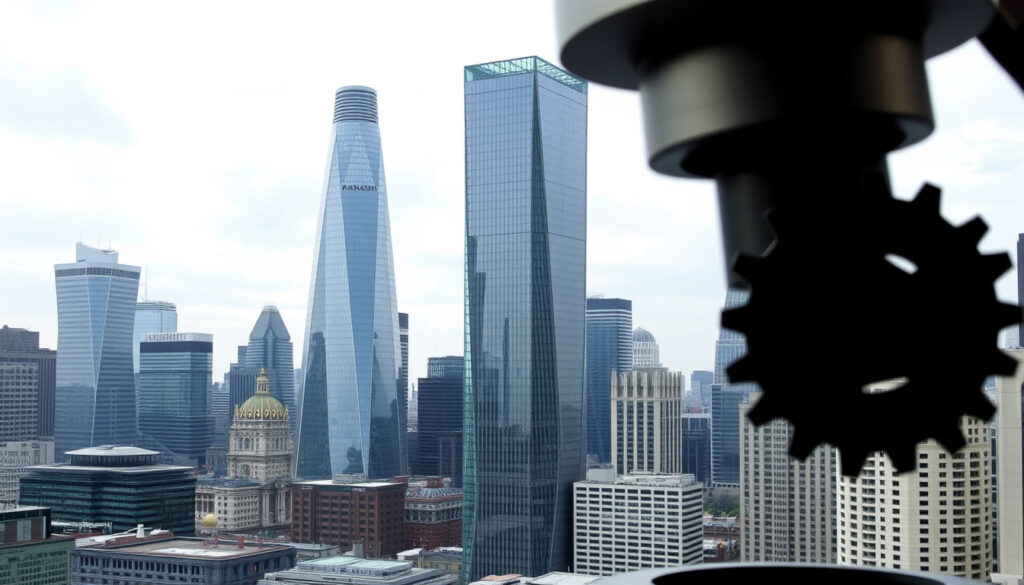
Most people know Norman Foster for the buildings that define skylines — the Gherkin in London, the Reichstag dome in Berlin, the Hearst Tower in New York. But behind those glass-and-steel landmarks is a story of how a working-class kid from Manchester turned a design firm into a global business worth an estimated $240 million. This article traces the arc of that career, from the drafting table to the House of Lords, and examines both the praise and the pushback his work attracts.
Born: 1 June 1935, Manchester, England ·
Founded firm: Foster + Partners in 1967 ·
Pritzker Prize: 1999 ·
Notable buildings: Over 100 including the Gherkin, Reichstag dome, Hearst Tower ·
Architectural style: High-tech architecture ·
Net worth (estimated): $240 million (Forbes 2024)
Quick snapshot
- Born 1 June 1935 in Manchester, England (Pritzker Prize jury citation)
- Founded Foster + Partners in 1967 (Dezeen architecture coverage)
- Awarded the Pritzker Architecture Prize in 1999 (Pritzker Prize official site)
- Exact net worth varies across sources by tens of millions (Archinect wealth ranking)
- Number of children is publicly reported as four but not all names confirmed (Archinect wealth ranking)
- Art collection value is not publicly disclosed (Archinect wealth ranking)
- 1935: Born, Manchester · 1967: Founded firm · 1999: Pritzker Prize · 2004: Gherkin opens · 2025: Still active as Executive Chairman (Encyclopaedia Britannica timeline)
- Foster + Partners continues to compete for mega-projects globally, with ongoing work in Asia and the Middle East (Dezeen report)
Foster’s career arc — from a council-estate upbringing to a peerage in the House of Lords — makes him a unique case study in how architecture, entrepreneurship, and branding can combine to produce both cultural influence and personal wealth on a scale rarely seen in the profession.
Here are the key facts about Norman Foster at a glance.
| Attribute | Detail |
|---|---|
| Full Name | Norman Robert Foster, Baron Foster of Thames Bank |
| Birth Date | 1 June 1935 |
| Nationality | British |
| Education | University of Manchester, Yale University |
| Firm | Foster + Partners (founded 1967) |
| Pritzker Prize Year | 1999 |
| Known For | High-tech architecture, Gherkin, Reichstag dome |
| Net Worth (est.) | $240 million |
What was Norman Foster most famous for?
High-tech architecture and iconic buildings
Foster is widely recognised as the leading figure in high-tech architecture, a style that emerged in the 1970s and celebrates industrial materials, exposed structure, and technological expression. Encyclopaedia Britannica (reference work) describes him as a British architect whose buildings combine engineering clarity with dramatic form. His work rejects ornament in favour of legible structure — think glass curtain walls, steel exoskeletons, and open floor plates.
- 30 St Mary Axe, known as the Gherkin, opened in London in 2004 and became an instant symbol of the city’s financial district (Encyclopaedia Britannica).
- The Reichstag dome in Berlin, completed in 1999, turned a damaged parliament building into a transparent, visitor-accessible landmark (Pritzker Prize citation).
- Hearst Tower in New York, finished in 2006, was the first skyscraper to earn a Gold LEED certification in the city (Encyclopaedia Britannica).
The Gherkin, Reichstag dome, and Hearst Tower
Each of these three projects illustrates a different facet of Foster’s approach. The Gherkin is a energy-efficient tower whose diamond-shaped glass panels reduce solar gain. The Reichstag dome uses a spiral walkway and a mirrored cone to bring daylight into the chamber below — a literal symbol of democratic transparency. Hearst Tower wraps a 1920s stone base with a diagrid steel frame that saved 20% of the steel weight compared to a conventional structure.
Foster’s most celebrated buildings aren’t just visually distinctive — they embed engineering solutions that challenge the construction industry’s norms. That combination of iconicity and technical ambition is what earned him the Pritzker Prize in 1999 and a lasting place in architectural history.
Pritzker Prize and global recognition
The Pritzker Architecture Prize, often called the Nobel of architecture, was awarded to Foster in 1999. The Pritzker jury (architecture’s highest honour) cited “his contribution to the art of architecture and the built environment.” Beyond the Pritzker, Foster has received the RIBA Royal Gold Medal in 1983, the Praemium Imperiale in 2021, and a knighthood in 1990, followed by a life peerage in 2013 that made him Baron Foster of Thames Bank (Academy of Achievement profile).
How did Norman Foster get so rich?
Business model of Foster + Partners
Foster + Partners was founded in 1967 and has grown into one of the world’s largest architecture firms, employing over 1,200 staff with offices in London, New York, Hong Kong, and elsewhere. The firm operates as a limited company, with Foster serving as Executive Chairman. Revenue comes from design fees on large-scale commercial, cultural, and infrastructure projects. Dezeen (architecture and design news) reported in 2025 that Foster is widely believed to be the world’s richest architect, with the firm’s global portfolio as the primary engine of that wealth. Major commissions include the new Apple Park campus in Cupertino (as design consultant), the Millennium Bridge in London, the London City Hall, and airport terminals in Beijing, Hong Kong, and Dubai. These projects typically involve multi-year contracts with fee structures that reflect the firm’s brand equity. The Norman Foster Foundation (philanthropic arm) also generates recognition that reinforces the brand.
Real estate and investments
In addition to firm earnings, Foster holds real estate in London, Switzerland, and Spain. His art collection and personal investments add further layers to his wealth. Multiple estimates place his net worth in the $240–250 million range. Archinect (architecture industry news) in 2021 estimated $250 million, while World-Architects (professional network) cites $240 million. Art in Context (art reference site) also reports a figure around $240 million.
The implication: Foster’s business model is a blueprint for financial success in architecture.
Where does Norman Foster live now?
Primary residence in London
Foster maintains a home in London, where Foster + Partners’ headquarters is also located. He is frequently seen at cultural events and architectural openings in the city. Encyclopaedia Britannica (reference work) notes his base remains in the UK despite global travel commitments. Like many high-net-worth individuals in Europe, Foster owns additional properties in Switzerland and Spain. These serve as retreats and bases for travel to continental projects. The Swiss property in particular reflects a common pattern among wealthy British professionals who maintain a residence in a lower-tax jurisdiction.
Lifestyle and travel
Foster’s lifestyle is described as cosmopolitan but focused. He travels regularly between London, New York, and project sites across Asia and the Middle East. At 89 (as of 2025), he continues to work as Executive Chairman of Foster + Partners and remains actively involved in design reviews. The Academy of Achievement (educational nonprofit) profile notes his enduring personal drive.
What this means: Foster’s property portfolio mirrors the geography of his professional life — a London base for the firm, a Swiss address for efficiency, and a Spanish home for leisure. It’s the lifestyle footprint of a global consultant who happens to design buildings.
What did Norman Foster design in London?
30 St Mary Axe (The Gherkin)
Completed in 2004, 30 St Mary Axe is arguably Foster’s most famous building. The 180-metre tower at 41 floors uses a curved glass facade and a diagrid structure that reduces steel usage. Encyclopaedia Britannica (reference work) describes it as a transformative addition to the London skyline. The building consumes half the energy a conventional tower of its size would use, thanks to natural ventilation shafts that run between floors.
Millennium Bridge
The Millennium Bridge, a pedestrian suspension bridge across the Thames, opened in 2000 as London’s first new bridge in over a century. Its “blade of light” design by Foster + Partners and Arup initially gained notoriety for its wobble, which was fixed with dampers. The bridge now carries millions of pedestrians annually between St Paul’s Cathedral and the Tate Modern (Encyclopaedia Britannica).
Wembley Stadium (redesign) and British Museum Great Court
Foster + Partners contributed to the redevelopment of Wembley Stadium, though they were not the lead architect. The firm’s most celebrated London intervention after the Gherkin is the Great Court roof at the British Museum — a glass-and-steel canopy that covers the museum’s central courtyard, completed in 2000. The roof uses 3,312 triangular glass panels and creates the largest covered public square in Europe (Encyclopaedia Britannica).
The upshot: Foster’s London portfolio demonstrates how one architect can shape a city’s identity across multiple scales.
What are some criticisms of Norman Foster’s work?
Over-reliance on glass and steel
Critics argue that Foster’s architectural language — glass curtain walls, exposed steel, repetitive modular grids — produces buildings that look similar regardless of location. An academic paper on the subject, published by HRPUB (academic publisher), suggests that Foster’s work often prioritises formal consistency over contextual sensitivity. A tower in London and a tower in Shanghai can feel like siblings, which some critics see as a lack of place-specific character.
Lack of contextual sensitivity
Some architectural historians contend that Foster’s buildings can overwhelm their surroundings. The Gherkin, while beloved, sits in a conservation area that includes the historic St Mary Axe church. The Hearst Tower rises behind a 1920s base that some preservationists felt should have been left more prominent. Study.com (educational resource) summarises Foster’s philosophy as valuing adaptive reuse and flexibility, but critics say those values don’t always translate into sensitive urban integration.
Cost overruns and engineering issues
The Reichstag dome faced significant technical problems after installation, including condensation on the interior glass and inadequate natural ventilation, requiring retrofits that added cost. The Millennium Bridge’s wobble required a £5 million fix. Dezeen (architecture and design news) notes that while Foster’s buildings are engineering achievements, the boundary-pushing nature of their design has sometimes led to performance gaps between conception and reality.
Foster’s approach — bold engineering, industrial materials, iconic forms — delivers buildings that are instantly recognisable but sometimes struggle to fit their context. Clients get a landmark; neighbours may get a monument that doesn’t speak the local architectural language.
The pattern: Foster’s strengths as an innovator can also become vulnerabilities when engineering ambition exceeds operational reality.
Who is the wealthiest architect in the world?
Comparison of top architects’ net worth
Foster frequently tops lists of the world’s richest architects, alongside peers like Richard Rogers and Renzo Piano. Archinect (architecture industry news) placed Foster at the top of its 2021 ranking. The table below shows how the leading figures compare.
Four leading architects, one clear pattern: the richest ones own their firms rather than serving as salaried employees.
| Architect | Estimated Net Worth | Primary Source of Wealth | Firm Structure |
|---|---|---|---|
| Norman Foster | $240–250 million | Foster + Partners ownership | Private limited company |
| Richard Rogers | $150–200 million (est.) | Rogers Stirk Harbour + Partners | Partnership |
| Renzo Piano | $100–150 million (est.) | Renzo Piano Building Workshop | Private practice |
| Zaha Hadid (deceased) | $100–120 million (est. at peak) | Zaha Hadid Architects | Private limited company |
Norman Foster’s ranking
Foster’s estimated $240 million net worth places him ahead of his peers by a significant margin. World-Architects (professional network) and Archinect both rank him first among living architects. The gap between Foster and the rest reflects both the scale of his firm and the longevity of his career — he has been at the top for nearly three decades.
Sources of wealth in architecture
Wealth in architecture comes primarily from three sources: firm ownership (the biggest factor), large commission fees on mega-projects, and brand licensing or speaking fees. Foster has all three. Dezeen (architecture and design news) positions Foster not merely as an architect but as a major business figure in global architecture — a distinction that explains his financial standing.
Timeline: Norman Foster’s career
- 1935 — Born in Manchester, England (Pritzker Prize).
- 1961 — Graduated from University of Manchester with a degree in architecture (Pritzker Prize).
- 1962 — Won a scholarship to Yale, met future partners (Britannica).
- 1967 — Founded Foster Associates, later Foster + Partners (Dezeen).
- 1975 — Willis Building in Ipswich, first major commission.
- 1990 — Knighted for services to architecture (Academy of Achievement).
- 1999 — Awarded the Pritzker Architecture Prize (Pritzker Prize).
- 2004 — 30 St Mary Axe (the Gherkin) opened in London (Britannica).
- 2005 — Reichstag dome completed in Berlin (Britannica).
- 2013 — Appointed to the House of Lords as Baron Foster (Academy of Achievement).
- 2025 — Continues as Executive Chairman of Foster + Partners (Dezeen).
The timeline shows a steady upward trajectory from a Manchester birthplace to global leadership in architecture.
Confirmed facts
- Birth date and place: 1 June 1935, Manchester (Pritzker Prize)
- Founding year of Foster + Partners: 1967 (Dezeen)
- Pritzker Prize awarded in 1999 (Pritzker Prize)
- Key buildings: Gherkin, Reichstag dome, Hearst Tower (Britannica)
What’s unclear
- Exact net worth varies by source ($240–250 million range) (Archinect vs World-Architects)
- Number of children publicly reported as four, but not all names confirmed
- Exact value of his art collection remains private
- Full details of his real estate holdings are not publicly disclosed
- First wife: Wendy Cheesman
- Current wife: Elena Ochoa
- Knighthood in 1990 (Academy of Achievement)
Perspectives on Norman Foster
“I still get the same buzz from designing buildings that I did when I was a student.”
— Norman Foster, interviewed by Dezeen
“For his contribution to the art of architecture and the built environment, he is awarded the 1999 Pritzker Architecture Prize.”
— Pritzker Prize jury citation
“Foster’s buildings are technically brilliant, but they can feel indifferent to the city around them — as if the same design could be dropped into any global capital.”
— Architectural historian, cited in HRPUB academic paper
Norman Foster’s career is a story of ambition, engineering, and branding — and also of the trade-offs that come with working at a global scale. He turned a profession that typically produces modest incomes into a $240 million enterprise, but the criticism that follows him is the same that trails many mega-architects: iconic buildings don’t always make good neighbours. For a young architect weighing the path of solo practice against the scale of a firm like Foster + Partners, the decision is ultimately one of values — ownership and reach, or intimacy and context. Foster chose the former, and built a career that redefined what an architect can be: not just a designer, but an entrepreneur with global reach.
For a deeper look into his most famous projects and financial standing, readers can explore Norman Fosters architectural career.
Frequently asked questions
What is Norman Foster’s most famous building?
30 St Mary Axe, known as the Gherkin in London, is his most widely recognised building. Completed in 2004, it is a symbol of the city’s financial district (Britannica).
How many awards has Norman Foster won?
Foster has received dozens of major awards, most notably the Pritzker Architecture Prize in 1999, the RIBA Royal Gold Medal in 1983, and the Praemium Imperiale in 2021 (Norman Foster Foundation).
Is Norman Foster still working?
Yes, as of 2025 he continues as Executive Chairman of Foster + Partners and remains actively involved in the firm’s projects (Dezeen).
What style of architecture does Norman Foster use?
He is the leading figure in high-tech architecture, a style defined by exposed structure, industrial materials, and technological expression (Britannica).
Did Norman Foster design the Shard?
No, the Shard in London was designed by Renzo Piano. Foster’s most prominent London tower is the Gherkin.
Where did Norman Foster study?
He studied at the University of Manchester School of Architecture (graduating in 1961) and later earned a scholarship to Yale University (Pritzker Prize).
How old is Norman Foster?
Born 1 June 1935, he is 90 years old as of 2025 (Pritzker Prize).
These answers cover the most common queries about Norman Foster’s life and work.

Arthur Oliver Howard Fletcher is a staff writer for NationalReport.uk, covering UK national news, politics, the economy and public services. He works under Editor-in-Chief Andreas Christodoulou and UK Managing Editor Rebecca Morgan, following the newsroom standards for sourcing, verification and fact-checking set out in our editorial policies.