
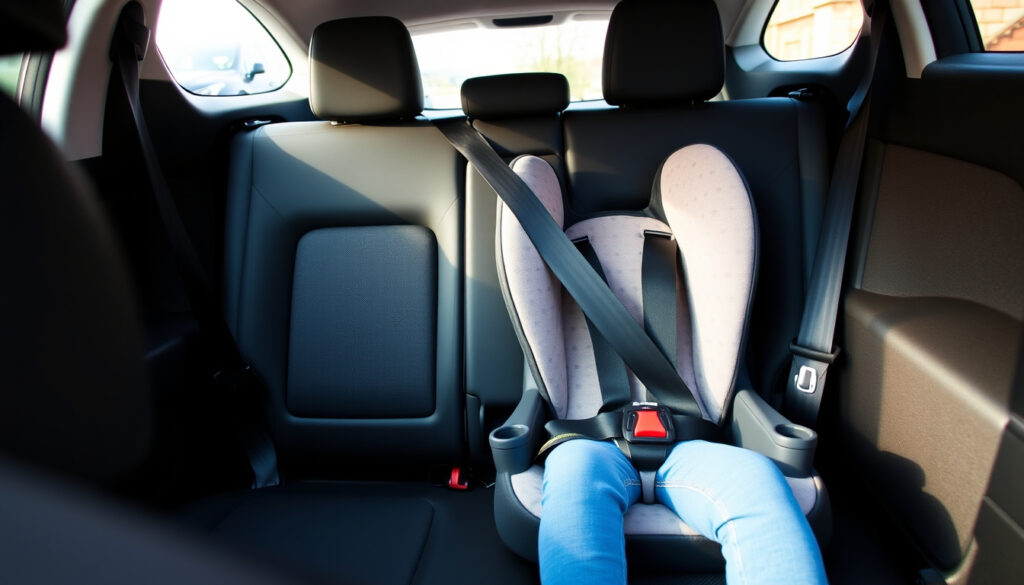
If you’re a parent in Ireland, the moment your child outgrows their forward-facing car seat can feel like a puzzle. The rules are clear, but the options—backless booster, high back booster, booster cushion—can be confusing. Irish law requires children to use a booster seat from 4 years or 15 kg until they reach 150 cm or 12 years. This guide breaks down the legal requirements, the practical differences between booster types, and how to make the safest choice for your child.
Minimum age for booster seat in Ireland: 4 years (legal minimum) ·
Minimum weight for booster seat: 15 kg (approx. 33 lb) ·
Minimum height for backless booster: 125 cm (approx. 49 inches) ·
Booster seat group classification: Group 2/3 (15–36 kg)
Quick snapshot
- Irish law: booster seat mandatory from 4 years or 15 kg until 150 cm or 12 years (Road Safety Authority (RSA) – Ireland’s official road safety agency)
- Backless booster approved from 125 cm (approx. 7 years) (RSA – FAQs)
- Children must sit in the rear until 12 years if possible (HSE – Health Service Executive)
- Exact statistics on booster seat misuse in Ireland
- Optimal switch age from backless to high back for individual cars
- Children progress from Group 1 harness (9 months–4 years) → Group 2/3 booster (4–12 years) → adult belt after 150 cm or 12 years (Tusla – Child and Family Agency)
- RSA recommends high-back booster for as long as possible, up to 36 kg (RSA – FAQs)
- Backless boosters are a fallback, not a first choice (RSA – FAQs)
Five key specifications every Irish parent should know:
| Label | Value |
|---|---|
| Minimum age (Ireland) | 4 years |
| Minimum weight (Ireland) | 15 kg (33 lb) |
| Required until | 150 cm height or 12 years |
| Backless booster minimum height | 125 cm |
| Front seat allowed | Only if no rear seat available and airbag deactivated |
At what age should a child go into a booster seat?
Legal minimum age in Ireland
Irish law sets the minimum age at 4 years, but the real trigger is weight. The Road Safety Authority (RSA) – Ireland’s official road safety agency states that children under 150 cm or 36 kg must use a suitable child restraint. A booster seat (Group 2/3) is approved from 15 kg, which typically happens around 4 years. The HSE – Health Service Executive confirms the law: a correct child seat or booster seat is required for children under 150 cm or weighing less than 36 kg.
Physical readiness (weight & height)
Weight is the decisive factor. The RSA’s guidance on child seats explains that categories are based on weight, not age. A booster seat is appropriate when the child reaches 15 kg and has outgrown the forward-facing harness seat. The Tusla – Child and Family Agency leaflet gives a typical age range of 6–11/12 years for Group 2/3 (22–36 kg), but the RSA notes that booster cushions are available from 15 kg.
Irish parents should focus on the weigh‑on‑the‑scale, not the birthday. A 4‑year‑old who weighs 15 kg is legally ready for a booster — but the RSA advises that a high‑back booster offers more protection than a cushion at that weight.
The implication: age is a rough guide, but the scale is the law. Use the 15 kg threshold as your green light, and keep the child in a high‑back booster until they exceed 125 cm or the seat’s weight limit.
What are the rules for booster seats in Ireland?
Rear vs forward facing
Booster seats are always forward‑facing. Irish law requires children to use a rear‑facing seat until at least 15 months (Group 0+), then a forward‑facing harness seat (Group 1) until they reach 15 kg or 4 years. The AIG Ireland – insurer and family safety advocate notes that once children outgrow their forward‑facing car seat, they should transition to a booster seat.
Where to sit
The RSA FAQ states that children should travel in the rear of the car until they are 12 years old, if possible. The HSE adds that taxis are exempt from the child restraint law, but otherwise a booster seat must be used in any car, van, or truck.
Front seat restriction
Children under 150 cm are banned from the front seat unless the airbag is deactivated. The RSA clarifies that front seat use is allowed only if no rear seat is available or all rear seats are occupied by younger children in their own restraints.
The catch: the front seat loophole is narrow. For most families, the rear seat is the only legal (and safe) option until the child reaches 150 cm.
Can a 4 year old use a backless booster?
Height requirement for backless booster
Backless boosters are approved from 125 cm and at least 15 kg. The RSA FAQ states that booster cushions are available from 15 kg, but it does not recommend them for children under 22 kg because they lack head, neck, and back protection. The Kennco – Irish car seat specialist advises that a rough age guide for booster seats is until about 12 years, but decisions should be based on weight.
When high back is better
High‑back boosters provide side impact protection and head support. The RSA recommends that older children use a high‑back booster seat for as long as possible, up to 36 kg, rather than a booster cushion alone. A booster cushion on its own provides no back or head protection.
A 4‑year‑old weighing 15 kg is within the legal range for a backless booster, but the RSA explicitly warns against it. The gap between legal minimum and best practice is 7 kg — a difference that can mean a child’s head is unprotected in a side impact.
The trade‑off: backless boosters are lighter and cheaper, but they sacrifice safety features. For a 4‑year‑old, a high‑back booster is the stronger choice, especially if the car’s rear seats lack adjustable headrests.
Can my 5 year old switch to a booster seat?
Weight and height checklist
A 5‑year‑old weighing at least 15 kg can legally move to a booster seat. But the RSA advises waiting until the child outgrows the forward‑facing harness seat — usually when the shoulders exceed the top harness slot. The Tusla leaflet gives a typical Group 1 age range of 9 months to 4 years, so a 5‑year‑old is likely ready for a booster.
Signs of a good fit
The HSE emphasises that the lap belt must sit low across the hips and the shoulder belt across the chest, not the neck. If the belt cuts into the neck or rides up onto the stomach, the child is not ready for a booster.
What this means: a 5‑year‑old who can sit still, keep the belt correctly placed, and has outgrown the harness seat is ready. Rushing the switch because of a birthday is a common mistake.
When to switch to backless booster?
Height vs age guideline
Backless boosters are recommended from 125 cm (approx. 7 years) or when the child’s ears reach the top of the high‑back booster. The RSA FAQ states that booster cushions are available from 15 kg, but the official recommendation is to use a high‑back booster up to 36 kg.
Car compatibility
If the vehicle seat has a low back or no headrest, a high‑back booster is safer. The RSA notes that a booster cushion alone provides no back or head protection, making it unsuitable for cars without built‑in headrests.
The pattern: height, not age, is the trigger for backless. And even then, a high‑back booster is still the superior choice unless the car’s headrests are tall enough to support the child’s head.
What age do booster seats go up to?
Maximum height and weight
Booster seats (Group 2/3) cover children from 15 kg to 36 kg. The RSA FAQ says children may no longer be obliged to use a booster once they exceed either the weight limit or the height limit (150 cm). The Kennco guide adds that booster seats are necessary until a child is tall enough — around 150 cm — to safely use an adult seat belt.
When to use only the adult belt
Children can stop using a booster when they are 150 cm tall or 12 years old, whichever comes first, and the seatbelt fits correctly. The RSA confirms that the law no longer requires a booster beyond that point.
The catch: many children reach 150 cm before 12 years, but the seatbelt may still not fit properly. A booster remains safer until the belt lies flat across the chest and hips, not the neck or stomach.
Clarity section
Confirmed facts
- Irish law: booster seat mandatory from 4 years or 15 kg until 150 cm / 12 years.
- Backless booster approved from 125 cm (approx. 7 years).
- Children must sit in the rear until 12 years if possible.
- RSA recommends high‑back booster over booster cushion for children under 22 kg.
What’s unclear
- Exact statistics on booster seat misuse in Ireland.
- Optimal switch age from backless to high back for individual cars.
“The law requires a correct child seat or booster seat for children under 150 cm or weighing less than 36 kg when travelling in a car, van, or truck.”
HSE – Health Service Executive
“The RSA recommends that older children use a high‑back booster seat for as long as possible, up to 36 kg, rather than a booster cushion alone.”
Road Safety Authority (RSA) – Ireland’s official road safety agency
Pros and cons: high‑back vs backless booster
Upsides
- High‑back booster: side impact protection, head support, better for cars without headrests.
- Backless booster: lightweight, portable, cheaper, easy to move between cars.
- Both are legal when used correctly from 15 kg / 125 cm.
Downsides
- Backless booster: no back or head protection, not recommended for children under 22 kg.
- High‑back booster: bulkier, more expensive, may not fit in all cars.
- Both require the child to sit still — not suitable for very restless children.
How to choose and install a booster seat (step‑by‑step)
- Check your child’s weight and height. If they are at least 15 kg and have outgrown the forward‑facing harness seat, they are ready for a booster.
- Decide between high‑back and backless. The RSA recommends high‑back for children under 22 kg. If your car has adjustable headrests, a high‑back booster is still safer.
- Place the booster on the rear seat. Ensure it sits flat and does not move more than 2.5 cm side‑to‑side when installed.
- Buckle the child in. The lap belt must lie low across the hips, not the stomach. The shoulder belt must cross the chest, not the neck. If the belt touches the neck, use a high‑back booster or a belt guide.
- Test the fit. The child should be able to sit with their back against the seat and knees bent over the edge. If the seat belt cuts into the neck or rides up, the booster is not the right size.
- Check the weight limit. Most boosters are rated to 36 kg. Once the child exceeds that, or reaches 150 cm, they can use the adult belt alone.
For Irish parents, the choice between high‑back and backless is clear: start with a high‑back booster and stay there until the child reaches 125 cm or the seat’s weight limit. A backless cushion is a convenience, not a safety upgrade.
Related reading: **Bar Stools Ireland: Heights, Clearance & Buying Guide** · **Washing Machine Buying Guide: Best Reliable Brands in Ireland**
citizensinformationboard.ie, carzone.ie, nhtsa.gov, facebook.com, longfordcoco.ie, instagram.com, budda.se
Frequently asked questions
Can my 7 year old sit in the front seat in Ireland?
No, unless all rear seats are occupied by younger children in their own restraints and the front airbag is deactivated. The RSA states that children under 150 cm must not sit in the front if the airbag is active.
What is the weight limit for a backless booster seat?
Backless boosters are approved from 15 kg to 36 kg, but the RSA recommends them only from 22 kg (approx. 125 cm height) for better protection.
Do I need a high‑back booster for a car with headrests?
The RSA recommends a high‑back booster even with headrests, because it provides side impact protection. A backless booster is acceptable only if the car’s headrest is tall enough to support the child’s head.
How do I know when my child is ready to stop using a booster?
When the child reaches 150 cm in height or 12 years old, and the adult seatbelt fits correctly — lap belt low on hips, shoulder belt across the chest, not the neck. The RSA confirms the law no longer requires a booster beyond that point

Arthur Oliver Howard Fletcher is a staff writer for NationalReport.uk, covering UK national news, politics, the economy and public services. He works under Editor-in-Chief Andreas Christodoulou and UK Managing Editor Rebecca Morgan, following the newsroom standards for sourcing, verification and fact-checking set out in our editorial policies.