
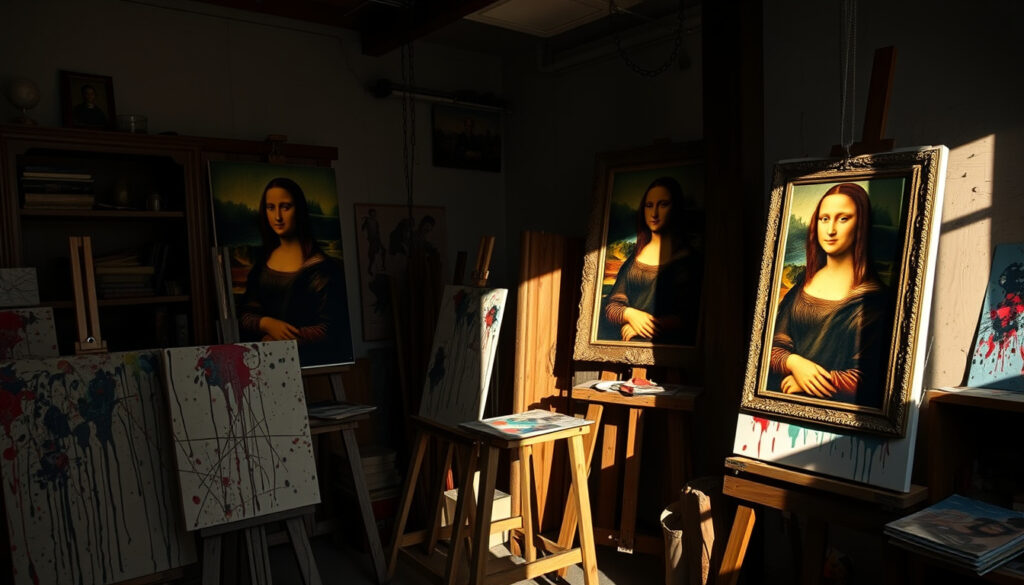
Few artists have reshaped the way we see the world quite like Pablo Picasso — and fewer still have been questioned over a stolen masterpiece. His name is synonymous with modern art, yet his life was as tangled as the brushstrokes that defined Cubism.
Born: October 25, 1881, Málaga, Spain ·
Died: April 8, 1973, Mougins, France ·
Famous for: Co-founding Cubism, constructing sculpture ·
Estimated artworks: 50,000 (paintings, drawings, sculptures, ceramics) ·
Known partners: Fernande Olivier, Olga Khokhlova, Dora Maar, Françoise Gilot, Jacqueline Roque ·
Notable incident: Questioned in 1911 Mona Lisa theft
Quick snapshot
- Born in Málaga, Spain (The Metropolitan Museum of Art)
- Son of an artist and art prodigy as a child (The Metropolitan Museum of Art)
- Formative years in Barcelona shaped his early training (Museu Picasso Barcelona)
- Co-founded Cubism with Georges Braque (Wikipedia)
- Developed collage and constructed sculpture (The Metropolitan Museum of Art)
- Blue Period, Rose Period, and Surrealist phases (Wikipedia)
- Created over 20,000 paintings, drawings, and sculptures (PabloPicasso.org)
- Influenced 20th-century art worldwide (PabloPicasso.org)
- Museums dedicated to his work in Paris and Barcelona (Musée Picasso Paris)
Eight facts trace the arc of Picasso’s life, from his impossibly long full name to the timeless works that still define modernism.
| Fact | Detail |
|---|---|
| Full name | Pablo Diego José Francisco de Paula Juan Nepomuceno María de los Remedios Cipriano de la Santísima Trinidad Ruiz y Picasso |
| Birth | October 25, 1881, Málaga, Spain |
| Death | April 8, 1973, Mougins, France |
| Nationality | Spanish, later French |
| Movement | Cubism, Surrealism, Modernism |
| Known for | Painting, sculpture, printmaking, ceramics |
| Notable artworks | Guernica, Les Demoiselles d’Avignon, The Weeping Woman |
| Number of children | 4 (Paulo, Maya, Claude, Paloma) |
What was Pablo Picasso accused of?
The Mona Lisa theft and Picasso’s involvement
In August 1911, the Mona Lisa was stolen from the Louvre. The theft became an international sensation. Among those swept into the investigation was Picasso, who had recently moved in Parisian avant-garde circles. His friend Guillaume Apollinaire was arrested after links to a former Louvre employee named Géry Pieret, who had sold stolen artworks to Picasso. Picasso was questioned but never charged (Europeana).
Why Picasso was a suspect
Picasso admitted to purchasing two Iberian statuettes from Pieret, which he later used as inspiration for Les Demoiselles d’Avignon. The suspicion stemmed from his association with known art thieves. However, the evidence linking him to the Mona Lisa itself was thin. “Picasso was drawn into the 1911 investigation but was cleared,” notes an account from Artnet News.
This episode reveals how deeply Picasso’s early Paris networks overlapped with the city’s underworld of art theft — a contrast to the heroic image of the modernist genius.
What was Pablo Picasso famous for?
Co-founding Cubism
Alongside Georges Braque, Picasso developed Cubism in the first decade of the 1900s. The movement broke objects into geometric planes and multiple perspectives, upending centuries of Renaissance perspective (The Metropolitan Museum of Art).
Pioneering collage and constructed sculpture
Picasso also invented constructed sculpture by assembling disparate materials — a technique that influenced modern assemblage art. His 1912 work Still Life with Chair Caning is considered the first fine-art collage.
Blue Period, Rose Period, and Surrealism
Before Cubism, Picasso’s Blue Period (1901–1904) and Rose Period (1904–1906) explored themes of poverty, melancholy, and circus life. Later, he flirted with Surrealism without ever fully joining the movement. The range of his styles underscores his relentless innovation.
Picasso didn’t just paint — he redefined what painting could be, forcing critics and collectors to abandon old categories and accept art as constant reinvention.
What disabilities did Pablo Picasso have?
Evidence of dyslexia
Research from the University of Michigan’s Dyslexia Help indicates that Picasso had dyslexia. The condition may have contributed to his unique spatial and visual thinking, allowing him to see objects from multiple angles simultaneously — a core feature of Cubism (University of Michigan Dyslexia Help).
How dyslexia may have influenced his art
While the connection remains speculative, some educators and art historians suggest that his brain’s atypical wiring gave him an innate advantage in representing alternative perspectives. Dyslexia, in Picasso’s case, could have been less a disability and more a different cognitive toolkit for seeing the world.
How many wives did Pablo Picasso have?
List of wives and long-term partners
Picasso had two legal wives: Olga Khokhlova (married 1918) and Jacqueline Roque (married 1961). His long-term partners included Fernande Olivier, Marie-Thérèse Walter (who bore his daughter Maya in 1935), Dora Maar, and Françoise Gilot (mother of Claude and Paloma). The Saper Galleries documents these relationships as central to his emotional life and artistic output (Saper Galleries).
Key relationships and their impact on his art
Each relationship corresponded to a distinct artistic phase: Dora Maar’s anguished face appears in The Weeping Woman, while Marie-Thérèse Walter’s curvaceous forms dominate his 1930s works. The women of Picasso’s life were both muses and subjects, and often the source of artistic tension.
Picasso’s creative brilliance coexisted with a personal pattern of possession and abandonment — the same intensity that fueled his art also caused deep fractures in his relationships.
What are 10 facts about Picasso?
Early life and training
- Born in Málaga, Spain, on October 25, 1881 (The Metropolitan Museum of Art).
- His full name contains 23 words.
- He was an art prodigy; his father, an artist, was his first teacher.
- By age 13, he had surpassed his father’s skill.
Artistic innovations
- Co-founded Cubism with Georges Braque (Wikipedia).
- Invented constructed sculpture.
- Created more than 20,000 artworks (PabloPicasso.org).
- His Blue Period was sparked by the suicide of his friend Carlos Casagemas.
Personal life and controversies
- He had four children: Paulo, Maya, Claude, and Paloma (Saper Galleries).
- He was a suspect in the 1911 Mona Lisa theft (Europeana).
- He died in 1973 at age 91.
Timeline
| Date | Event |
|---|---|
| 1881 | Born in Málaga, Spain |
| 1901–1904 | Blue Period |
| 1904–1906 | Rose Period |
| 1907 | Painted Les Demoiselles d’Avignon, proto-Cubist work |
| 1911 | Questioned as suspect in Mona Lisa theft |
| 1918 | Married Olga Khokhlova |
| 1937 | Painted Guernica |
| 1944 | Joined French Communist Party |
| 1961 | Married Jacqueline Roque |
| 1973 | Died in Mougins, France |
The timeline signal: Picasso’s most turbulent personal episodes coincide with his most radical artistic breakthroughs.
Clarity check
Confirmed facts
- Picasso was a suspect in the 1911 Mona Lisa theft (Europeana).
- He co-founded Cubism (The Metropolitan Museum of Art).
- He had dyslexia (University of Michigan Dyslexia Help).
- He had four children (Saper Galleries).
- He died in 1973 at age 91.
What’s unclear
- Specific details of his involvement in the Mona Lisa theft remain uncertain; he was never charged.
- The exact number of his romantic relationships is disputed.
- The full extent of his wealth at death is debated.
Perspectives on Picasso
“Picasso is widely credited as a co-founder of Cubism alongside Georges Braque, a movement that transformed representation by breaking objects into geometric forms and multiple viewpoints.”
— Wikipedia
“The Tate describes his role in Cubism and constructed sculpture as central to the development of modern art.”
— Tate
“Picasso was questioned in connection with the 1911 Mona Lisa case but was later cleared. The incident shows how deeply his early Paris circles overlapped with the city’s art underworld.”
— History.com
“Evidence of dyslexia may have contributed to his spatial and visual thinking, allowing him to see objects from multiple angles — a core feature of Cubism.”
— University of Michigan Dyslexia Help
The real Picasso
Picasso’s genius was never pure — it was entangled with stolen art, fractured relationships, and a restless mind that saw the world differently. For collectors and art lovers today, the choice is between celebrating the artist for his revolutionary vision or wrestling with the flawed man behind it. The implication for Spanish and French institutions that hold his legacy: preserve the work, acknowledge the full biography, or risk telling only half the story.
Related reading: Salvador Dalí
messynessychic.com, foreverbarcelona.com, francetoday.com, facebook.com, riksposten.se
Years after the heist, Picasso remained a person of interest in the Louvre Museum robbery, a saga that forever changed the painting’s fame.
Frequently asked questions
What was Pablo Picasso’s net worth?
At his death in 1973, Picasso’s estate was estimated at $260 million (about $1.7 billion today), though exact figures remain debated. His artworks continue to sell for tens of millions.
How did Pablo Picasso die?
Picasso died of a heart attack on April 8, 1973, in Mougins, France, while entertaining friends. He was 91 years old.
What is Pablo Picasso’s full name?
Pablo Diego José Francisco de Paula Juan Nepomuceno María de los Remedios Cipriano de la Santísima Trinidad Ruiz y Picasso — 23 words in total.
How many paintings did Picasso make?
He created over 20,000 paintings, drawings, sculptures, and ceramics across his career, though estimates vary. His prolific output averaged two works per day for much of his life.
What is Picasso’s most famous painting?
Guernica (1937), a powerful anti-war mural, is widely considered his masterpiece. Les Demoiselles d’Avignon (1907) is also seminal as a proto-Cubist work.
Was Picasso left-handed?
No, Picasso was right-handed. He famously held his cigarette in his right hand and painted with his right hand throughout his career.
Did Picasso have any children?
Yes, he had four children: Paulo (with Olga Khokhlova), Maya (with Marie-Thérèse Walter), and Claude and Paloma (with Françoise Gilot).
What is the Picasso Museum?
There are two major museums: the Musée Picasso in Paris, which holds the largest collection of his works, and the Museu Picasso in Barcelona, focusing on his early years and holding about 5,000 pieces.

Arthur Oliver Howard Fletcher is a staff writer for NationalReport.uk, covering UK national news, politics, the economy and public services. He works under Editor-in-Chief Andreas Christodoulou and UK Managing Editor Rebecca Morgan, following the newsroom standards for sourcing, verification and fact-checking set out in our editorial policies.