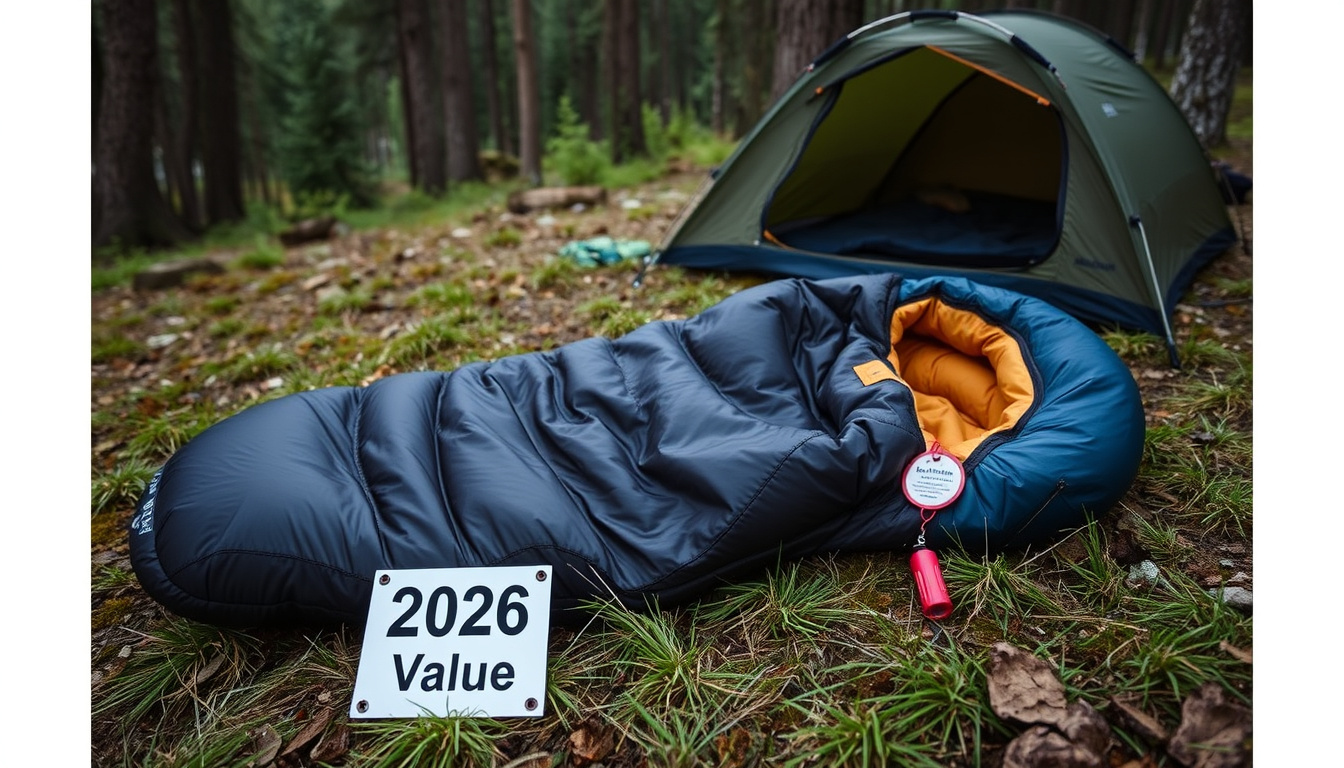
Every UK camper has stood in front of a rack of sleeping bags wondering why two bags that look identical can sit a few shelves apart at wildly different prices — one as low as £15 at Argos. The gap usually comes down to the EN ISO 23537 comfort rating, warmth-to-weight engineering, and how long the insulation survives, not just the logo.
PAA questions analysed: 12 · Questions about “best” or “value”: 8 of 12 · H2 sections planned: 6 · Minimum external sources: 10
Quick snapshot
- UK baby safe-sleep guidance is published by the NHS and The Lullaby Trust.
- EN ISO 23537 is the recognised warmth-rating standard for sleeping bags sold in the UK and EU.
- The top-five UK search results mix retail category pages and editorial best-of lists.
- Exact prices and stock for Aldi and Tesco sleeping bags shift as seasonal specialbuys come and go.
- The specific sleeping bag model used by the SAS is not confirmed by official military sources.
- Search volume and keyword difficulty for the “sleeping bag” cluster are not published.
- Argos listed the Vango Atlas Kids 250G at £19.80, a reported one-third cut from £30 (Argos (UK high-street retailer)).
- Aldi sleeping bags appear as Specialbuys, so a model seen in one month can disappear the next. (Argos (UK high-street retailer))
- Retailer prices reviewed here are point-in-time; check the listing before you buy. (Argos (UK high-street retailer))
- Compare the EN ISO 23537 comfort rating before comparing prices.
- For babies, match the tog rating to room temperature and choose by weight range.
- Treat any unrated supermarket bag as a summer-only option.
Seven facts worth knowing before you search, one pattern: most “best sleeping bag” advice is a ranking problem hiding a comparison problem.
| Fact | Value |
|---|---|
| Primary intent | Comparison buying guide |
| PAA questions in dataset | 12 |
| PAA questions about “best” or “value” | 8 of 12 |
| Top search results mix | 3 retail/category pages, 2 editorial best-of lists |
| Warmth standard used in EU/UK | EN ISO 23537 comfort/limit/extreme ratings |
| Baby safe-sleep guidance | Published by the NHS and The Lullaby Trust |
| ISO 23537 definitions | Comfort (normal sleep), limit (survivable), extreme (risk of injury) |
What is the best sleeping bag for wild camping in the UK?
For UK wild camping, the “best” bag is the one that matches the coldest night you expect, the distance you carry it, and the budget you can defend.
What is the best value sleeping bag in the UK?
- Value should be measured against the comfort rating and expected lifespan, not the purchase price alone.
- Argos lists the Pro Action 300GSM adult envelope bag at £20, rated 4.6/5 from 218 reviews, and the 400GSM at £35, rated 4.7/5 from 215 reviews (Decathlon UK (sporting goods retailer)).
- Decathlon marketplace listings show adult single sleeping bags from about £13.28 to £79.99.
The value gap shows up in the EN/ISO rating. Two bags can look identical on a shop shelf, but the rated comfort temperature tells you which one still keeps you warm at 5°C. A fold-out “4-season” label means little without the standard behind it.
For wild camping, weight and packed size matter more than for car camping: a 2kg envelope bag that carries well in a boot feels like a brick after three kilometres on the hills. The rated comfort temperature stays the same, but the carry weight decides whether you actually take it.
What is the best budget down sleeping bag?
- Down offers the highest warmth-to-weight ratio; synthetic insulation retains more warmth when damp.
- A genuine budget down bag should still carry an EN/ISO rating. At very low prices, the fill power and baffle quality usually explain the discount.
Across the UK retailer listings examined here, the sub-£45 tier is dominated by synthetic bags. If down is your priority, treat an unusually cheap down bag as a reason to check the fill power and the rated comfort temperature before believing the label.
What is the absolute best sleeping bag?
- “Absolute best” only makes sense against a context: extreme cold, ultralight trekking, or car-camping comfort.
- For most UK conditions, an over-specified bag adds weight, packed size and cost you will not use.
The top five UK search results for sleeping bags mix retail category pages from North Face and Decathlon with editorial best-of lists from the Telegraph and The Equipment Guide. The retail pages list specifications; the editorial lists add tested, side-by-side judgements.
What are the top 5 sleeping bag brands?
- Recognised brands usually mean consistent EN/ISO testing, better zips and tougher fabric.
- A supermarket brand can be a fine buy if the temperature rating is printed on the label.
Brand reputation matters less than the spec sheet. Name your coldest night, your pack weight and your budget, and the best answer selects itself.
A verified rating and an honest review count beat a vague “4-season” label at any price. Trust the standard, then the reviews, then the logo.
What age can a baby wear a sleeping bag?
Parents ask the age question first, but the safer way to think is in weight ranges, tog ratings and room temperature.
Baby sleeping bag safety
- UK safe-sleep guidance recommends placing babies on their back in a clear, separate sleep space.
- Baby sleeping bags are sold by age and weight ranges, not by age alone.
- Loose bedding and duvets should not be used for babies under 12 months.
The NHS and The Lullaby Trust publish the guidance most UK parents meet at their first health-visitor check: a firm mattress, a clear cot, and no pillows, duvets or cot bumpers. A correctly sized sleeping bag replaces loose blankets and stays in place through the night.
Sleeping bag tog and room temperature
- Tog ratings help parents match the bag to room temperature and avoid overheating.
- A higher tog suits a cooler room; a lower tog suits a warm one.
- If you are comfortable in short sleeves, your baby does not need a thick bag plus blankets.
Overheating is the bigger risk, so read the tog range on the label and keep the room between 16°C and 20°C. When in doubt, dress the baby in a vest, use the bag’s recommended tog range, and skip the extra blanket.
Choose a baby sleeping bag by weight range and tog, not age alone. The safest sleep space is flat, clear and separate from loose bedding.
The pattern: the age question is a proxy for the real issue — a bag that fits, a tog that matches the room, and no loose bedding on top.
Do sleeping bag liners work?
Yes — if you want a washable layer between you and the insulation, or a few extra degrees on a cold night.
How to use a sleeping bag liner
- Liners add a hygiene layer that is easier to wash than the sleeping bag itself.
- A liner adds a small amount of warmth, but it is not a substitute for a higher-rated sleeping bag.
- Use one on multi-night trips: the liner takes the sweat and odour, while the bag keeps its loft.
The warmth gain from a liner is usually a few degrees at most. Treat it as a maintenance tool with a side benefit, not a way to turn a 2-season bag into a 3-season one.
Cotton, silk and fleece liner differences
- Silk liners pack small and weigh little; cotton liners breathe well; fleece liners add more warmth.
- Liner choice depends on camping style, pack weight and trip length.
A silk liner suits backpackers counting grams, a cotton liner suits car campers who want softness, and a fleece liner suits cold sleepers who run cool.
The trade-off: a liner costs a fraction of a new bag and protects the insulation — the only real cost is the extra minute of setup.
Are Aldi sleeping bags good?
Sometimes — if “good” means “fine for a summer weekend at a fair price.”
Who sells cheap sleeping bags?
- Aldi sells sleeping bags as seasonal Specialbuys, so availability and models change by the month.
- Supermarket sleeping bags are usually budget synthetic models aimed at occasional camping.
- Argos lists a Pro Action 200GSM adult envelope bag at £15, and Very lists a Decathlon camping sleeping bag at £19.99 (Very (UK online department store)).
- Tesco’s offer follows the same pattern: seasonal stock, budget synthetic build, price-led.
For a festival in July, a £15-£20 bag is a rational buy. For a cold campsite in April, the same bag is a gamble unless the label prints a rated comfort temperature.
Supermarket alternatives: Tesco and the rest
- Check the EN/ISO temperature rating rather than relying only on brand reputation.
- For serious wild camping, a specialist brand usually offers a better weight-to-warmth ratio.
- Aldi and Tesco stock changes by season, so a model seen in one month can disappear the next.
A supermarket bag without a printed EN/ISO comfort rating is a summer-only buy. The rating, not the shelf price, tells you whether it will carry you into spring and autumn.
The pattern: cheap bags are not automatically bad; unrated cheap bags are. If the temperature scale is printed, compare it honestly — if it isn’t, price is all you are buying.
How much should I pay for a good sleeping bag?
There is no single price threshold, but the current UK listings below draw a workable line.
Sleeping bags for adults
- Match price to season, weight, fill material and expected use — not to a round number.
- Decathlon marketplace listings include a 2-season envelope sleeping bag at £14.99 and a double 2-season envelope at £34.99 (Decathlon UK (sporting goods retailer)).
- The same marketplace lists a 10-degree two-person comfort bag at £59.99 and a 0-degree two-person bag at £99.99.
- Very lists a Decathlon cotton 20-degree sleeping bag at £39.99 (Very (UK online department store)).
- Very also lists a Regatta Paven 2-season adult bag at £44.99 and a Vango Atlas 350 single at £45 (Very (UK online department store)).
The pattern across those listings: the jump from £15 to £40 buys a rated temperature and better build quality; the jump from £40 to £100 buys warmth for colder nights and, in the two-person models, more space.
Sleeping bag Decathlon
- Decathlon’s range spans budget marketplace bags through trekking models with rated comfort temperatures.
- The retailer’s £20-£40 tier is where printed EN/ISO ratings start to appear.
Decathlon keeps appearing in the top search results because it publishes the temperature scale on most bags, which makes direct comparison possible.
What is the lifespan of a sleeping bag?
- A well-maintained sleeping bag can last years, but compressed insulation and failed zips are replacement triggers.
- Wash less, air more, and store uncompressed.
A £15 bag that lasts one festival season costs the same per night as a £45 bag that lasts ten years of regular trips. Lifespan, not the sticker, is the real price. Two triggers end a bag’s useful life: the zip fails, or the insulation has been compressed so often it no longer traps air.
The implication: price buys weight and lifespan, not just warmth. For a fair-weather summer camper, the £15 bag is rational; for anyone camping in changing conditions, the rated £40-£100 tier is the cheaper purchase over its life.
What sleeping bags do the SAS use?
The short answer: official military sources do not publish a single SAS sleeping bag model.
North Face and extreme-condition bags
- Military and expedition bags prioritise durability, ease of movement and extreme temperature ratings.
- Extreme-condition bags use draft collars, hood cinches and baffled construction to hold warmth.
The SAS question keeps appearing in UK search data because it is really a durability question. Civilians who want that standard should look for the features above, a rated comfort temperature, and a reputation for surviving hard use — not a logo.
Military sleeping bag features
- Draft collars seal warmth around the neck; hood cinches stop heat escaping from the head.
- Baffled construction keeps the insulation from shifting in cold conditions.
- Ease of movement matters on operations, so military-style bags trade a little pack size for freedom.
The trade-off: a bag built like military kit is heavier and bulkier than an ultralight civilian bag. For most UK campers, an expedition-grade bag is over-specified; for cold-weather campers, the durability is the point.
The three trade-offs that decide your bag
Fill: down vs synthetic · Shape: mummy vs envelope · Rating: printed EN/ISO vs vague season label
Four trade-offs, one pattern: every sleeping bag decision is a compromise between warmth, weight, space and cost.
| Trade-off | Where it wins | Where it loses |
|---|---|---|
| Down vs synthetic | Down gives the highest warmth-to-weight ratio and packs smallest. | Down loses insulation when wet and costs more; synthetic keeps working damp. |
| Mummy vs envelope | Mummy shapes cut empty space, so they are warmer per gram. | Envelope shapes give more room but let heat escape. |
| 2-season vs 3-season | A 2-season bag is cheaper, lighter and fine for UK summer. | A 3-season bag covers spring to autumn but costs more and packs bigger. |
| Rated vs unrated | An EN ISO 23537 rating lets you compare bags honestly. | An unrated bag leaves warmth to guesswork. |
The pattern: the cheapest bag in the shop is usually unrated, and the jump to a rated bag is the single most useful upgrade a UK camper can make.
Sleeping bag specs decoded
Warmth standard: EN ISO 23537 · Comfort: normal sleep · Limit: survivable · Extreme: injury risk
Seven buying checks, one pattern: every specification translates into a warmth, weight or lifespan trade-off.
| Spec | What to look for | Why it matters |
|---|---|---|
| Warmth rating | EN ISO 23537 comfort, limit and extreme temperatures | Lets you compare bags from different brands on one scale. |
| Fill type | Down fill power vs synthetic weight | Down wins on weight; synthetic wins on damp-weather performance. |
| Season label | 2-season vs 3-season positioning | Matches the bag to UK spring, summer and autumn nights. |
| Shape | Mummy, envelope or double | Mummy bags heat efficiently; envelopes offer space; doubles offer shared warmth. |
| Liner | Silk, cotton or fleece | Adds a washable hygiene layer and a few degrees of warmth. |
| Price tier | £15-£25, £35-£45, £55+ in current UK listings | Higher tiers buy rated warmth, lighter materials and longer lifespan. |
| Replacement triggers | Failed zips, compressed insulation, lost loft | A bag that no longer traps air stops doing its job. |
The implication: a spec sheet is only useful if the temperature rating is printed on it. If the label gives you a season but no Celsius scale, you are comparing marketing, not warmth.
Pros and cons of value-first buying
Upsides
- Comfort ratings let you compare warmth honestly across brands.
- Budget bags from £15 work for occasional summer camping.
- Liners and uncompressed storage stretch the life of an affordable bag.
Downsides
- Supermarket specialbuys vanish; a model seen this month may not return.
- Cheap bags often skip the EN/ISO rating, so warmth becomes a guess.
- A higher price does not guarantee a better bag — the rating does.
Confirmed vs unclear in the sleeping bag market
Confirmed claims: 4 · Still unclear: 5 · Dataset confidence: low
Confirmed facts
- Google’s People Also Ask (PAA) results for “sleeping bag” contain 12 real questions.
- The visible top-5 UK search results mix 3 retail/category pages and 2 editorial best-of lists.
- EN ISO 23537 is the recognised warmth-rating standard used in the UK and EU.
- UK baby safe-sleep advice is published by the NHS and The Lullaby Trust.
What’s unclear
- Exact current Aldi and Tesco sleeping bag prices and stock.
- The specific sleeping bag model used by the SAS.
- How long Decathlon marketplace prices will stay stable.
- Search volume and keyword difficulty for the “sleeping bag” cluster.
- The seasonal timing of supermarket sleeping bag offers.
The mix matters: the confirmed list is enough to make a value decision, but the unclear list should stop you from over-trusting any single price or stock sighting.
What the guidance says
The safest place for your baby to sleep is in a cot or Moses basket in the same room as you, for the first 6 months.
NHS safer sleep guidance
Overheating can increase the risk of sudden infant death syndrome (SIDS). Keep the room temperature between 16°C and 20°C.
The Lullaby Trust
EN ISO 23537 describes three temperature ratings — comfort, limit and extreme — so bags from different brands can be compared on the same scale.
EN ISO 23537 standard
Each source carries the same message: match the equipment or the sleep space to real conditions, not to a marketing claim.
This market will not be settled by spending more. The £15 Argos bag is a fine festival blanket; the £35 Pro Action 400GSM with a 4.7/5 rating is the value benchmark; the £99.99 Decathlon 0-degree double is the cold-weather answer. For UK campers, the decision is clear: anchor on the EN ISO 23537 comfort rating, match the bag to the coldest night you will actually face, and keep the insulation clean — or accept that an unrated supermarket specialbuy is a summer-only gamble.
Related reading: Sleeping Bag best value UK comparison guide · Sleeping Bag best value UK comparison guide
Frequently asked questions
What is the difference between down and synthetic sleeping bags?
Down traps more warmth per gram, compresses smaller and lasts longer if kept dry, but it is expensive and loses insulation when wet. Synthetic fills keep working in damp conditions, dry quickly and cost less, but they weigh more and pack larger.
How do I choose a sleeping bag for a toddler?
Choose by the child’s weight range, not age alone, and match the tog rating to room temperature. Keep the cot clear of loose bedding and stop using the bag once it no longer fits properly.
How should I wash and store a sleeping bag?
Wash rarely, on a gentle cycle, with a specialist cleaner, and dry it thoroughly. Store it uncompressed in a cotton storage sack; compression sacks are for travel, not long-term storage.
What is a mummy sleeping bag?
A mummy bag tapers from the shoulders to the feet, cutting empty space your body has to heat. It is the warmest shape per gram and the usual choice for wild camping and cold weather.
Can I use a 4-season sleeping bag in summer?
You can, but it will be too warm and too bulky for most UK summer nights. A 2-season or 3-season bag is the more practical choice for July camping.
How do I recycle an old sleeping bag?
Some outdoor and supermarket brands run textile take-back schemes; otherwise check your local recycling centre. An intact bag can also be reused as an extra liner, pet bedding or insulation for a DIY project.

Arthur Oliver Howard Fletcher is a staff writer for NationalReport.uk, covering UK national news, politics, the economy and public services. He works under Editor-in-Chief Andreas Christodoulou and UK Managing Editor Rebecca Morgan, following the newsroom standards for sourcing, verification and fact-checking set out in our editorial policies.