There’s a reason Harvey Dent lingers in the memory long after the credits roll—even among Batman’s gallery of rogues, his fall from grace lands hardest. He began Gotham’s white knight district attorney, a symbol of justice, before a crime boss’s acid half-destroyed his face and split his psyche in two. The story of Two-Face is a tragedy dressed as a villain origin, and it raises a real question: how much of his behaviour is comic-book fantasy, and how much maps onto recognizable psychology?
Alter ego of: Harvey Dent, Gotham City district attorney ·
First appearance: 1942 in Detective Comics #66 ·
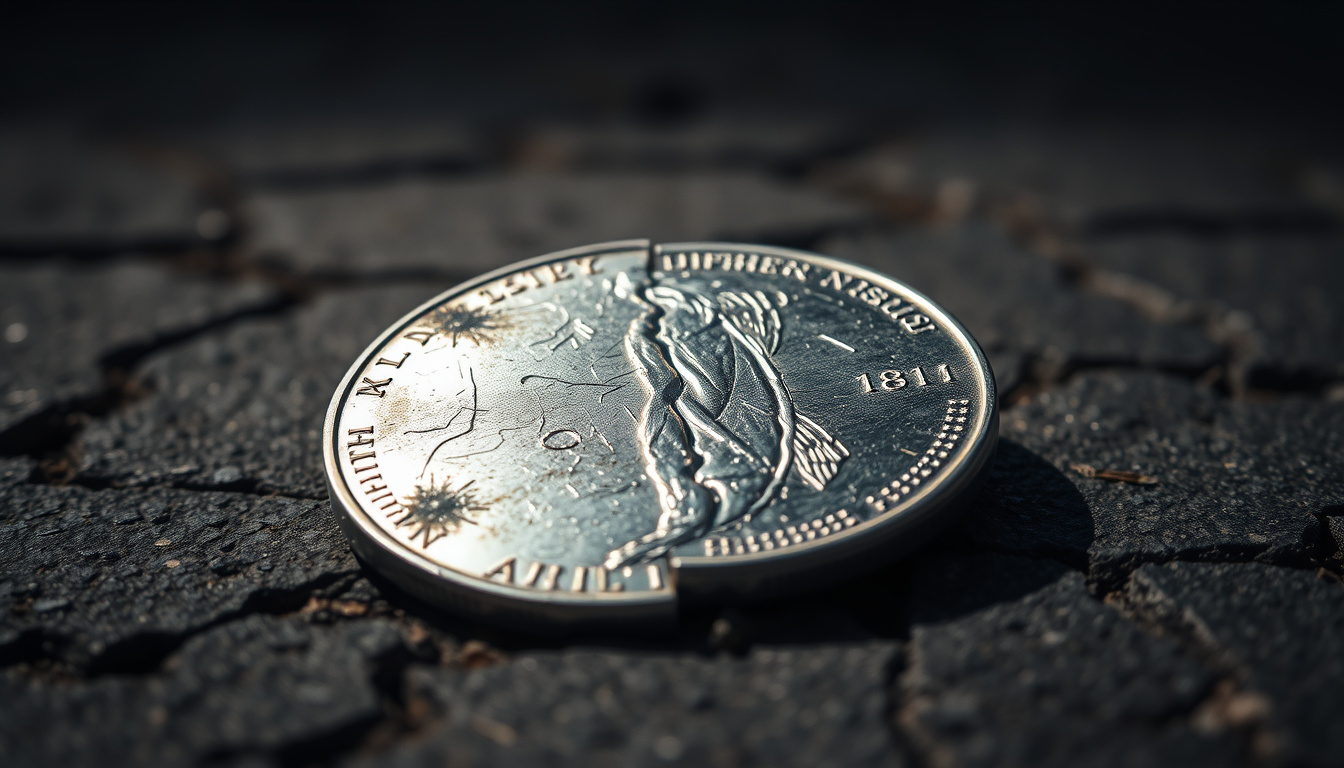
Signature weapon: A two-headed coin (one side scarred) ·
Key trauma: Acid thrown in face by crime boss ·
Central conflict: Split between good and evil personalities ·
Portrayed in film by: Tommy Lee Jones, Aaron Eckhart, others
Quick snapshot
- Harvey Dent was Gotham’s DA (DC Comics official blog)
- Scarred by acid from crime boss (Wikipedia entry)
- Adopts Two-Face persona and coin (Batman Wiki)
- Exact psychiatric condition (no canonical diagnosis) (Batman Wiki) (ScreenRant)
- True relationship with Joker shifts across continuities (ScreenRant)
- Whether romantic ties to Talia al Ghul exist in every version (ScreenRant)
- 1942: Debut in Detective Comics #66 (DC Comics official blog)
- 2008: The Dark Knight retells origin (Wikipedia)
- New animated and live-action projects continue exploring his duality
- Fan theories speculate on redemption arcs (DC Comics official blog)
Key attributes of Two-Face are listed below.
| Attribute | Value |
|---|---|
| Full Name | Harvey Dent |
| First Appearance | Detective Comics #66 (1942) (DC Comics official blog) |
| Alter Ego | Two-Face |
| Occupation (before) | District Attorney of Gotham City |
| Symbol | Two-headed coin |
| Primary Motivation | Obsession with chance and duality |
Why Did 2 Face Become a Villain?
What event triggered Harvey Dent’s transformation?
The pivot from Gotham’s most promising district attorney to a scarred, coin-flipping criminal began in 1942 with Detective Comics #66—though at that point the character was named Harvey Kent, not Dent, as DC Comics (its official blog) notes. The surname change to Dent came in Batman #50 in 1948. Regardless of name, the origin stuck: crime boss Sal Maroni threw acid in Dent’s face during a trial, scarring the left half permanently. Wikipedia (the crowdsourced encyclopedia) describes how the disfigurement drove him insane, leading him to base every decision on a coin flip.
Harvey Dent didn’t fall because he was corrupt. He fell because a single act of physical trauma demolished the identity he had built as Gotham’s moral compass.
ScreenRant (a specialist entertainment outlet) reports that the character was used only five times across the 1940s and 1950s combined, then slowly reintroduced in World’s Finest Comics #173 in 1968 before becoming a regular Batman villain by 1971.
How did the acid attack change his psyche?
Before the attack, Dent had allegedly managed to sublimate a second, anti-social personality since he was a teenager, according to the Wikipedia entry. The trauma shattered that suppression. In the DCAU continuity, the anger built into a second personality called Big Bad Harv, as the DC Database (a curated fan wiki) documents. The physical scar became a visible map of his inner fracture.
What is Two-Face’s origin story in the comics vs The Dark Knight?
In the comics, the transformation is immediate—the acid hits, and Dent emerges from the hospital already obsessed with duality. ScreenRant notes that the 2008 film The Dark Knight stretched that arc: Dent stays noble through most of the runtime, and his fall only comes after the Joker kills Rachel Dawes, his fiancée. The film version uses grief as the catalyst rather than solely disfigurement.
What Mental Illness Is Associated with Two-Face?
Does Two-Face have dissociative identity disorder?
Modern incarnations of Two-Face are frequently described as having Dissociative Identity Disorder (DID), with Harvey Dent acting for good and Two-Face acting in self-interest, according to the Batman Wiki (a community-run database). The 1990 storyline Eye of the Beholder established the character explicitly as a second personality state resulting from trauma, as Wikipedia reports. In that story, a psychiatrist diagnosed Dent as having two personalities.
Is his condition rooted in a real psychological framework?
The character is a fictional exaggeration, not a clinical case. Real DID involves fragmented identity states, often linked to severe childhood trauma; Two-Face’s obsession with the number two (two personalities, two-sided coin, scarred half of his face) is a narrative device rather than a diagnostic criterion. The Prime Earth DC Database (a fan-curated source) describes him as having a split personality obsessed with the number two—a framing that leans into literary symbolism more than psychiatry.
Labeling Two-Face as having DID gives readers a familiar hook, but it risks conflating a tragic fictional character with a real, stigmatized condition. The distinction between inspiration and diagnosis is important.
How do comics and films portray his mental state?
- Comics: Second personality emerges after trauma; coin determines actions (Batman Wiki – Arkhamverse)
- Films (The Dark Knight): Split is more gradual, rooted in grief
- DCAU: “Big Bad Harv” personality was repressed since childhood (DC Database – DCAU)
The pattern: every version agrees on the split, but the trigger varies—physical trauma, emotional loss, or childhood repression. None of them offer a clean clinical diagnosis.
Does 2 Face Hate the Joker?
Why does Two-Face resent the Joker in some storylines?
Two-Face’s resentment toward the Joker stems from a fundamental philosophical clash. Two-Face believes in chance-based justice—every decision goes to the coin. The Joker represents pure chaos, laughing at rules, systems, and even coins. In The Dark Knight, that conflict becomes personal: Two-Face blames the Joker for Rachel’s death, as Wikipedia notes. The Joker essentially manufactured the tragedy that pushed Dent over the edge.
How do their philosophies differ?
The table below compares the core principles of Two-Face and the Joker.
| Dimension | Two-Face | Joker |
|---|---|---|
| Driving principle | Chance (50/50 coin flip) | Chaos (no rules at all) |
| Morality | Twisted sense of fairness | Amoral, nihilistic |
| Relationship with Batman | Personal, tragic | Obsessive, symbiotic |
The catch: they share a common enemy in Batman, which occasionally makes them uneasy allies. In some comic arcs, they cooperate; in others, Two-Face tries to kill the Joker for undermining his worldview.
Have they ever worked together?
Yes—in various storylines, the two have formed temporary alliances, most famously in the Batman animated series episode “The Strange Secret of Bruce Wayne.” But these alliances are always brittle. ScreenRant points out that the Joker sees Two-Face as a hypocrite pretending to have a moral code. Two-Face sees the Joker as a toxin that corrupts even his coin’s logic.
Who Was Two-Face in Love With?
Who is Gilda Dent?
Gilda Dent was Harvey’s wife before his transformation. In several continuities—including Batman: The Animated Series and Batman: The Long Halloween—she stands by him during his early recovery but eventually distances herself as his split personality takes over. The tragedy is that Harvey’s love for her was real, but the Two-Face identity cannot sustain relationships; it reduces everything to probability.
Did Two-Face ever love Talia al Ghul?
Some storylines introduce a romantic tension or partnership with Talia al Ghul, the daughter of Ra’s al Ghul. This varies across continuities. The Batman Wiki notes that Talia has manipulated Two-Face as a pawn rather than a love interest in most versions. The romance claim often comes from fan speculation or alternate-universe stories.
How does his romantic history reflect his duality?
Harvey Dent’s love life mirrors his split: one side wants genuine connection (with Gilda), the other seeks transactional or obsessive relationships (with Talia, where it exists). The fall from grace isn’t just a physical transformation—it’s an emotional divorce from the capacity to love without conditions. Two-Face’s coin flips even determine life-or-death outcomes for people he once cared about.
Why this matters: romantic attachments are the most human part of Harvey’s story. When he loses that, he loses the last thread tying him to his old self.
Is Two-Face a Villain or an Anti-Hero?
What defines an anti-hero in the Batman mythos?
An anti-hero operates outside the law but often with a personal moral code. Catwoman steals from the rich; Red Hood kills criminals to reduce crime. Two-Face sits near this line: his coin offers a form of “fairness”—the criminal gets a 50% chance of survival. But he also murders indiscriminately based on that flip, which pushes him firmly into villain territory. Wikipedia categorizes him unambiguously as a Batman villain.
How does Two-Face’s moral code compare to Batman’s?
The following table contrasts Batman’s and Two-Face’s approaches to justice.
| Aspect | Batman | Two-Face |
|---|---|---|
| Rule on killing | Never kills | Coin decides life or death |
| Justice system | Works within Gotham’s broken system | Replaced the system with random chance |
| Origin trauma | Parents murdered by mugger | Own face destroyed by criminal |
The trade-off: Batman’s code is absolute. Two-Face’s code is random. That randomness makes him more dangerous, not less, because there is no predictability—even he doesn’t know whether he will spare or kill until the coin lands.
Can Two-Face ever be redeemed?
Redeption arcs appear periodically in the comics. In Batman: The Long Halloween, Harvey Dent comes close to reclaiming his sanity but ultimately relapses. DC Comics (its official blog) hints that the character’s popularity stems from this tragic glimmer of hope—readers want him to get better. But the structure of the character requires the split to remain. A cured Two-Face is no longer Two-Face.
Two-Face cannot be redeemed without ceasing to exist. That is the tragedy of the character: his brokenness is his identity.
Timeline
- 1942: Two-Face debuts in Detective Comics #66 as Harvey Kent. (DC Comics official blog)
- 1948: Surname changed to Harvey Dent in Batman #50. (DC Comics official blog)
- 1950s–1960s: Rarely used (only five appearances). (ScreenRant)
- 1968: Reintroduced in World’s Finest Comics #173. (ScreenRant)
- 1971: Becomes a regular Batman villain. (ScreenRant)
- 1990: Eye of the Beholder establishes DID as the psychological framework. (Wikipedia)
- 1995: Portrayed by Tommy Lee Jones in Batman Forever.
- 2008: Portrayed by Aaron Eckhart in The Dark Knight; iconic origin retold. (Wikipedia)
- 2012: Brief appearance in The Dark Knight Rises.
This timeline illustrates the key milestones in Two-Face’s publication history.
Clarity: What’s Confirmed vs. Unclear
Confirmed facts
- Two-Face is a fictional character within DC Comics. (Wikipedia)
- Harvey Dent transforms after acid is thrown in his face. (DC Comics official blog)
- He uses a coin to make decisions. (Batman Wiki)
What’s unclear
- The exact psychiatric condition he suffers from (no official diagnosis in canon). (Batman Wiki)
- Whether he truly hates the Joker or cooperates with him depending on continuity. (ScreenRant)
- Whether a romantic attraction to Talia al Ghul exists in every version.
This clarity table separates confirmed facts from ongoing ambiguities.
Quotes
You either die a hero, or you live long enough to see yourself become the villain.
Harvey Dent, The Dark Knight (2008)
I believe in Harvey Dent.
Batman, The Dark Knight (2008)
Two-Face is a tragedy wrapped in a villain’s mask—a man who tried to be the best of us and became the worst of us.
Comic narration, Batman: The Long Halloween
These quotes capture the tragedy of Harvey Dent’s transformation.
batman.fandom.com, dccontinuityproject.com, arkhamcity.fandom.com, reddit.com, de.wikipedia.org, batman.fandom.com
Frequently asked questions
Why does Two-Face flip a coin?
He flips a two-headed coin (with one side scarred) to decide every action, from minor choices to killing. It represents his belief that chance, not human judgment, should determine morality after his own judgment failed him. (Wikipedia)
What is Two-Face’s real name?
Harvey Dent. Originally Harvey Kent in his first appearance, changed to Dent in 1948. (DC Comics official blog)
Is Two-Face dead in the comics?
Two-Face has died and been resurrected multiple times across DC’s continuity resets. In most mainline stories, he remains alive. (Batman Wiki)
How did Two-Face get his scars?
Crime boss Sal Maroni threw acid in his face during a courtroom trial, permanently scarring the left side. (Wikipedia)
Why is Two-Face obsessed with the number two?
The number two represents his dual personality: good/evil, scarred/unscarred, Harvey/Two-Face. It permeates every aspect of his costume, coin, and psyche. (DC Database – Prime Earth)
Can Two-Face be cured or redeemed?
Storylines occasionally explore redemption, but the character’s identity depends on the split. A fully cured Two-Face would cease to exist as a character. (DC Comics official blog)
What is Two-Face’s relationship with Batman?
Deeply personal. Batman was once Harvey’s ally and friend. Their conflict is rooted in tragedy: Batman failed to save Harvey from his transformation. (Wikipedia)
These answers address common questions about Two-Face.

Arthur Oliver Howard Fletcher is a staff writer for NationalReport.uk, covering UK national news, politics, the economy and public services. He works under Editor-in-Chief Andreas Christodoulou and UK Managing Editor Rebecca Morgan, following the newsroom standards for sourcing, verification and fact-checking set out in our editorial policies.