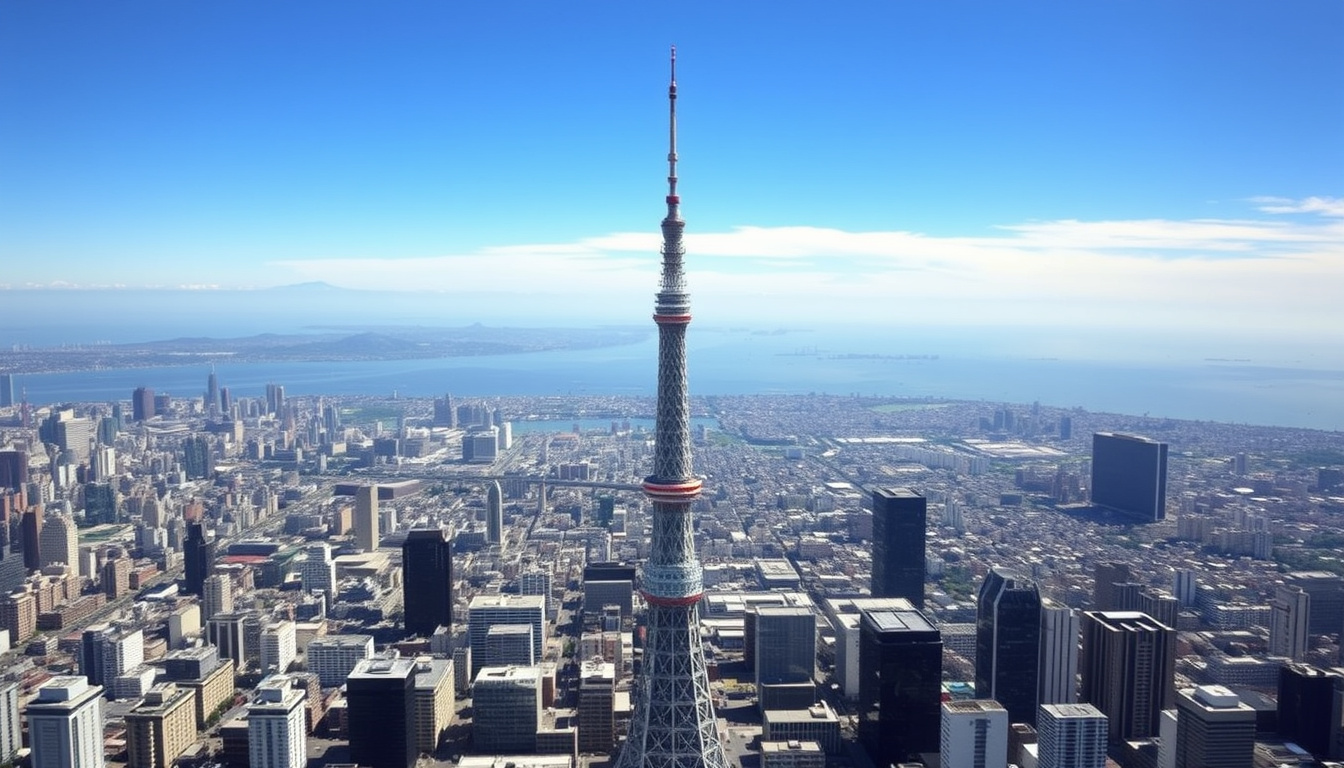
For a structure that was built to send signals, the Tokyo Skytree has certainly sent mixed feelings among visitors. Is a 634-meter broadcasting tower worth the queue and the ticket price when Tokyo already has plenty of high-altitude options?
Height: 634 m (2,080 ft) ·
Observation Decks: 2 (Tembo Deck 350 m, Tembo Galleria 450 m) ·
Tallest Tower in Japan: Yes ·
Opened: 2012 ·
Location: Sumida, Tokyo
Quick snapshot
- Tallest tower in Japan at 634 m (Tokyo Skytree official site)
- Two observation decks at 350 m and 450 m (Tobu Railway)
- Mount Fuji visible on clear winter days (Japan Guide)
- Which deck offers the best value depends on personal preference
- Skytree vs Tokyo Tower “better” is subjective
- Earthquake safety protocols are not publicly detailed
- Opened in 2012 (Tokyo Skytree official site)
- Remains the tallest tower in Japan (Tokyo Skytree official site)
- Ticket prices may vary by season; advance booking recommended (Japan Guide)
- Dynamic pricing could become more common (Japan Guide)
Key facts at a glance
Six specs that define the Skytree experience — from its concrete core to how fast the elevator climbs.
| Attribute | Value |
|---|---|
| Height | 634 m (Tokyo Skytree official site) |
| Observation Decks | 2 (350 m & 450 m) (Tobu Railway) |
| Opened | 2012 (Tokyo Skytree official site) |
| Location | Sumida, Tokyo (GO TOKYO) |
| Architect | Nikken Sekkei |
| Elevator Speed | 600 m/min (fastest in Japan) (Tobu Railway) |
The pattern: every dimension says “big and fast” — but the real question is whether the experience lives up to the numbers.
Is it worth going up the Tokyo Skytree?
No other observation deck in Tokyo forces you to decide between price, queue time, and altitude quite like this one.
Pros and cons of visiting Tokyo Skytree
Upsides
- Unobstructed 360-degree view of Tokyo (Japan Guide)
- Mount Fuji visible on clear winter mornings (Japan Guide)
- Two decks offer different perspectives (350 m open-air walk, 450 m glass floor) (Tobu Railway)
- Large attached mall (Tokyo Solamachi) with dining and shopping
Downsides
- Weekend/holiday ticket prices are ¥200–300 higher (Tobu Railway)
- Queues can exceed 60 minutes during peak times (Japan Guide)
- Additional ¥500 issuance fee if buying at the counter (TicketLens)
- Less central location (Sumida) compared to Tokyo Tower or Shibuya Sky
Cost vs experience
Tobu Railway (operator) sells weekday Tembo Deck-only tickets at ¥2,100 for adults, while the same ticket on holidays costs ¥2,300. Adding the Tembo Galleria brings weekday combo to ¥3,100 and holiday to ¥3,400. That’s a ¥300 premium for weekend access — roughly the price of a bowl of ramen.
Japan Guide (visitor resource) notes that same-day full-price tickets are ¥2,400 weekdays and ¥2,600 weekends for the first observatory. Advance reservations through the official website or Klook can save a few hundred yen.
Alternative viewpoints in Tokyo
- Tokyo Tower (333 m) — more central, shorter queue, one deck at 250 m (Japan Guide)
- Shibuya Sky (230 m) — open-air roof deck, younger crowd, time-slot tickets
- Tokyo Metropolitan Government Building (202 m) — free observation deck, but less iconic
The trade-off: the Skytree gives you height and breadth, but the competition offers better locations or lower cost.
A weekday visitor with an advance ticket pays ¥1,800–2,100 for the main deck — roughly the same as a dinner out. Weekend walk-ups face ¥2,300 plus queue time. For budget-conscious travellers, the free city government observatory beats both.
Why is the Tokyo Skytree so famous?
Height and broadcasting role
At 634 m, the Skytree is the tallest tower in Japan and the second tallest structure in the world (Tokyo Skytree official site). But its primary job isn’t tourism — it broadcasts digital terrestrial television and radio to the greater Tokyo region, replacing the older Tokyo Tower after the digital switchover. Its height ensures interference-free signals across the Kanto plain.
Architecture and design
Designed by Nikken Sekkei, the tower uses a hybrid steel-and-concrete frame with a central concrete core. The silhouette narrows in sections to reduce wind load. The design incorporates a triangular base that transitions into a circular cross-section — both aesthetic and aerodynamic.
Cultural impact
The Skytree anchors the Oshiage area redevelopment (GO TOKYO). Since opening in 2012, it has become a symbol of modern Tokyo, appearing in international media and drawing millions of visitors annually. The attached Tokyo Solamachi mall contains over 300 shops, including a Pokemon Center.
The pattern: a broadcast tower that became a cultural magnet — but the engineering that makes it work is invisible to most visitors.
Which one is better, Skytree or Tokyo Tower?
Three major observation structures in Tokyo, three different trade-offs. Here’s how they stack up.
Three contenders, one key split: height versus location. The Skytree wins on altitude but loses on centrality.
| Feature | Tokyo Skytree | Tokyo Tower | Shibuya Sky |
|---|---|---|---|
| Height | 634 m (official site) | 333 m (Japan Guide) | 230 m |
| Observation deck(s) | 2 (350 m, 450 m) (Tobu Railway) | 1 (250 m) (Japan Guide) | 1 (230 m, open roof) |
| Adult ticket (weekday, advance) | ¥1,800–2,100 (official e-ticket) | ¥1,200–1,500 | ¥2,000 |
| Mount Fuji view | Yes (clear winter days) (Japan Guide) | Possible but less panoramic | No |
| Location | Sumida (east side) | Minato (central) | Shibuya (west side) |
What this means: if your priority is the tallest possible perch with a chance to spot Mount Fuji, the Skytree wins. If you want a quick, cheap city-centre view, Tokyo Tower or Shibuya Sky are smarter picks.
Shibuya Sky lacks indoor seating and closes during bad weather. The Skytree’s enclosed decks run rain or shine. For families with small children or anyone who wants to linger, the Skytree’s indoor spaces give it an edge.
Can you see Mount Fuji from Tokyo Skytree?
Best conditions for viewing
Mount Fuji is visible from the Skytree’s upper decks on clear winter mornings, roughly from November to February (Japan Guide). The distance is about 100 km. Best visibility occurs between 7:00 and 9:00 AM, before humidity builds.
Seasonal visibility
- Winter (Nov–Feb): highest chance, especially after cold fronts
- Spring (Mar–May): occasional visibility, but often hazy
- Summer (Jun–Aug): very low due to humidity and rain
- Autumn (Sep–Oct): moderate, improves after typhoons pass
Alternative spots for Mount Fuji view
- Tokyo Tower (333 m) — less altitude, but closer to central Tokyo
- Mount Takao (599 m) — a 1-hour train ride west, dedicated Fuji-facing viewpoint
- Observatory of the Tokyo Metropolitan Government Building (202 m) — free and often less crowded
The practical takeaway: if you’re visiting Tokyo in winter, the Skytree is your best bet for a Fuji sighting from a building. In summer, skip it and hike Takao instead.
What is the view like from the Tokyo Skytree?
Panoramic skyline
The 360-degree view from the Tembo Deck at 350 m covers the entire Tokyo basin. On a clear day, you can identify the Sumida River, Asakusa’s Senso-ji temple, Tokyo Tower, the Rainbow Bridge, and, if lucky, Mount Fuji to the west (Japan Guide).
Day vs night
Daytime offers the best chance for long-distance visibility, especially for Mount Fuji. Nighttime transforms the experience into a sea of city lights — the “Tokyo night view” is consistently praised in visitor reviews. The glass-floor sections at Tembo Galleria (450 m) let you look straight down, a thrill that the lower deck lacks.
Landmarks visible
- Sumida River and the many bridges
- Asakusa and the golden temple of Senso-ji
- Tokyo Tower (333 m) in the distance
- Rainbow Bridge and Odaiba
- Mount Fuji (seasonal, winter mornings)
The pattern: the view gets better the higher you go, but the real value is the ability to stay indoors, sit down, and take in the scale of Tokyo without fighting crowds — something the open-air alternatives don’t offer.
Confirmed facts vs what remains unclear
Confirmed facts
- Tokyo Skytree is the tallest tower in Japan at 634 m (Tokyo Skytree official site)
- It has two observation decks at 350 m and 450 m (Tobu Railway)
- Mount Fuji is visible on clear winter days (Japan Guide)
- Weekday Tembo Deck-only tickets cost ¥2,100 for adults, holidays ¥2,300 (Tobu Railway)
- Advance online tickets start at ¥1,800 for the main deck (Tokyo Skytree E-ticket)
- Last admission is 60 minutes before closing (GO TOKYO)
What’s unclear
- Which observation deck offers the best value for each visitor
- Whether Skytree or Tokyo Tower is “better” — depends on your priorities
- Detailed earthquake safety protocols are not publicly disclosed
- Actual wait times on specific days are hard to predict
- Dynamic pricing may change future ticket costs
What visitors say
“Tokyo Skytree is the tallest tower in Japan, standing at a height of 634 m.”
Wikipedia entry for Tokyo Skytree
“Enjoy the ultimate outing at TOKYO SKYTREE!”
Tokyo Skytree official website
Two perspectives: the record book and the marketing pitch. Neither tells you what the queues feel like on a Saturday afternoon.
Bottom line
The Tokyo Skytree delivers exactly what it promises: the highest vantage point in Japan, a reliable Mount Fuji view in winter, and a polished tourist experience with a mall at its feet. For the traveller who values altitude and indoor comfort over location and price, the weekday advance ticket at ¥1,800 is a solid deal. For the budget traveller or the one with only one night in central Tokyo, the free city government observatory or the quicker Shibuya Sky makes more sense. The choice is clear: pay for height and breadth, or pay less for convenience and character.
tokyoskytree.jp, tokyo-skytree.jp, visittokyoguide.com, jrpass.com, tokyo-skytree.jp, gotokyoskytree.com
Frequently asked questions
Which month is Mount Fuji most visible from Tokyo Skytree?
Mount Fuji is most visible during the winter months, especially from November to February, on clear mornings before humidity increases.
How long is a bullet train from Tokyo to Mount Fuji?
The Shinkansen from Tokyo Station to Shin-Fuji Station takes about 1 hour, but note that Shin-Fuji is still about 40 km from the mountain itself. Buses from Shinjuku to the Fifth Station take roughly 2.5 hours.
Is Tokyo Skytree the highest tower in the world?
No. Tokyo Skytree is the second tallest structure in the world after the Burj Khalifa (828 m) and the tallest tower in Japan.
Which is taller, the Eiffel Tower or the Tokyo Skytree?
The Tokyo Skytree (634 m) is nearly twice as tall as the Eiffel Tower (300 m, 330 m with antenna).
Should I do Shibuya Sky or Skytree?
If you want an open-air rooftop experience and are in Shibuya, go to Shibuya Sky. If you want the highest possible views with indoor comfort and a chance to see Mount Fuji, choose the Skytree. Shibuya Sky is cheaper but closes in bad weather.
What is the best observation deck in Tokyo?
There is no single answer. The Skytree wins for height and Fuji views, Tokyo Tower for its central location and retro charm, Shibuya Sky for open-air night views, and the Tokyo Metropolitan Government Building for free access.
How many floors does Tokyo Skytree have?
The tower has no traditional “floors” like an office building. The main observation areas are the Tembo Deck at 350 m (approximately floor equivalent 29) and the Tembo Galleria at 450 m (approximately floor equivalent 37).

Arthur Oliver Howard Fletcher is a staff writer for NationalReport.uk, covering UK national news, politics, the economy and public services. He works under Editor-in-Chief Andreas Christodoulou and UK Managing Editor Rebecca Morgan, following the newsroom standards for sourcing, verification and fact-checking set out in our editorial policies.