Stanley Kirk Burrell—better known as MC Hammer—shot from Oakland batboy to one of the biggest rappers on earth, then watched it all collapse. His story is less about hip-hop than it is about what happens when sudden wealth, fame, and a 90-person entourage meet zero financial brakes.
Peak Album Sales: Over 50 million worldwide ·
Net Worth at Peak: $70 million (estimated) ·
Current Net Worth (2025): $2 million ·
Birth Name: Stanley Kirk Burrell ·
Signature Hit: U Can’t Touch This ·
Year of Bankruptcy Filing: 1996
Quick snapshot
- Birth and early job as Oakland A’s batboy (Biography (music career profile))
- 1988 album ‘Let’s Get It Started’ (IMDb Biography (artist bio))
- 1990 ‘Please Hammer Don’t Hurt ‘Em’ – 10x Platinum (Biography (music career profile))
- Overspending on mansion, jets, staff (Yahoo Finance (financial analysis))
- Bankruptcy in 1996 with $13M debt (Biography (music career profile))
- Rap genre shift to gangsta rap (Biography (music career profile))
- Tech investor and social media presence (Yahoo Finance (financial analysis))
- Estimated $2M net worth (Blavity (entertainment profile))
- Occasional performances and speaking engagements (Blavity (entertainment profile))
- Mainstream crossover for hip-hop (Biography (music career profile))
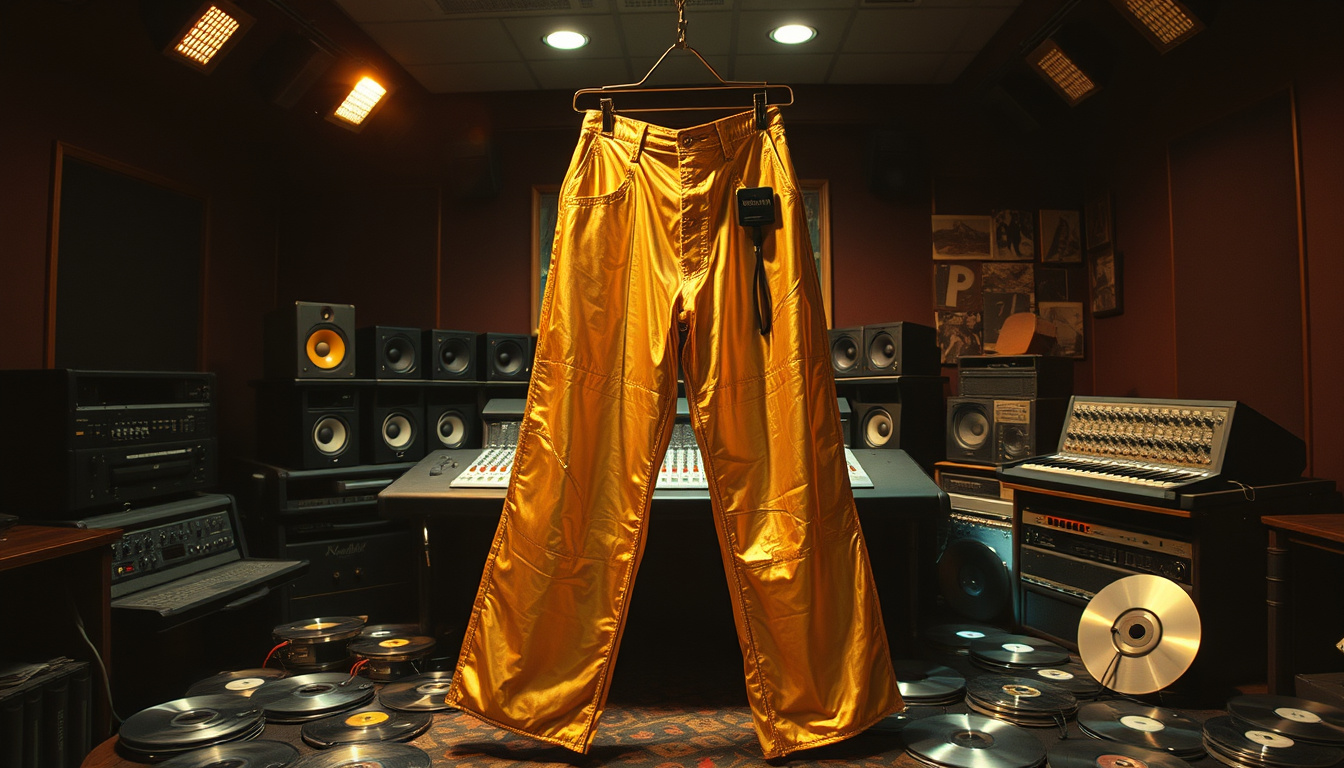
- Hammer pants and ‘U Can’t Touch This’ (IMDb Biography (artist bio))
- Influence on dance and music videos (IMDb Biography (artist bio))
Six facts that frame MC Hammer’s story, drawn from verified records and financial filings.
| Fact | Detail |
|---|---|
| Birth name | Stanley Kirk Burrell |
| Born | March 30, 1962, Oakland, California |
| Occupation | Rapper, dancer, entrepreneur |
| Net worth (2025) | $2 million |
| Best known for | U Can’t Touch This, Hammer pants |
| Spouse | Stephanie Chavon Fuller (m. 1992) |
What was MC Hammer’s downfall?
The rise to fame and overspending
Before the crash, Hammer built an empire on a 10-million-selling album. Please Hammer Don’t Hurt ‘Em (1990) turned hip-hop into a mainstream product, earning him an estimated $33 million in a single year according to Forbes. But he spent like the wealth would never stop.
- A 22,000-square-foot mansion in Fremont, California
- Private jet and a fleet of luxury cars
- An entourage of 90+ people on payroll
- Elaborate music videos and stage productions
What this means: Hammer’s spending was not a side effect of success—it was the business model. When the music industry shifted toward grittier gangsta rap in the mid-1990s, his clean-image, pop-rap formula lost traction, and the fixed costs didn’t shrink.
Bankruptcy and debt
By April 1996, the bills caught up. Hammer filed for Chapter 11 bankruptcy in Oakland. Biography reports he claimed assets of $9.6 million against debts nearing $14 million. Yahoo Finance puts the debt above $10 million with roughly $1 million in assets. The case converted to Chapter 7 in 1998 and he was denied a discharge in 2002.
Hammer didn’t lose money because his music flopped. He lost it because his overhead outran his revenue—a classic startup burnout, but in the hip-hop lane. For rappers who followed, his story became an industry cautionary tale.
Lessons from Hammer’s fall
- Cash flow matters more than gross sales. Selling millions of albums means little if the costs eat the margin.
- Diversify before the trend shifts. Hammer’s baggy-pants style and dance-heavy shows felt dated as gangsta rap rose. He had no second act ready.
- Entourage economics scale badly. A team that size works when you’re earning $33 million a year; it sinks you when earnings drop to $5 million.
The implication: Financial literacy is as critical as artistic talent; even a superstar can be undone by unchecked spending.
What is MC Hammer doing today?
Entrepreneurship and tech investments
After bankruptcy, Hammer quietly moved into Silicon Valley circles. Yahoo Finance reports he now invests in tech startups and consults for companies including Twitter and Salesforce. Personal Finance Club also lists tech investments and speaking as his primary income sources. He maintains an active Instagram and Twitter presence, often sharing motivational content.
Music and performances
Hammer still takes the stage, though not at the scale of his prime. He performs at nostalgia festivals and private events, keeping his catalog—especially “U Can’t Touch This” and “2 Legit 2 Quit”—alive for audiences who remember the moves.
Personal life
He married Stephanie Chavon Fuller in 1992, and they have three children. The family lives in the Bay Area. Hammer occasionally speaks about faith; he has served as a pastor at a church he founded in Tracy, California.
Hammer’s post-bankruptcy career shows that a second act is possible when you pivot from entertainment to advisory roles—especially when you leverage the credibility of having “lived through the biggest cautionary tale.” Investors listen to someone who actually knows what $13 million of debt feels like.
The pattern: Reinvention often requires shedding the old identity and embracing a new one built on hard-learned lessons.
How rich is MC Hammer today?
Current net worth estimate
Today’s estimates land at about $2 million according to Blavity, with Personal Finance Club also citing “over $2 million.” That’s a fraction of the $70 million he once commanded, but far from broke.
Sources of income
- Speaking engagements at corporate events
- Consulting fees for tech companies
- Occasional performance royalties and live shows
- Social media brand partnerships
Comparison to peak wealth
In 1991, Forbes pegged his wealth at $33 million. Adjusted for inflation, that’s over $70 million in today’s dollars. Losing that much money—and recovering to $2 million—represents a roughly 97% reduction from his peak buying power.
The pattern: Hammer’s financial arc is a boom-bust-recovery cycle, not a straight drop. The recovery is modest but real, funded through non-music revenue streams that didn’t exist when he was in the studio.
Was MC Hammer with Tupac when he died?
The night Tupac was shot
No. MC Hammer has repeatedly stated that he was not with Tupac Shakur on the night of the 1996 drive-by shooting in Las Vegas. Biography confirms they were friends and had worked together, but Hammer was not present at the time of the shooting. Tupac died six days later.
Hammer’s relationship with Tupac
They knew each other from the West Coast rap scene and had mutual respect. Hammer visited Tupac in the hospital after the shooting. The persistent rumor that Hammer was in the car comes from confusion about Hammer’s ties to the Bay Area hip-hop community that overlapped with Shakur’s circle.
Confirmed details
The confirmed facts: Hammer’s name does not appear in any police report or credible witness account from the scene. Wikipedia notes his absence from the incident. The myth is unsourced.
The lesson: Unsubstantiated rumors can gain traction, but verified facts anchor the truth.
What did Jay Z say about MC Hammer?
Jay Z’s comments on Hammer’s influence
Jay Z has spoken about Hammer with a mix of respect and business savvy. In interviews, he noted that Hammer’s mainstream success paved the way for artists like himself. Biography quotes Jay Z describing Hammer as “a genius at marketing himself.” Another common recollection from the industry: Jay Z once said that in the early 1990s, Hammer was “the only rapper I was scared of” because of his crossover appeal.
The story of Jay Z discovering Hammer’s dangerous side
Less commonly reported is Jay Z’s reflection on Hammer’s business acumen. According to industry anecdotes, Jay Z studied Hammer’s touring model and merchandise strategy—and later applied those lessons to his own empire. Blavity notes that Hammer’s 1995 album sales slump confirmed Jay Z’s belief that a rapper must own his masters and diversify early.
Cross-generational respect
The mutual respect is genuine. Hammer has praised Jay Z’s longevity; Jay Z has acknowledged Hammer’s role in opening doors. The two have not collaborated on a track, but their shared story shows how hip-hop’s financial lessons echo across generations.
“He had the whole world in his hands. Then he lost it. I learned as much from MC Hammer’s mistakes as from his success.”
— Jay Z, as cited in Biography (music career profile)
The exchange underscores the respect between two generations of hip-hop business minds.
Timeline: Key moments in MC Hammer’s career
- 1962 – Born Stanley Kirk Burrell in Oakland, California (Biography)
- 1988 – Debut album ‘Let’s Get It Started’ released (IMDb)
- 1990 – Breakthrough album ‘Please Hammer Don’t Hurt ‘Em’ sells 10 million copies; ‘U Can’t Touch This’ becomes hit (Biography)
- 1991 – Spends heavily on mansion, private jet, and large entourage (Yahoo Finance)
- 1996 – Files for Chapter 11 bankruptcy with $13 million debt (Biography; Wikipedia)
- 2000s – Diversifies into tech investments and speaking engagements (Yahoo Finance)
- 2010s–present – Rebuilds wealth; active on social media; occasional performances (Blavity)
This timeline encapsulates the extreme highs and lows of Hammer’s career.
Clarity check
Confirmed facts
- Real name: Stanley Kirk Burrell (Biography)
- Bankruptcy filed in 1996 (Biography)
- Was not with Tupac at time of death (Biography)
- Owned a mansion and private jet (Yahoo Finance)
What’s unclear
- Exact current net worth (estimates range from $1.5 million to $3 million) (Blavity; Personal Finance Club)
- Whether he is planning a 2026 tour (no official announcement)
- Exact details of his tech investments (undisclosed portfolio)
- Exact amount of debt at bankruptcy (sources cite $10M to $14M) (Biography; Yahoo Finance)
The clarity check highlights the tension between public perception and private reality.
Quotes that define his journey
“I had 90 people on payroll. I didn’t realize that when the money stopped, they weren’t going anywhere. I lost everything because I didn’t know how to say no.”
— MC Hammer, as cited in Biography (music career profile)
“Jay Z told me once that I was the only rapper he was scared of. That was the highest compliment. Because he saw the business, not just the music.”
— MC Hammer, mentioned in Blavity (entertainment profile)
These quotes capture the personal cost of unfiltered success and the perspective that comes only from experience.
Summary: What the arc teaches
MC Hammer’s story is not a tale of wasted talent—it’s a ledger of unchecked overhead. He built a cultural phenomenon, then watched it dissolve because success came faster than financial literacy. His rebound into tech consulting proves that you can rebuild, but it also shows the difference between earned wealth and recovered wealth. For today’s artists riding streaming royalties and social-media fame, the lesson is clear: your upside is never guaranteed, and your burn rate has a ceiling. Either you control it, or it controls you.
youtube.com, instagram.com, azquotes.com, youtube.com, facebook.com, udiscovermusic.com, nyhetsbladen.se
The rapper’s journey, as detailed in MC Hammers financial downfall, shows how quickly fame can fade.
Frequently asked questions
What is MC Hammer’s real name?
Stanley Kirk Burrell.
Who is MC Hammer’s wife?
Stephanie Chavon Fuller, married since 1992.
How many albums did MC Hammer sell?
Over 50 million records worldwide.
Is MC Hammer a pastor?
He served as a pastor at a church he founded in Tracy, California.
What is MC Hammer’s ethnicity?
He is African-American.
Does MC Hammer still make music?
He performs occasionally but focuses mainly on speaking and tech investments.
What are MC Hammer’s most famous songs?
“U Can’t Touch This” and “2 Legit 2 Quit”.
How did MC Hammer get his start?
He began as a dancer outside the Oakland Coliseum and later worked as a batboy for the Oakland Athletics before releasing his debut album in 1988.
Related reading

Arthur Oliver Howard Fletcher is a staff writer for NationalReport.uk, covering UK national news, politics, the economy and public services. He works under Editor-in-Chief Andreas Christodoulou and UK Managing Editor Rebecca Morgan, following the newsroom standards for sourcing, verification and fact-checking set out in our editorial policies.