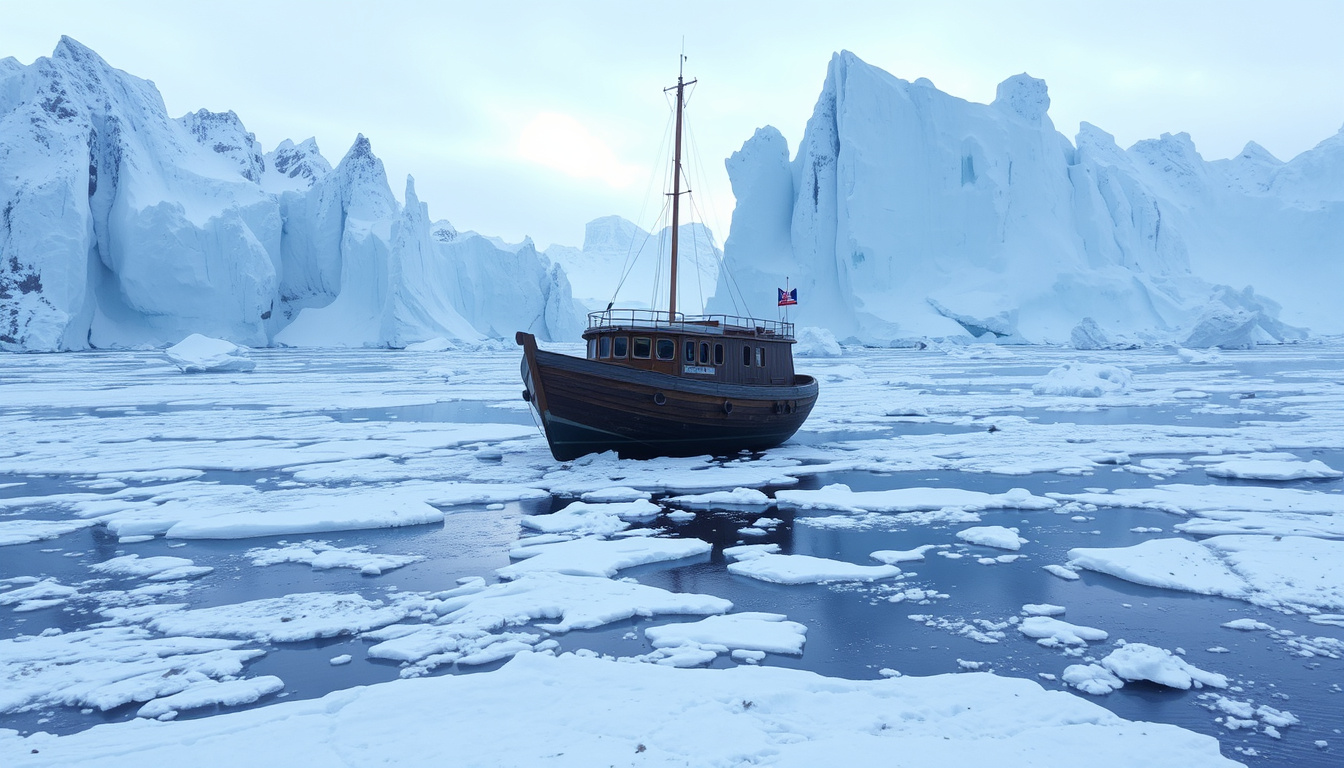
Few survival stories grip the imagination like the saga of Ernest Shackleton and his crew. When their ship Endurance was crushed by Antarctic ice in 1915, the 28 men faced a frozen hell that would have broken most leaders. Yet Shackleton brought every single one of them home – a feat that still feels impossible a century later.
Born: 15 February 1874, Kilkea, Ireland · Died: 5 January 1922, South Georgia · Crew survived on Endurance expedition: All 28 men · Ship lost: Endurance, crushed by ice in 1915 · Survival voyage: 800 miles (1,300 km) in open lifeboat James Caird
Quick snapshot
- Shackleton led the Imperial Trans-Antarctic Expedition (1914–1917) (Cool Antarctica educational resource)
- All 28 crew survived the two-year ordeal (Royal Geographical Society learned society)
- Endurance sank on 21 November 1915 after being crushed by ice (Cool Antarctica educational resource)
- Exact wording of Shackleton’s last words varies among sources
- Number of dogs that survived the expedition is not uniformly recorded
- 2022 – Wreck of Endurance discovered in the Weddell Sea at 3,008 meters depth (NPR public radio)
- Endurance22 expedition continues to document the wreck and share findings
The table below captures the essential biographical and expedition facts that define Shackleton’s legacy.
| Fact | Detail |
|---|---|
| Full name | Sir Ernest Henry Shackleton |
| Born | 15 February 1874, Kilkea, Ireland |
| Died | 5 January 1922, South Georgia |
| Nationality | Anglo-Irish |
| Occupation | Antarctic explorer |
| Expeditions led | 3 British expeditions to Antarctica |
| Famous for | Endurance expedition survival |
| Crew survival rate | 100% (28/28) |
What is Ernest Shackleton most famous for?
The Endurance expedition
- Shackleton’s Imperial Trans-Antarctic Expedition (1914–1917) aimed to cross Antarctica from sea to sea via the South Pole (Cool Antarctica educational resource).
- Endurance left South Georgia on 5 December 1914 and encountered pack ice just two days later (Cool Antarctica educational resource).
- On 18 January 1915, the ship became beset in heavy ice; by 27 October 1915 it was abandoned and sank on 21 November 1915 (Cool Antarctica educational resource).
The James Caird voyage
- After months adrift on the ice, Shackleton and five others launched the open lifeboat James Caird from Elephant Island on 24 April 1916 (Cool Antarctica educational resource).
- They sailed 800 miles (1,300 km) across the Southern Ocean to South Georgia, a feat historians call one of the greatest small-boat journeys ever made.
- On 20 May 1916, Shackleton, Tom Crean, and Frank Worsley reached the Stromness whaling station on foot after crossing the island’s uncharted mountains (Cool Antarctica educational resource).
Leadership under crisis
- Shackleton kept morale and discipline intact during 22 months of isolation, danger, and uncertainty (HISTORY history channel).
- His decision-making – from abandoning the ship to dividing the crew for rescue – is studied in business schools as a model of crisis leadership.
Did any of the Shackleton crew survive?
All 28 men rescued
- Every single crew member of the Endurance expedition survived – a 100% survival rate (Royal Geographical Society learned society).
- After the James Caird landing, Shackleton made three attempts to rescue the 22 men left on Elephant Island. The fourth attempt, using the Chilean steam tug Yelcho, succeeded on 30 August 1916 (Lloyd’s historic insurer).
- The men had been stranded on Elephant Island for 4.5 months, living under upturned boats and surviving on seal and penguin meat.
Role of Shackleton’s leadership
- Shackleton’s insistence on maintaining routine, exercise, and optimism prevented despair from taking hold (HISTORY history channel).
- He personally led the most dangerous phases – the boat journey and the mountain crossing – rather than delegating risk.
Survival conditions on Elephant Island
- The 22 men left behind on Elephant Island endured howling winds, near-freezing temperatures, and limited food.
- They were eventually brought home without loss of life, a testament to their resilience and Shackleton’s planning (Wikipedia open encyclopedia).
The implication: Shackleton’s leadership turned a catastrophic loss of ship into a triumph of human endurance.
Shackleton’s expedition failed in its original goal – crossing Antarctica – yet succeeded in the most profound human sense: everyone came home alive. That trade-off defines his legacy.
What is Ernest Shackleton’s famous quote?
Difficulties as opportunities
- Shackleton wrote in his book South: “Difficulties are just things to overcome, after all.” (HISTORY history channel)
- This line captures his philosophy of treating obstacles as problems to be solved, not reasons to give up.
Context of the quote
- The quote appears in the final chapter of South, published in 1919, where Shackleton reflects on the ordeal and the lessons learned.
Other notable Shackleton quotes
- “Optimism is true moral courage” – a line often cited in leadership literature.
- “The noise of the ice was like the sound of a thousand guns” – describing the moment Endurance was crushed.
What are 10 interesting facts about Ernest Shackleton?
Early life and career
- Born in Kilkea, County Kildare, Ireland, on 15 February 1874, the second of ten children.
- At 16, he joined the merchant navy and rose through the ranks, earning his master mariner certificate by 1898.
- He participated in the Discovery Expedition (1901–1904) with Robert Falcon Scott, during which he was invalided home after suffering scurvy.
Exploration achievements
- Led the Nimrod Expedition (1907–1909), reaching a southernmost record of 88°23’S – just 97 nautical miles from the South Pole.
- Was knighted by King Edward VII in 1909 for this achievement.
- Led the Imperial Trans-Antarctic Expedition (1914–1917) – the famous Endurance expedition.
- His final expedition, the Shackleton–Rowett Expedition on the Quest (1921–1922), was cut short by his death.
Death and legacy
- Shackleton died of a heart attack on 5 January 1922, aged 47, while the Quest was anchored at South Georgia.
- He was buried on South Georgia at the Grytviken whaling station, at the request of his wife.
- In 2022, the wreck of Endurance was discovered in the Weddell Sea, 3,008 meters deep, remarkably intact (NPR public radio).
Is the Ernest Shackleton story true?
Historical records
- All events of the Endurance expedition are documented in crew diaries, expedition photographs, and official reports (Royal Geographical Society learned society).
- Frank Hurley’s photographs and film footage provide visual evidence of the ship’s destruction and the men’s survival on the ice.
Endurance expedition documented
- Shackleton’s own book South (1919) gives a first-person account, corroborated by the diaries of other crew members such as Thomas Orde-Lees and Lionel Greenstreet.
- The story has been verified by multiple historians and is considered one of the best-documented survival sagas in exploration history.
Discovery of Endurance wreck in 2022
- The Endurance22 expedition located the wreck on 5 March 2022, more than a century after it sank (NPR public radio).
- The ship sits upright on the seafloor, with much of its structure preserved by the cold, dark waters of the Weddell Sea.
The discovery of Endurance doesn’t just confirm the historical record – it reopens the story for a new generation, making the abstract survival tale tangibly real.
What were Ernest Shackleton’s last words before he died?
Death on the Quest
- Shackleton suffered a fatal heart attack on 5 January 1922 while the Quest was anchored off South Georgia.
- His last words, as reported by crew members, were: “We are going to have a sleep.” (HISTORY history channel)
Last moments
- He had complained of chest pains the previous night but dismissed them. After a brief rest, he called for his doctor, who arrived moments after Shackleton’s death.
Legacy
- Shackleton was buried at Grytviken, South Georgia, on 5 March 1922. His grave remains a pilgrimage site for explorers and historians.
- The inscription on his memorial: “He sought the way to the Pole, but found the way to the heart.”
The pattern: Shackleton’s story endures because it offers a template for how to lead when everything falls apart.
Clarity check
Confirmed facts
- Shackleton led the Endurance expedition (1914–1917)
- All 28 crew survived the ordeal
- Endurance was crushed and sank in 1915
- Shackleton died on 5 January 1922 in South Georgia
- Endurance wreck was found in March 2022 at 3,008 meters depth
What’s unclear
- Exact wording of Shackleton’s last words varies among sources
- Number of dogs that survived is not uniformly recorded
Timeline
- 1874 – Born in Kilkea, County Kildare, Ireland
- 1890 – Joined the merchant navy
- 1901–1904 – Participated in Discovery Expedition with Robert Falcon Scott
- 1907–1909 – Led Nimrod Expedition; reached southernmost point at 88°23’S
- 1914–1917 – Led Imperial Trans-Antarctic Expedition on Endurance
- 1915 – Endurance crushed by ice and sank
- 1916 – 800-mile voyage to South Georgia; rescued all crew
- 1921–1922 – Led Shackleton–Rowett Expedition on Quest
- 5 January 1922 – Died of heart attack on Quest at South Georgia
- 2022 – Wreck of Endurance discovered in the Weddell Sea
“Difficulties are just things to overcome, after all.”
Ernest Shackleton, South (1919)
“We are going to have a sleep.”
Ernest Shackleton, last words reported by crew
The implication: Shackleton’s story is not just a 20th-century curiosity – it’s a living template for how to lead when everything falls apart. For modern leaders facing uncertainty, the choice is clear: either treat obstacles as excuses, or do what Shackleton did – turn them into a path home.
aurora-expeditions.com, coolantarctica.com, en.wikipedia.org, swoop-antarctica.com, blogs.egu.eu, deseret.com
Frequently asked questions
How did Shackleton become an explorer?
He joined the merchant navy at 16 and later volunteered for the Discovery Expedition, which ignited his passion for Antarctic exploration.
What happened to Shackleton’s ship Endurance?
It became trapped in pack ice on 18 January 1915, was crushed, and sank on 21 November 1915.
How long were Shackleton’s men stranded?
The crew was stranded from October 1915 until their rescue in August 1916 – about 10 months on the ice and Elephant Island.
Did Shackleton ever reach the South Pole?
No, he came within 97 nautical miles during the Nimrod Expedition (1909) but never reached the Pole.
What did Shackleton do after the Endurance expedition?
He served in World War I, then led the Shackleton–Rowett Expedition on the Quest, where he died in 1922.
How is Shackleton remembered today?
As a paragon of crisis leadership, his story is taught in business schools, celebrated in books and films, and honored by the 2022 discovery of Endurance.
Where is Shackleton buried?
At Grytviken on South Georgia, a British Overseas Territory in the South Atlantic.

Arthur Oliver Howard Fletcher is a staff writer for NationalReport.uk, covering UK national news, politics, the economy and public services. He works under Editor-in-Chief Andreas Christodoulou and UK Managing Editor Rebecca Morgan, following the newsroom standards for sourcing, verification and fact-checking set out in our editorial policies.