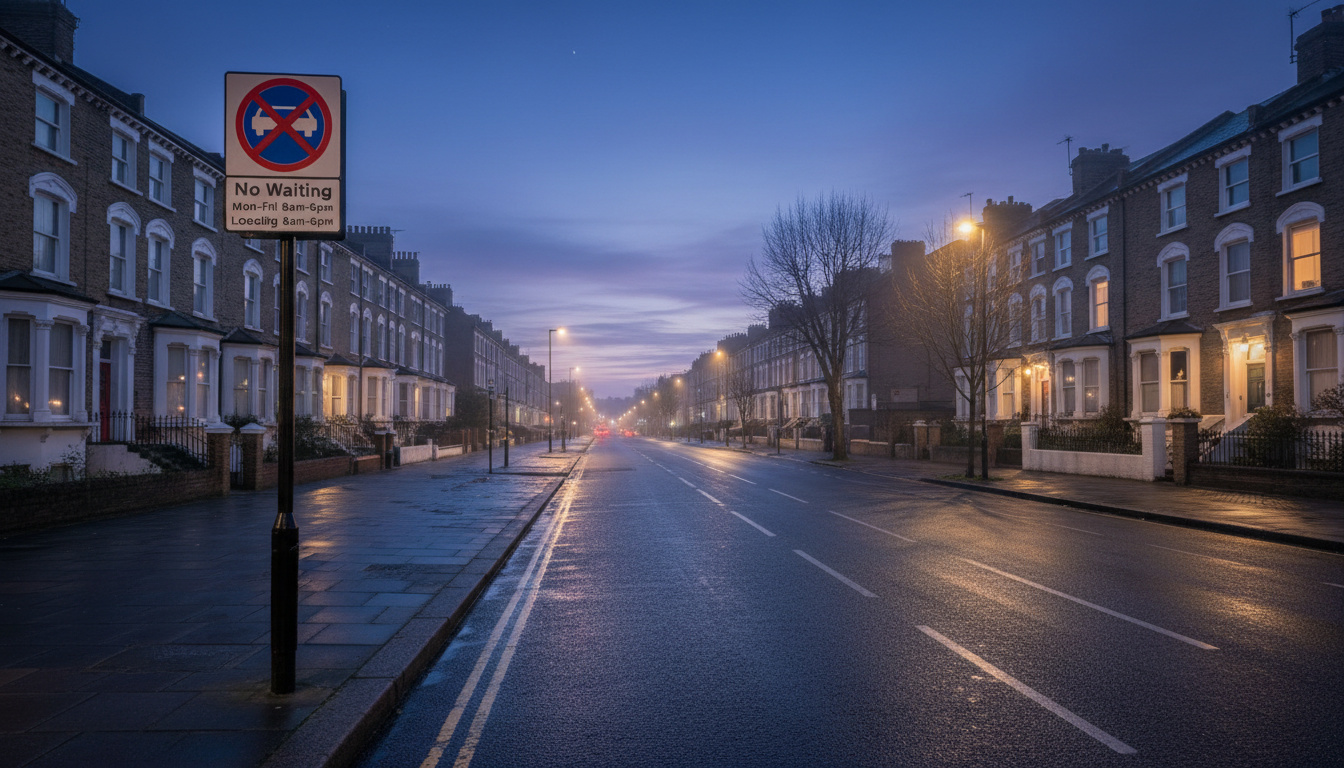
Single yellow line parking rules in the UK depend entirely on adjacent time plates rather than universal nationwide timings. Unlike double yellow lines, which prohibit waiting at all times, single yellow lines restrict parking only during specific hours indicated by nearby signs. These restrictions typically aim to manage traffic flow during peak periods or protect access for residents and businesses.
Drivers must verify the exact hours displayed on yellow signs attached to lampposts or walls near the restriction. Common time windows include 8am to 6pm or 8am to 8pm, often applying Monday through Saturday, though Sunday restrictions exist in busy areas like Manchester city centre. Parking is permitted outside these designated hours, including evenings and weekends, unless signage explicitly states otherwise.
Violations incur Penalty Charge Notices ranging from £50 to £80, depending on the local council. Early payment within 14 days typically reduces the fine by 50%. Enforcement occurs year-round, including bank holidays, unless the controlling time plate specifically excludes them.
What are the single yellow line parking rules?
- Check adjacent time plates: Restrictions apply only during hours shown on nearby yellow signs or Controlled Parking Zone (CPZ) entry signs.
- Typical weekday focus: Many restrictions operate 8am–6pm or 8am–8pm, Monday to Saturday.
- Absolute prohibition during hours: No waiting or parking is permitted while restrictions are active.
- Variable penalties: Fines differ by council but generally fall between £50 and £80.
- Sign dependency: The Highway Code mandates that drivers must not wait or park on yellow lines during the times of operation shown on nearby time plates.
- CPZ coverage: In Controlled Parking Zones, entry signs set uniform times for all single yellow lines within that zone, eliminating the need for individual line signs.
- Sunday variations: Many councils lift restrictions on Sundays, but areas with high demand may enforce seven-day rules.
- Loading distinctions: Single yellow lines often permit loading outside restricted hours, whereas double yellow lines with kerb markings prohibit loading entirely.
- No automatic evening waiver: The 6pm threshold is a common misconception; restrictions may extend until 8pm or later.
- Blue Badge limitations: Disabled badge holders receive concessions on double yellow lines (up to three hours) but must observe single yellow line time restrictions unless local exemptions apply.
| Scenario | Allowed? | Details |
|---|---|---|
| Parking at 7pm Friday | Usually yes | Permitted unless signs specify evening hours (e.g., 8am–8pm) |
| Parking Sunday 5pm | Often yes | Allowed if sign reads “Mon–Sat”; prohibited if “Mon–Sun” or similar |
| No sign visible nearby | Assume restricted | Check for CPZ entry signs; if none, assume restrictions apply per local default |
| Manchester city centre | No | Restrictions apply 8am–8pm seven days weekly |
| Brief passenger drop-off | Yes | Stopping to pick up or drop off passengers is permitted if the driver does not wait |
| Commercial loading | Limited | Up to 40 minutes may be allowed for unloading if no kerb marks or loading bans exist |
| Bank holiday Monday | Check sign | Bank holidays follow normal Monday rules unless the time plate explicitly excludes them |
When can you park on a single yellow line after 6pm, on Sundays or weekends?
The notion that parking becomes universally permitted after 6pm is inaccurate. Legality depends entirely on the specific hours printed on the time plate. If the sign indicates “8am–6pm Mon–Fri,” parking is indeed allowed after 6pm on Friday evening and throughout the weekend. However, if the restriction reads “8am–8pm Mon–Sat,” drivers must wait until after 8pm on Saturday or before 8am on Monday.
Sunday parking specifics
Sundays often operate outside standard restriction windows. When signs specify “Monday to Saturday” or similar weekday-only language, Sunday parking is generally permitted at any time. Conversely, signs displaying “Mon–Sun” or “Everyday” enforce restrictions including Sundays. Confused.com notes that Sunday enforcement varies significantly by borough, requiring on-site verification.
Weekend evening considerations
Saturday evenings follow the same logic as weekdays. If restrictions end at 6pm, parking is permissible thereafter. Some high-traffic entertainment districts extend prohibitions until 10pm or midnight on Fridays and Saturdays to manage nightlife congestion. Drivers should also consider that bank holidays in 2025 follow the rules of the day they replace unless the sign states otherwise.
Manchester city centre enforces single yellow line restrictions from 8am to 8pm seven days a week, including Sundays. Parking after 6pm on a Sunday is prohibited until 8pm in this zone. Carwow reports that no national weekend waiver exists; local variations apply.
What if there is no sign next to a single yellow line?
Absence of an immediate time plate does not guarantee free parking. The line may fall within a Controlled Parking Zone (CPZ), where restriction times are displayed on large entry signs at the zone’s boundaries rather than on every street. Drivers entering such zones must observe the times shown at entry points.
CPZ implications
According to Bromley Council, CPZ entry signs establish uniform waiting restrictions for all single yellow lines within that zone. If the zone operates 8am–6pm Monday to Friday, every single yellow line inside shares those hours regardless of individual street signage.
When no CPZ or sign exists
If neither individual time plates nor CPZ entry signs are visible, drivers should assume restrictions apply. West Yorkshire Police advise that without signage, the default position treats the line as restricted during typical daylight hours, though verification with the local authority remains essential.
Always examine both ends of the street for CPZ entry plates. These signs often display operating hours and resident permit requirements. Parking without checking these boundaries risks penalty even when individual line signs are absent.
How do single yellow line rules differ from double yellow lines?
Double yellow lines impose absolute prohibitions on waiting and parking at all times, including Sundays, bank holidays, and late evenings. Single yellow lines offer time-limited flexibility, restricting usage only during specified hours. This distinction fundamentally changes driver obligations and penalty exposure.
Loading and stopping distinctions
Double yellow lines marked with kerb blips (double yellow lines on the kerb) prohibit any stopping, loading, or unloading. Single yellow lines generally permit loading outside restricted times. The AA emphasizes that double yellow lines allow only three activities: passenger pick-up/drop-off (no waiting), Blue Badge holder parking (up to three hours), and brief commercial loading where no kerb markings exist.
Blue Badge applicability
Blue Badge holders may park on double yellow lines for up to three hours provided the badge is displayed correctly, the vehicle does not obstruct traffic, and no loading restrictions apply. This concession does not extend to single yellow lines during their active restriction periods; badge holders must observe single yellow time plates like all other drivers.
Single yellow lines appear as one continuous yellow stripe at the road edge. Double yellow lines show two parallel yellow stripes. Kerb markings—small yellow ticks perpendicular to the main lines—indicate loading prohibitions. Observing these visual cues prevents accidental violations.
Single yellow line parking rules in Manchester and Camden
Local councils retain authority to set restriction hours, creating significant geographical variation. Manchester and Camden represent contrasting approaches to Sunday and evening enforcement.
Manchester city centre restrictions
Manchester operates single yellow line restrictions from 8am to 8pm, seven days per week, throughout the city centre. This means parking is prohibited after 6pm on Sundays until 8pm, contrary to the common assumption that Sunday evenings are universally unrestricted. Carwow confirms this daily enforcement pattern.
Camden and London borough variations
No specific Camden-wide single yellow line hours were identified in available documentation. London boroughs vary significantly; Westminster often restricts Monday to Saturday, while other boroughs may include Sundays. Drivers in Camden must check individual street signs or consult the RAC guidance on reading time plates. Those seeking vehicle services in the capital might search for Toyota dealers near me to find compliant parking near service centres.
What is the enforcement timeline for parking violations?
Understanding the sequence of penalty enforcement helps drivers respond appropriately to notices and avoid escalation. If you’re unsure about the current time in the UK, you can check it here: Який зараз час у Великій Британії.
- Penalty Charge Notice issued: Civil enforcement officers or camera systems record the violation and issue a PCN attached to the vehicle or sent by post. Fines typically range from £50 to £80 depending on the council and severity.
- 14-day discount window: Paying within 14 days reduces the fine by 50%. This applies to both single and double yellow line violations.
- Formal demand: After 28 days, the council issues a formal demand for the full amount plus potential registration fees.
- Order for recovery: Unpaid debts may result in an Order for Recovery, adding further costs and potential bailiff involvement.
According to Carwow, councils may escalate unpaid fines to bailiffs, significantly increasing the financial burden beyond the initial penalty.
What is established versus uncertain about yellow line parking?
| Established Information | Information Requiring Verification |
|---|---|
| Highway Code mandates checking time plates for single yellow lines | Specific hours when no sign is visible (assumed restricted but varies by council) |
| Double yellow lines prohibit waiting 24/7, 365 days annually | Camden’s exact Sunday restrictions (no published uniform rule found) |
| Manchester city centre enforces 8am–8pm daily | Whether individual streets within CPZs have unique exemptions |
| Fines range £50–£80 with 50% early payment discount | Specific bank holiday exemptions (must check local signage) |
| Blue Badge holders get 3 hours on double yellows (not singles during hours) | Loading permission duration on single yellows without kerb marks (up to 40 minutes suggested but not universal) |
Why do single yellow line restrictions exist?
Single yellow lines primarily manage kerbside space to maintain traffic flow and safety. Local authorities implement these restrictions near schools, hospitals, shopping areas, and narrow streets where stationary vehicles would cause congestion or hazard. The system allows councils to balance resident parking needs against commercial delivery requirements and through-traffic.
Introduced under the Road Traffic Act powers, these markings represent a compromise between absolute prohibition (double yellows) and unrestricted parking (white lines). By time-limiting restrictions, councils can clear roads during rush hours while permitting evening and weekend parking for visitors and residents. West Yorkshire Police emphasize that these rules protect emergency access and public transport routes.
What do official sources say about yellow line parking?
“You MUST NOT wait or park on yellow lines during the times of operation shown on nearby time plates (or zone entry signs if in a CPZ).”
— The Highway Code, via Confused.com
“0800hrs–1800hrs but check the sign. Outside of those times, you can park there.”
— West Yorkshire Police
Key takeaways on single yellow line parking
Successful navigation of single yellow line parking requires vigilant attention to local signage rather than reliance on universal assumptions. Drivers must check adjacent time plates or CPZ entry signs for specific hours, remembering that restrictions vary significantly between Manchester’s daily enforcement and other regions’ weekday-only rules. Always distinguish single yellow lines from double yellow lines, which prohibit stopping at all times except for brief passenger exchange or Blue Badge holders. When planning journeys around bank holidays in 2025, assume normal restriction days apply unless the sign explicitly excludes them.
Frequently asked questions
Can you park on double yellow lines?
No. Double yellow lines prohibit waiting and parking at all times, including Sundays and bank holidays. Exceptions exist only for Blue Badge holders (up to three hours), brief passenger pick-up/drop-off without waiting, and commercial loading where no kerb markings prohibit it.
What is the fine for single yellow line parking?
Penalty Charge Notices typically range from £50 to £80 depending on the local council. Early payment within 14 days reduces the fine by 50%. Unpaid fines may escalate to bailiff action with additional costs.
Do bank holidays affect single yellow line restrictions?
Bank holidays generally follow the rules of the day they replace (usually Monday). If restrictions normally apply Monday to Friday, they apply on bank holiday Mondays unless the time plate specifically excludes bank holidays. Always check local signs.
Can Blue Badge holders park on single yellow lines?
Blue Badge holders must observe single yellow line time restrictions like all other drivers. The concession allowing up to three hours of parking applies to double yellow lines, not single yellow lines during their restricted hours.
How long can you stop on a single yellow line to drop off passengers?
Stopping to pick up or set down passengers is permitted on single yellow lines provided the driver does not wait or park. The vehicle must remain attended and move immediately after the exchange. Loading or unloading goods follows different rules, typically allowing up to 40 minutes for commercial vehicles outside restricted hours.

Arthur Oliver Howard Fletcher is a staff writer for NationalReport.uk, covering UK national news, politics, the economy and public services. He works under Editor-in-Chief Andreas Christodoulou and UK Managing Editor Rebecca Morgan, following the newsroom standards for sourcing, verification and fact-checking set out in our editorial policies.