
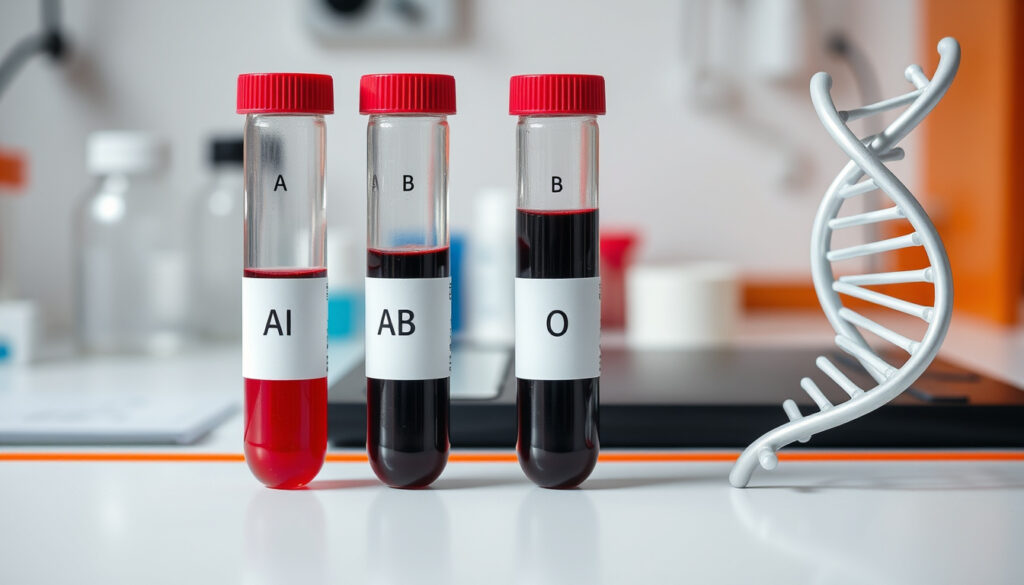
You probably already know your blood type, but have you ever wondered how rare it really is, or why you happen to have the exact one you do? The answers lie in a surprisingly elegant genetic system, and the numbers behind the eight common blood types reveal some clear winners—and some that stand out for their rarity.
Most common blood type worldwide: O+ (37.4% of population) ·
Rarest blood type globally: AB- (0.6% of population) ·
Universal red cell donor: O- ·
Universal plasma recipient: AB+
Quick snapshot
- Four main blood groups: A, B, AB, O (Cleveland Clinic)
- Based on presence of A and B antigens (Cleveland Clinic) (Cleveland Clinic)
- Rh-positive (+) or Rh-negative (-) (American Red Cross)
- Creates the eight common blood types (American Red Cross) (American Red Cross)
- AB- is the rarest (0.6%) (Stanford Blood Center)
- O+ is the most common (37.4%) (Medical News Today)
- Each parent contributes one ABO allele (Medicover Genetics)
- Rh type inherited as dominant or recessive (Medical News Today) (Medicover Genetics)
Six key figures capture the essentials of ABO and Rh blood types, from the number of groups to the universal donor and recipient.
| Fact | Value |
|---|---|
| Number of ABO blood groups | 4 (A, B, AB, O) |
| Total blood types (with Rh) | 8 (A+, A-, B+, B-, AB+, AB-, O+, O-) |
| Most common blood type | O+ (37%) |
| Rarest blood type | AB- (0.6%) |
| Universal red cell donor | O- |
| Universal recipient | AB+ |
What blood type is rarest?
If you ask people to guess the rarest common blood type, most say AB- or maybe O- — but only one of those is correct. Among the eight familiar ABO/Rh types, one stands out for its scarcity.
What are the top 3 rarest blood types?
- AB- – 0.6% of the U.S. population (Stanford Blood Center)
- B- – 1.5% of the U.S. population
- AB+ – 3.4% of the U.S. population
These numbers come from Stanford Blood Center, which tracks donor data. The pattern holds across most Western populations, though exact percentages shift by country. In the UK, for instance, AB- makes up about 1% of donors (NHS Blood Donation).
The implication: if you have AB- blood, you’re part of an exceptionally small club — and blood banks often actively recruit you.
Is O Negative a Rare Blood Type?
- O- prevalence in the U.S.: 6.6% (Stanford Blood Center)
- O- prevalence in the UK: 14% of donors (NHS Blood Donation)
O- is often called the universal donor because it can be given to any patient in emergencies. But rarity-wise, it’s not even close to the rarest: AB- is about 11 times rarer in the U.S. (0.6% vs 6.6%). O- is moderately uncommon, not exceptionally rare.
The catch: O- is in constant high demand precisely because it’s the go-to for trauma and newborns. So while not rare, it can be in short supply.
Do you inherit your blood type from your mom or dad?
Blood type is determined by both parents, and the genetic rules are straightforward — but real families often produce surprising combinations. The ABO system follows simple Mendelian inheritance.
Can two siblings have the same blood type?
- Each parent contributes one ABO allele (A, B, or O). A and B are co-dominant; O is recessive (Medicover Genetics).
- If both parents have type O, all children will be O. If parents are AO and BO, children can be A, B, AB, or O.
- Rh factor is inherited separately: Rh+ is dominant, Rh- is recessive (Medical News Today).
Yes, siblings can share the same blood type — and often do. But they can also differ. For example, two parents with A+ blood (genotype AO/Rh+Rh-) can have children with A+, A-, O+, or O- blood. The probability depends on the parents’ exact genotypes.
What this means: your blood type isn’t a solo trait — it’s a genetic hand-off from both parents, and knowing their types can tell you a lot about what’s possible for you.
Which is better, O+ or AB+?
Better depends on context: are you donating red cells, receiving them, or just curious about scarcity? O+ and AB+ play very different roles in the blood supply.
Is O or AB+ more rare?
- O+ is the most common type worldwide (about 37.4%) (American Red Cross)
- AB+ is far rarer: about 3.4% in the U.S. (Stanford Blood Center)
Clearly, AB+ is the rarer type. But “rarer” doesn’t mean “better” for everyone.
Is O+ or A+ more rare?
- O+: 37.4% in the U.S.
- A+: 27.8% in the U.S. (Stanford Blood Center)
A+ is less common than O+, but both are still considered very common. The real divide is between positive and negative types: Rh-negative types are generally rarer than Rh-positive across all ABO groups.
The trade-off: O+ can donate to any Rh+ recipient (including AB+), while AB+ can receive from any type. For donation reach, O+ wins. For recipient flexibility, AB+ wins.
What blood type are most Irish?
Geographic differences in blood type distribution are real, and Ireland stands out for its high frequency of O types and Rh-negative blood.
- O+ is the most common blood type in Ireland at about 47% (American Red Cross)
- Ireland has a higher proportion of Rh-negative types (including O-) than the global average
- Globally, O+ is also the most common type, but Ireland’s percentage is notably higher than, say, the U.S. (37.4%)
The pattern: Rh-negative types are more common in populations of European descent, especially in the British Isles and Scandinavia. So if you’re of Irish heritage, checking your blood type might reveal an O or Rh-negative surprise.
How rare are two blood types?
Having two distinct blood types in one person — blood group chimerism — is rare but documented. It’s not the same as having a mix of ABO antibodies; it’s genuinely two cell populations.
- Chimerism can occur naturally in twins who exchange blood in the womb (Medical News Today)
- It can also result from bone marrow transplants or transfusion
- Population estimates for natural chimerism are not well established, but it’s considered extremely uncommon outside of twin pregnancies
The implication: if a routine blood test flags a mixed result, it could be chimerism, not an error. Most people will never have two blood types, but those who do are a fascinating medical footnote.
Five blood types are compared head-to-head across rarity, donation roles, and typical traits.
| Blood Type | U.S. Frequency | Universal Donor? | Universal Recipient? |
|---|---|---|---|
| O+ | 37.4% | Only Rh+ | Only O |
| O- | 6.6% | Yes (all) | Only O |
| A+ | 27.8% | A, AB | A, O |
| B+ | 8.5% | B, AB | B, O |
| AB+ | 3.4% | Only AB | Yes (all) |
Six key blood type distribution figures across major populations.
| Population | O+ | A+ | B+ | AB+ | O- | A- | B- | AB- |
|---|---|---|---|---|---|---|---|---|
| United States | 37.4% | 27.8% | 8.5% | 3.4% | 6.6% | 6.3% | 1.5% | 0.6% |
| United Kingdom | 36% | 28% | 8% | 2% | 14% | 8% | 3% | 1% |
| Global average | ~37% | ~26% | ~9% | ~3% | ~7% | ~6% | ~2% | ~1% |
For blood banks, the rare AB- types are a logistics challenge: hospitals can’t stockpile every unit, and a matched patient may need an urgent order from a central registry. O- donors, though not the rarest, are the safety net for emergencies.
Confirmed facts
- AB- is the rarest of the eight common blood types (Stanford Blood Center)
- O+ is the most common worldwide (American Red Cross)
- Blood type is inherited from both parents (Medical News Today)
- The American Red Cross defines rare blood as occurring in fewer than 1 in 1,000 people (Medical News Today)
What’s unclear
- Exact rarity percentages vary by country and ethnicity
- Whether Jesus’s blood type can be determined is disputed
- Frequency of blood chimerism in the general population is not precisely known
AB+ is the universal recipient, meaning it can accept any red cell type — yet it’s among the rarest. O- is the universal donor, and while it’s not rare, demand exceeds supply because trauma patients need it fast.
“Blood type is inherited from biological parents, similar to eye color.” — American Red Cross
“AB- is the least common of the eight main blood types globally.” — Cleveland Clinic
For anyone navigating their own blood type rarity — whether you’re O-, AB+, or something in between — the practical takeaway is clear: know your type, and if it’s rare, consider donating regularly. Blood banks rely on that small percentage of donors to match patients with uncommon needs. For the rest, awareness of inheritance can settle family curiosities and even guide prenatal considerations around Rh compatibility. The choice to donate or to learn your family’s blood type heritage is simple: a few minutes now could make a difference tomorrow.
For a deeper look at why AB- is so rare and what that means for donors, see AB- and its rarity.
Frequently asked questions
Can blood type change over time?
Generally, blood type stays the same for life. Rare exceptions include bone marrow transplants (the recipient may acquire the donor’s type) or chimerism. No routine change occurs.
What blood type do mosquitoes prefer?
Some studies suggest type O blood is more attractive to mosquitoes, but the reasons are not fully understood. The effect is small and varies by mosquito species.
Is there a link between blood type and personality?
This is a popular belief in some cultures (especially Japan) but is not supported by rigorous scientific evidence. Personality associations are considered pseudoscience.
What is the ‘golden blood type’ (Rh-null)?
Rh-null lacks all Rh antigens and is extremely rare, estimated in about 1 in 6 million people (Medical News Today). It is prized for research and donation.
How is blood type determined in a lab?
A simple test mixes a blood sample with antibodies against A and B antigens, and Rh factor. The pattern of clumping reveals the type.
Can two Rh-positive parents have an Rh-negative child?
Yes, if both parents are Rh-positive but carry a recessive Rh-negative allele (genotype Rh+/Rh-), they can each pass the Rh- allele to the child.
What blood types are compatible for transfusion?
Roughly: O- can donate to anyone, AB+ can receive from anyone. Within ABO, O can donate to any group, A to A and AB, B to B and AB, AB only to AB. Rh compatibility is also considered.

Arthur Oliver Howard Fletcher is a staff writer for NationalReport.uk, covering UK national news, politics, the economy and public services. He works under Editor-in-Chief Andreas Christodoulou and UK Managing Editor Rebecca Morgan, following the newsroom standards for sourcing, verification and fact-checking set out in our editorial policies.