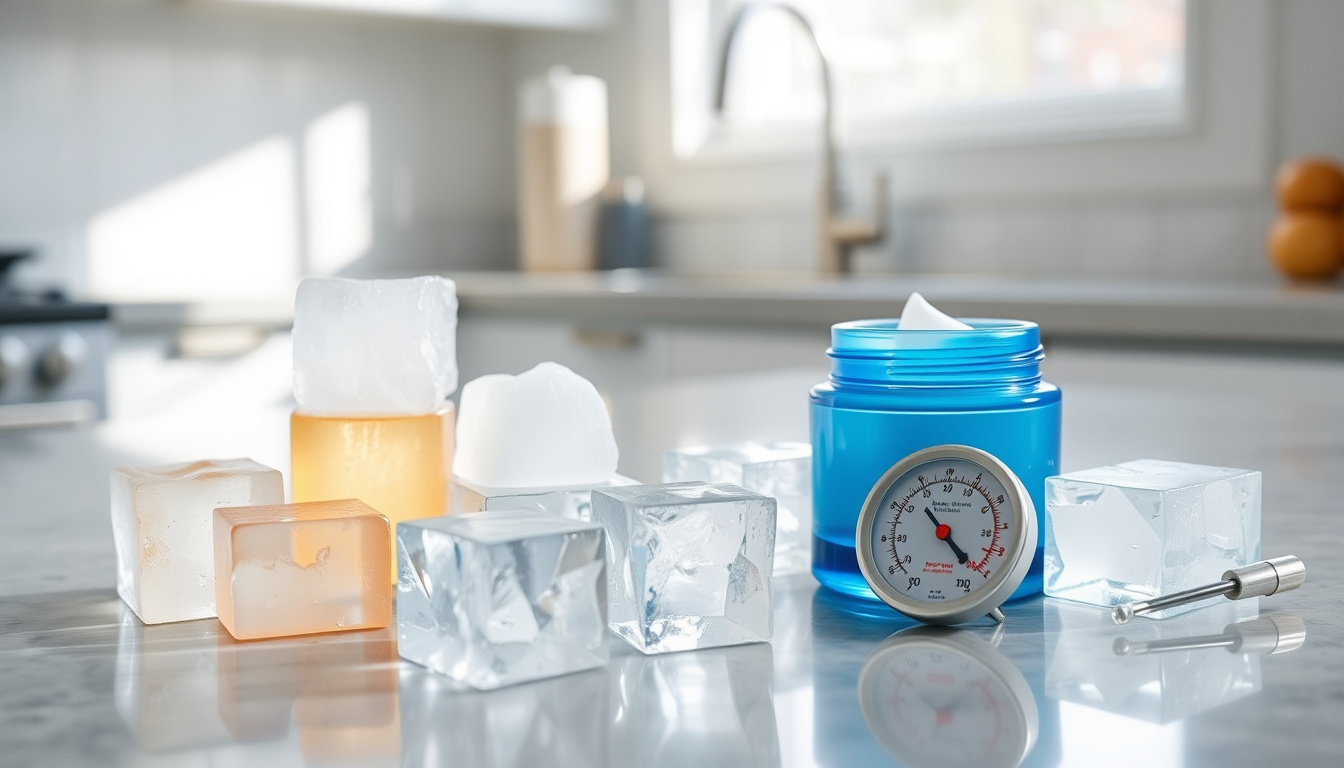
Ice cubes quietly chill drinks, soothe burns, and trend on TikTok for facial icing — but the evidence behind these uses varies widely. This guide sorts proven facts from viral hype, helping you choose the right ice for the job and use it safely.
Average ice cube melting time: 90-120 minutes in a standard drink ·
Household penetration of ice makers: Over 75% of US homes have an automatic ice maker ·
Recommended facial application time: 1-2 minutes per area, max 15 minutes total ·
Commercial ice cube weight standard: 1.8 kg bags (approx. 4 lbs) common in retail ·
Nugget ice melting time vs. cube: About 30% faster due to higher surface area
Quick snapshot
- Ice reduces localized inflammation via vasoconstriction (Cleveland Clinic, a leading non-profit medical center)
- Clear ice melts slower than cloudy ice because fewer impurities are present (Wikipedia)
- Excessive ice consumption can signal iron deficiency anemia (Healthline, a health information publisher)
- Long-term efficacy of daily facial ice for acne scar reduction (Healthline)
- Whether nugget ice is inherently safer to chew than crescent ice (GoodRx, a pharmacy savings platform with medical expertise)
- Exact bacterial growth rate in home ice makers without regular cleaning (Skin Beauty, a beauty information site)
- Social media posts about facial icing surged in 2024 (Instagram, a social media platform)
- Hospitals adopted flake and nugget ice machines over the past decade for patient comfort (Wikipedia)
- Demand for nugget ice in home refrigerators is growing (Pure Irish Ice, a commercial ice manufacturer)
- Dermatologists increasingly recommend ice rollers or refrigerated tools instead of raw cubes (Clarins USA, a skincare brand with dermatological input)
Five facts that define how ice cubes behave at the kitchen and clinical level.
| Fact | Value |
|---|---|
| Typical ice cube size | Standard home tray: 1 inch × 1 inch (approx. 2.5 cm × 2.5 cm) |
| Freezing point of water | 32°F (0°C) at standard pressure |
| Recommended ice application time on skin | 1-2 minutes per area, max 15 minutes total per session |
| Most popular ice type commercially | Nugget ice, also called ‘Sonic ice’ or pellet ice |
| Cleaning frequency for home ice makers | Every 6 months with a vinegar solution to prevent mold and mineral buildup |
What are ice cubes good for?
Cooling beverages effectively
- Standard cubes chill drinks evenly with minimal dilution when sized appropriately (Wikipedia).
- Clear ice, made with filtered water, melts slower and avoids off-flavors in spirits (Healthline).
For the average drinker, the trade-off is between convenience (standard cubes) and purity (clear ice). The implication: if you care about taste and dilution, invest in a clear-ice tray.
Reducing puffiness around the eyes
Applying ice wrapped in a cloth to the under-eye area temporarily drains excess lymphatic fluid, reducing puffiness (Cleveland Clinic). The effect is immediate but short-lived — usually 15 to 30 minutes.
The catch: the same vasoconstriction that reduces puffiness can also restrict blood flow too long, risking skin damage.
Soothing minor burns and sunburns
A cold compress (ice wrapped in a cloth) applied for 10-15 minutes can calm the stinging of a mild sunburn (GoodRx). Direct ice contact is discouraged because it can cause frostbite on already-compromised skin.
Preserving food in coolers
Ice cubes keep perishables cold during transport or outdoor events. Block ice or large cubes last longest; crushed ice chills fastest (FDA, the U.S. food safety regulator).
The pattern: each use case demands a different ice format. One size does not fit all.
Is ice good for sensitive skin?
Immediate vs. long-term effects on sensitive skin
- Sensitive skin types may experience redness or irritation from direct ice (Instagram Derm Tip, a dermatology account).
- Wrapping ice in a cloth reduces the skin shock but does not eliminate it entirely (Skin Beauty).
Some dermatologists advise against daily ice use for sensitive skin because repeated vasoconstriction can trigger rebound redness, especially in rosacea-prone individuals (GoodRx).
How to test ice tolerance safely
- Apply a wrapped ice cube to the inner arm for 30 seconds.
- Wait 10 minutes.
- If no redness or irritation develops, facial use is likely safe (Clarins USA).
Alternative cooling methods for reactive skin
For those who react to ice, alternatives include refrigerated jade rollers, chilled spoons, or gel face masks kept in the fridge (Clarins USA). These provide the cooling effect without the extreme temperature of frozen water.
Why this matters: people with rosacea, eczema, or broken capillaries should avoid ice entirely — inflammation may worsen rather than calm.
What kind of ice cube is best?
Nugget ice: chewable and high surface area
- Soft, porous pellets that cool fast and are easy to chew (Wikipedia).
- Preferred in fast-food chains and hospitals for patient comfort.
Nugget ice melts about 30% faster than standard cubes, which is a trade-off: it’s great for rapid cooling but dilutes drinks quicker.
Crescent ice: standard home freezer output
- The typical shape from automatic ice makers in household fridges (Healthline).
- Melts faster than clear ice but slower than crushed ice.
Gourmet clear ice: slow melting for spirits
- Made with directional freezing to remove air and impurities (Wikipedia).
- Preferred by whiskey drinkers because it dilutes slowly and adds no off-flavors.
Crushed ice: rapid cooling and dental uses
- High surface area chills drinks instantly (FDA).
- Often used for oral post-surgery recovery because it’s gentle to chew.
The implication: your choice depends on how fast you need cooling vs. how little dilution you want.
The trade-offIf convenience and chewability matter, nugget ice wins. If you’re drinking premium spirits, clear ice is the only option that preserves the pour.
| Type | Melt rate | Best for | Key characteristic |
|---|---|---|---|
| Nugget (pellet) ice | Fast (~30% faster than crescent) | Soft drinks, hospitals, chewing | Soft, porous, chewable |
| Crescent ice | Moderate | Home daily use | Common, affordable |
| Clear (gourmet) ice | Slow (up to 2× slower than crescent) | Whiskey, cocktails | Transparent, minimal dilution |
| Crushed ice | Very fast (~50% faster than crescent) | Rapid chilling, dental recovery | High surface area, easy to chew |
The implication: for the average US household that already has a crescent ice maker, upgrading to nugget or clear ice is a lifestyle choice, not a necessity.
Can I use ice cubes on my face daily?
Recommended frequency for facial ice massage
- Daily use is considered safe for most skin types when limited to 1-2 minutes per area (Clarins USA).
- Dermatologists often recommend 3-4 times per week as a safer starting point (GoodRx).
Signs of overuse: redness, skin barrier damage
Excessive daily icing can cause broken capillaries, especially around the nose and cheeks (Instagram Derm Tip). Skin may feel tight or look red after sessions — both signs to stop.
Safe daily routine with proper wrapping and timing
- Wrap ice in a clean cotton cloth or paper towel.
- Move the cube in small circles, never holding it still.
- Limit each area to 30 seconds per pass.
- Keep total face time under 15 minutes (Healthline).
The catch: even with safe technique, daily use may not provide lasting benefits. The cooling effect and de-puffing are temporary.
Why is hospital ice so soft?
Flake ice vs. cube ice in medical settings
- Hospitals use flake ice or nugget ice, which have a softer, more porous structure (Wikipedia).
- Softer ice is easier to chew for patients with dental issues or throat sensitivities.
How ice texture affects patient comfort
Crunchy, brittle cubes can hurt sensitive teeth or throats after surgery. Flake ice collapses easily on the tongue, making it ideal for recovery rooms (FDA).
Sterilization process for hospital ice machines
Hospital ice machines undergo strict sanitation protocols — often daily cleaning with antimicrobial solutions — to reduce bacterial growth (Healthline). Home ice makers should be cleaned every 6 months.
The pattern: hospitals prioritize safety and patient comfort over cooling speed. Home users can learn from their approach.
Clarity check: what we know vs. what’s uncertain
Confirmed facts
- Ice reduces localized inflammation via vasoconstriction (Cleveland Clinic)
- Clear ice melts slower than cloudy ice (Wikipedia)
- Excessive ice consumption can be a symptom of iron deficiency anemia (Healthline)
- Hospital ice uses flake or nugget formats (Wikipedia)
What’s unclear
- Long-term efficacy of daily facial ice for acne scar reduction (Healthline)
- Whether nugget ice is inherently safer to chew than crescent ice (GoodRx)
- Exact bacterial growth rate in home ice makers without regular cleaning (Skin Beauty)
- Whether ice cubes with milk or cucumber exfoliate skin (anecdotal, low confidence)
- Long-term brightening effect from facial ice (not established)
Expert perspectives
“Cold compresses can reduce inflammation, but direct ice on skin should be limited to 15 minutes to avoid frostbite.”
– American Academy of Dermatology (as cited in GoodRx)
“Ice that contacts food or ice that enters the mouth must be handled as a food product — contamination risks are real.”
– FDA food safety guidelines (FDA)
“The first ice cubes were produced commercially in the 19th century, but the home ice cube tray revolutionized domestic use.”
– Wikipedia
Why this mattersThe gap between viral ice-facial claims and dermatological evidence is wide. Consumers who follow social media trends without precautions risk skin damage. The safe path: treat ice as a short-term cooling tool, not a permanent skincare fix.
Summary: Ice cubes are a practical, low-cost tool for cooling drinks and reducing minor inflammation — but their skincare benefits are exaggerated online. For beverage use, choose nugget or clear ice depending on whether speed or purity matters. For facial use, always wrap the ice, limit application to 2 minutes per area, and stop if redness appears. For US consumers with sensitive skin or rosacea, the choice is clear: skip the ice and reach for a refrigerated roller or cold spoon instead.
For those who prefer their ice in a coffee cup rather than a cocktail glass, our guide to iced coffee recipes offers a practical alternative to the standard ice cube approach.
Frequently asked questions
How long do ice cubes last in a freezer?
Properly stored, ice cubes stay solid indefinitely if kept at 0°F (-18°C) or below. Over time they can absorb odors from the freezer, so it’s best to use them within a few weeks.
Can I refreeze melted ice cubes?
Yes, but the texture will be cloudier because dissolved gasses and impurities concentrate during refreezing. Flavor may degrade if the water was contaminated.
Does ice expire?
Ice does not spoil, but it can pick up off-flavors from surrounding food. If your ice tastes like garlic or fish, it’s time to dump the tray and wash it.
Why does my ice taste like plastic?
New plastic ice trays or ice maker lines can leach volatile compounds. Using filtered water and allowing the tray to air out for a few days usually solves the issue.
Is nugget ice the same as Sonic ice?
Yes. Sonic popularized nugget ice (sometimes called pellet ice), but many ice makers now produce the same soft, chewable shape.
What type of ice is best for cocktails?
Large, clear ice cubes melt slowly and don’t dilute the drink quickly. For shaken cocktails, crushed ice works well for rapid chilling.
How do I clean my ice maker?
Run a vinegar-water solution (1:1) through the cycle, then rinse with fresh water. Do this every 6 months to prevent mold and mineral buildup.
Can ice cubes cause tooth damage?
Chewing hard ice cubes can fracture enamel or damage fillings. Nugget ice is softer and less likely to cause dental injury.
Related reading

Arthur Oliver Howard Fletcher is a staff writer for NationalReport.uk, covering UK national news, politics, the economy and public services. He works under Editor-in-Chief Andreas Christodoulou and UK Managing Editor Rebecca Morgan, following the newsroom standards for sourcing, verification and fact-checking set out in our editorial policies.