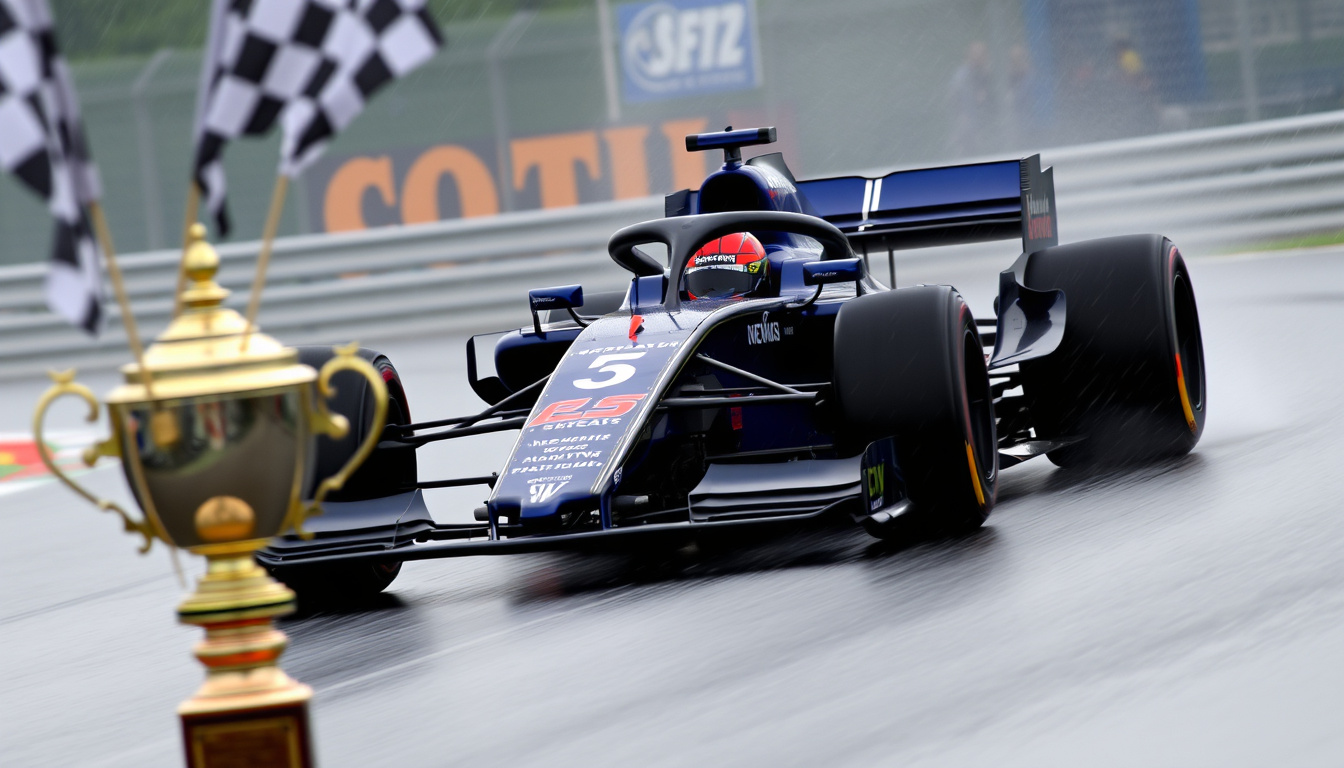
Few drivers have ever bent a Formula 1 season to their will the way Nigel Mansell did in 1992. After years of near‑misses and runner‑up finishes, the British racer finally seized the World Championship with five rounds still left on the calendar, built on nine race wins and a 52‑point margin over his teammate.
9 race wins in 1992 · 52‑point championship margin · 31 career Grand Prix wins · 32 pole positions · 190 career starts ·
Quick snapshot
- Mansell won the 1992 title with Williams‑Renault (Formula1.com, the sport’s governing body) (Williams Racing, the team that built his car)
- He sealed the championship at the 1992 Hungarian Grand Prix (Williams Racing, the team that built his car)
- He won nine of the 16 races that season (Motorsport Magazine, an authoritative F1 archive)
- Whether Mansell’s decision to leave F1 after 1992 was driven by contract disputes or a desire for a new challenge – accounts differ (Wikipedia, the user‑compiled encyclopedia)
- Exact reasons for Williams’ shift to Renualt engines ahead of the 1992 season, though the partnership proved pivotal (Wikipedia, the user‑compiled encyclopedia)
- 1992 Hungarian Grand Prix – Mansell clinched the title with five races to spare (Wikipedia)
- Mansell won five consecutive races to open the 1992 season (Motorsport Magazine, an authoritative F1 archive) (Wikipedia)
- Mansell left Formula 1 after 1992, moving to IndyCar where he won the 1993 championship – making him the only driver to hold both F1 and IndyCar titles simultaneously (Wikipedia, the user‑compiled encyclopedia)
- His 1992 title ended a 16‑year drought for British F1 champions, the last being James Hunt in 1976 (Wikipedia) (Wikipedia, the user‑compiled encyclopedia)
Mansell’s 1992 season wasn’t just a win – it was a statement. By becoming the first British world champion in 16 years and leading his teamate by more than double the points, he proved that raw aggression matched with the right car can produce one of the most one‑sided title runs in F1 history.
The 1992 Season: A Level of Dominance Rarely Seen
Nine race wins out of 16. Five straight victories to open the season. A championship sealed in Hungary before the leaves had even turned. The numbers alone tell a story of total control, but the context makes it remarkable: Mansell had been runner‑up twice before (Formula1.com, the sport’s governing body) and many doubted whether he would ever put a full season together. In 1992, he answered every question.
The Williams FW14B was the key technical weapon – a car with active suspension and advanced electronics that gave Mansell a clear edge (Formula1.com, the sport’s governing body). But Mansell’s own raw pace turned that advantage into a title decided with five rounds still remaining. The 1992 Hungarian Grand Prix became the coronation, as he crossed the line to secure the championship (Williams Racing, the team at the centre of the triumph).
The implication: Mansell converted his career‑long promise into a championship that silenced critics and reshaped how his talent would be remembered.
The Numbers Behind the Title
Mansell’s career statistics are spread across his 190 starts, 31 wins, and 59 podiums – but the 1992 season distills his career into one exceptional year.
| Stat | Career total | 1992 season |
|---|---|---|
| Grands Prix started | 190 | 16 |
| Race wins | 31 | 9 |
| Pole positions | 32 | data not specified |
| Podium finishes | 59 | data not specified |
| Championship points | N/A | 108 |
| Championship position | 1 (1992) + runner‑up 1986, 1987, 1991 | 1st |
| Teammate (1992) | Riccardo Patrese | 56 points (2nd) |
| Margin over teammate | 52 points | 52 points |
The statistics are sourced from Formula1Archive, a specialist F1 statistics site and Wikipedia, the user‑compiled encyclopedia. The 52‑point gap between Mansell and his teammate Patrese underlines the scale of his dominance – a margin that still ranks among the largest in the sport’s modern era.
For a driver who had built a reputation as a hard‑luck contender, the 1992 season rewrote the narrative. It transformed Mansell from a perennial runner‑up into a confirmed champion, and it gave British motorsport a hero after a 16‑year wait.
The pattern: once Mansell secured the title in Hungary, his place in the record books shifted from nearly‑man to all‑time great.
After the Championship: The Legacy
Mansell’s 1992 title was his last full season in Formula 1 – he left the sport at the peak of his powers (Wikipedia, the user‑compiled encyclopedia). His move to IndyCar resulted in an immediate championship in 1993, making him the only driver to hold both F1 and IndyCar titles concurrently. For British racing fans, his 1992 triumph ended a long drought and set the stage for a golden era of British drivers to follow.
Confirmed facts
- Mansell is a Formula One World Champion (1992) who won 31 Grands Prix, achieved 59 podiums, and took 32 pole positions across 190 starts (Formula1Archive, a specialist F1 statistics site)
- He became the first British world champion since James Hunt in 1976 (Wikipedia, the user‑compiled encyclopedia)
- The 1992 title was secured at the Hungarian Grand Prix (Williams Racing, the team at the centre of the triumph)
What’s unclear
- The exact financial and contractual reasons behind Mansell’s decision to leave F1 immediately after winning the title remain debated in historical accounts (Wikipedia, the user‑compiled encyclopedia)
Mansell’s 1992 championship is not just a statistical anomaly – it is a case study in how a driver’s decade‑long struggle can culminate in a single, near‑perfect season. For fans who followed his career, the title was redemption; for the sport, it was a reminder that raw talent, when paired with the right car, can produce dominance that history still references.
formula1points.com, racingnews365.com, formula1points.com, f1-fansite.com, f1-fansite.com
Frequently asked questions
When did Nigel Mansell win the Formula 1 World Championship?
Nigel Mansell won the World Drivers’ Championship in 1992 while driving for Williams‑Renault. He secured the title at the Hungarian Grand Prix on 16 August 1992 with five races still remaining. (Formula1.com, the sport’s governing body)
How many races did Nigel Mansell win in 1992?
Mansell won nine of the 16 Grands Prix during the 1992 season, including a streak of five consecutive victories at the start of the year. (Motorsport Magazine, an authoritative F1 archive)
How many points did Mansell score in the 1992 season?/summary>Mansell finished the 1992 season with 108 championship points, more than double the score of his Williams teammate Riccardo Patrese who finished second with 56 points. (Autocar, a British automotive publication)
Why did Nigel Mansell leave Formula 1 after 1992?
Mansell left Formula 1 after clinching the 1992 title, moving to IndyCar where he won the championship the following season. Historical accounts point to a mix of contract disputes and a desire to pursue new challenges. (Wikipedia, the user‑compiled encyclopedia)
How many Formula 1 Grands Prix did Mansell win in his career?
Nigel Mansell won 31 Formula 1 Grands Prix across his career, with 59 podium finishes and 32 pole positions from 190 starts. (Formula1Archive, a specialist F1 statistics site)
Was the Williams FW14B the car Mansell used to win the 1992 championship?
Yes, Mansell drove the Williams FW14B, a car widely regarded as the most technologically advanced on the grid that year, featuring active suspension and advanced electronic driver aids. (Formula1.com, the sport’s governing body)
Who was the last British Formula 1 champion before Mansell?
The last British world champion before Mansell was James Hunt, who won the title in 1976. Mansell’s 1992 victory ended a 16‑year gap for British drivers. (Wikipedia, the user‑compiled encyclopedia)
For British F1 fans, the 1992 championship is more than a stat line – it is the moment a nation’s long wait for a homegrown world champion finally ended. For anyone studying dominance in sport, Mansell’s season remains the benchmark: 108 points, nine wins, a 52‑point margin over his teammate, and the title wrapped up with five races to spare. Mansell made himself untouchable in 1992, and the record books have not forgotten.

Arthur Oliver Howard Fletcher is a staff writer for NationalReport.uk, covering UK national news, politics, the economy and public services. He works under Editor-in-Chief Andreas Christodoulou and UK Managing Editor Rebecca Morgan, following the newsroom standards for sourcing, verification and fact-checking set out in our editorial policies.