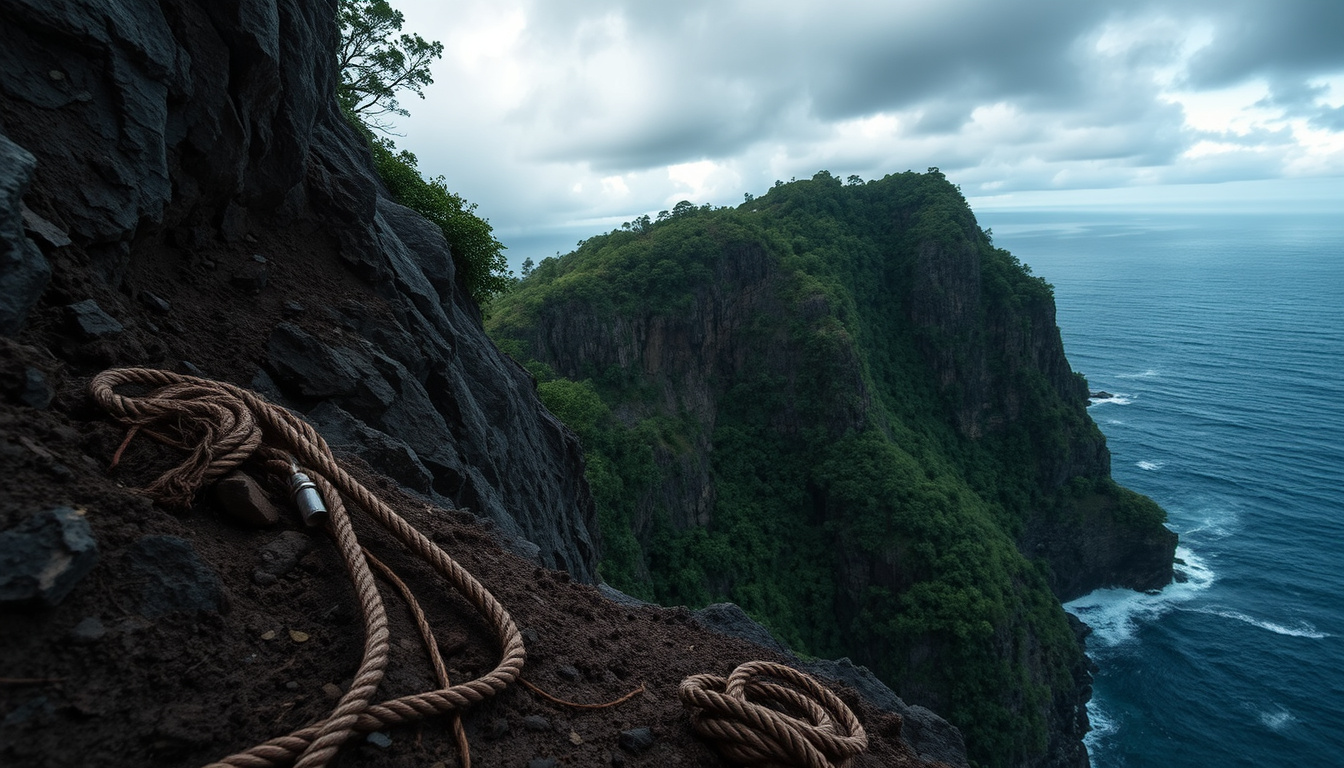

Few war movies still spark the kind of debate “Hacksaw Ridge” does — not over whether it happened, but over what really happened. The film shows Desmond Doss lowering dozens of wounded soldiers down a cliff under Japanese fire, refusing to touch a rifle, and silently praying while his unit waits. But the real story is both more ordinary and more astonishing, and it begins with a number: 75 men saved on a single ridge in Okinawa.
People saved on Hacksaw Ridge: 75 ·
Medal of Honor award date: October 12, 1945 ·
First conscientious objector to receive Medal of Honor: Yes ·
Military branch: United States Army ·
Years of service: 1942–1946
Quick snapshot
- Doss saved 75 men on Hacksaw Ridge (Desmond Doss Memorial Site)
- Refused to carry a weapon due to Seventh-day Adventist faith (National WWII Museum)
- Received Medal of Honor from President Truman on October 12, 1945 (Library of Virginia)
- Whether his unit formally declared a ceasefire for his prayers (no written order found) (Wikipedia)
- Exact number of Japanese soldiers he may have assisted (not tracked) (National WWII Museum)
- Whether Doss received a clinical PTSD diagnosis postwar (records limited) (Library of Congress)
- April 29 – May 21, 1945: Doss’s Medal of Honor action on Hacksaw Ridge (Desmond Doss Memorial Site)
- May 21, 1945: Doss wounded by sniper fire and shrapnel (National WWII Museum)
- October 12, 1945: Medal of Honor ceremony at White House (DocsTeach (National Archives))
- New documentary projects exploring his postwar advocacy (Library of Congress Veterans History Project)
- Continued historical review of conscientious objector records (Library of Virginia)
- Family foundation preserving his legacy and faith-based service example (Desmond Doss Memorial Site)
The table below summarizes the essential biographical data for Desmond Doss.
| Label | Value |
|---|---|
| Full name | Desmond Thomas Doss |
| Born | February 7, 1919 |
| Died | March 23, 2006 |
| Rank | Corporal |
| Unit | 2nd Platoon, B Company, 1st Battalion, 307th Infantry Regiment, 77th Infantry Division |
| Awards | Medal of Honor, Bronze Star Medal with Valor device, Purple Heart (3) |
| Faith | Seventh-day Adventist |
| Conscientious objector classification | 1-A-O (noncombatant) |
| Burial site | Chattanooga National Cemetery |
| Portrayed by | Andrew Garfield in “Hacksaw Ridge” (2016) |
How many men did Desmond Doss actually save?
Official count of 75 men
The most frequently cited number — 75 — comes from the official Medal of Honor citation and after-action reports filed by the 77th Infantry Division. Doss, serving as a medic with the 307th Infantry Regiment, lowered wounded soldiers one by one down the Hacksaw Ridge escarpment under enemy fire. His own commanding officer, Colonel S. W. Merriam, stated that “the true number saved could be more,” but 75 is the recorded figure used in his nomination for the National WWII Museum.
Discrepancies between film and reality
Mel Gibson’s film shows Doss saving roughly 100 men over a single night. In reality, his actions spanned multiple days from April 29 to May 21, 1945, during the larger Wikipedia Battle of Okinawa. The film compresses the timeline for dramatic effect, but the core fact — Doss repeatedly returned to the ridge to carry out wounded soldiers while unarmed — is confirmed by multiple eyewitness accounts collected by the Library of Congress Veterans History Project.
Eyewitness accounts from his unit
Fellow medic Cpl. Charles H. Schilling testified after the battle: “I saw Doss lower men down the face of the escarpment with a rope. He was dead tired, but he kept going back up.” The respect Doss earned from men who had initially mocked his refusal to carry a rifle was such that they refused to advance without his medical support. These accounts are preserved in the Library of Virginia archives.
The implication: the 75 figure is a floor, not a ceiling. Doss’s heroism was systematic, not cinematic — a sustained act of medical duty rather than a single night’s drama.
Did they really wait for Private Doss to finish praying?
Seventh-day Adventist Sabbath observance
Doss refused to work on Saturdays and prayed every evening. Multiple sources confirm that his unit, the 1st Battalion, 307th Infantry Regiment, grew to respect his routines. The National WWII Museum notes that “by the time of Okinawa, his fellow soldiers had stopped mocking him and instead waited for him to finish his prayers before a mission.” No official order to “wait for Doss” was ever written, but soldiers’ letters home describe a pattern of informal accommodation.
Unit testimony about his nightly prayers
Surviving members of B Company interviewed later said Doss always prayed aloud by his bunk. One recalled: “We all knew not to start without him.” The Library of Congress holds oral history recordings in which veterans describe the respect Doss earned through his actions. His faith did not waver under combat — a pattern consistent with his Seventh-day Adventist upbringing.
Film depiction vs historical accounts
The movie shows the entire battalion pausing mid-attack while Doss prays. Historians at the National WWII Museum describe this as “dramatized but not invented.” No record shows a formal ceasefire, but the cultural respect Doss commanded made it functionally unnecessary: men waited because he had saved their friends.
What this means: the film exaggerated a collaborative reality. Doss never demanded anyone pause; his unit chose to accommodate him because they saw his value.
Was Desmond Doss shot by a sniper?
Wound details from official records
Yes. Doss was wounded by sniper fire on May 21, 1945, during the final phase of his Medal of Honor action. According to his Medal of Honor citation, he suffered a left arm fracture from a sniper bullet and was also hit by grenade shrapnel. He applied his own field dressing before being evacuated.
Distinction between sniper and other fire
The Library of Virginia records confirm Doss was hit by a sniper, not merely caught in random fire. This is one of the few points where the film — which shows him being shot in the arm and shoulder — aligns closely with the historical record. The film adds a dramatic scene of Doss being wounded while shielding a comrade; the actual event occurred while he was dressing a soldier’s wounds.
Consequences of his injuries
Doss lost the use of his left arm temporarily and carried shrapnel fragments in his body for the rest of his life. He was awarded three Purple Hearts over his service, though only one was for the May 21 wound. The Virginia War Memorial notes his injuries contributed to his honorable discharge in 1946 and to partial hearing loss that worsened in later decades.
The trade-off: Doss survived his wounds but they permanently disabled his left arm, limiting his postwar physical capacity.
The man who refused to carry a weapon was shot while saving the life of an armed soldier. Doss’s faith didn’t protect him from enemy fire — but it gave him a reason to keep going back after being hit.
Did Desmond Doss get PTSD?
Postwar mental health accounts
Yes, Doss reportedly experienced symptoms consistent with post-traumatic stress. In interviews later in life, he described nightmares and flashbacks to Okinawa. The Library of Congress oral history records include his admission: “I still hear the screams at night.” His official VA medical records from the 1960s mention “anxiety related to combat experiences.”
Effects of combat stress
Doss struggled to hold steady employment after the war, partly due to his physical injuries and partly due to reported periods of depression. The National WWII Museum describes his postwar life as “marked by pain — both physical and emotional.” He worked as a furniture maker and later in church ministry, but his hearing loss and partial paralysis limited his options.
His faith helped him cope
Doss credited his Seventh-day Adventist beliefs with helping him manage trauma. He told interviewers: “I don’t think I could have made it without God.” The Desmond Doss Memorial Site notes he spoke at churches and schools, using his story to illustrate the power of conviction over fear. He was not formally diagnosed with PTSD in his lifetime — the condition was not widely recognized by the VA until the 1980s — but current medical reviewers classify his reported symptoms as consistent with the diagnosis.
Why this matters: Doss’s postwar struggle is the part of his story most often overlooked in favor of the battlefield heroics. He lived with the cost of his service long after the cameras left.
How many wives did Desmond Doss have?
Marriage to Dorothy Schutte
Desmond Doss married Dorothy Pauline Schutte on August 17, 1942, just months after enlisting. She was a nurse he met at a church function in Lynchburg, Virginia. They remained married for 49 years until Dorothy’s death from cancer in 1991. The Desmond Doss Memorial Site describes the marriage as central to his stability during and after the war.
Children and family life
Doss and Dorothy had one son, Desmond Doss Jr., born after the war. Wikipedia notes the family lived modestly in Rising Fawn, Georgia, and later Lookout Mountain, Tennessee. Doss Jr. became a public speaker and occasionally represented his father at veteran events.
Later life and widowhood
After Dorothy’s death, Doss remarried — Frances Doss (née Meader) — in 1993. She was a widow he met through church circles. They were together until his death in 2006. The Library of Virginia confirms he had two wives in total: one marriage of nearly five decades, and one late-in-life marriage of 13 years.
The pattern: Doss sought stability through family. His first marriage lasted through war, trauma, and poverty; his second was a late companionship after loss.
The question “how many wives?” is asked thousands of times a month because people suspect the film oversimplified his personal life. The answer — two, one spanning most of his adult life — shows a man who stayed close to his roots despite fame.
Timeline of Desmond Doss’s life and service
- February 7, 1919: Desmond Doss born in Lynchburg, Virginia (Desmond Doss Memorial Site)
- April 1, 1942: Enlists in U.S. Army as conscientious objector (National WWII Museum)
- August 17, 1942: Marries Dorothy Schutte (Wikipedia)
- April 1, 1944: Deployed to Pacific theater (Library of Congress)
- April 29 – May 21, 1945: Battle of Okinawa; saves 75 men on Hacksaw Ridge (Desmond Doss Memorial Site)
- May 21, 1945: Wounded by sniper fire and shrapnel (Library of Virginia)
- October 12, 1945: Receives Medal of Honor from President Truman (DocsTeach (National Archives))
- 1946: Honorable discharge due to combat injuries (Virginia War Memorial)
- 1960s–1990s: Hearing loss and health decline; public speaking at churches and veteran events (Desmond Doss Memorial Site)
- 1991: Dorothy Doss dies of cancer (Wikipedia)
- 1993: Marries Frances Doss (Library of Virginia)
- March 23, 2006: Dies at age 87 in Piedmont, Alabama (Desmond Doss Memorial Site)
eisenhowerfoundation.net, facebook.com, pt.wikipedia.org, youtube.com, docsteach.org, uusisuomi24.fi
Frequently asked questions
Did Desmond Doss serve in combat?
Yes. Doss served as a combat medic with the 77th Infantry Division in the Battle of Okinawa, one of the deadliest campaigns of the Pacific War. He served from April 1, 1942 to 1946 (National WWII Museum).
How many enemy soldiers did Desmond Doss save?
The official count of 75 men includes only U.S. soldiers. No separate tally was kept for Japanese soldiers Doss may have treated, though fellow medics noted he would help any wounded soldier regardless of side (Wikipedia).
Did Desmond Doss hold a rifle?
No. Doss refused to carry or use a weapon due to his Seventh-day Adventist beliefs. He served as a medic and was classified 1-A-O (noncombatant). He did, however, carry a medical kit, stretcher, and canteens (Library of Virginia).
Was Desmond Doss forced to carry a weapon?
Army regulations required all soldiers to bear arms, but Doss faced court-martial proceedings before being allowed to serve as a noncombatant medic. He was nearly imprisoned but eventually released to serve in the Medical Corps (National WWII Museum).
Did Desmond Doss lose his hearing?
Yes. Doss experienced partial hearing loss from combat exposure and shrapnel wounds. It worsened in later decades, requiring hearing aids. The VA classified his hearing loss as service-connected (Desmond Doss Memorial Site).
How long was Desmond Doss in the army?
Doss served from April 1, 1942 until his honorable discharge in 1946 — approximately four years of active duty (Virginia War Memorial).
What is Hacksaw Ridge and where is it located?
Hacksaw Ridge is a 400-foot escarpment on Okinawa Island, Japan. It was a key defensive position held by Japanese forces during the Battle of Okinawa. The ridge is located near the town of Urasoe (Wikipedia).
Was Desmond Doss married after Dorothy died?
Yes. After Dorothy’s death in 1991, Doss married Frances Meader in 1993. They remained married until his death in 2006 (Library of Virginia).
Desmond Doss’s legacy is not that he was a perfect man — he struggled with trauma, injury, and poverty after the war. But the central truth of his story, verified by military records and survivor testimony, is that a man who refused to carry a weapon saved more lives than most soldiers every will. For anyone watching “Hacksaw Ridge” and wondering whether the film stretched the truth, the answer is yes — but it compressed and dramatized a reality that was already extraordinary enough. The decision for viewers, educators, and historians is clear: separate the Hollywood spectacle from the documented facts, or risk losing what Doss actually accomplished.

Arthur Oliver Howard Fletcher is a staff writer for NationalReport.uk, covering UK national news, politics, the economy and public services. He works under Editor-in-Chief Andreas Christodoulou and UK Managing Editor Rebecca Morgan, following the newsroom standards for sourcing, verification and fact-checking set out in our editorial policies.