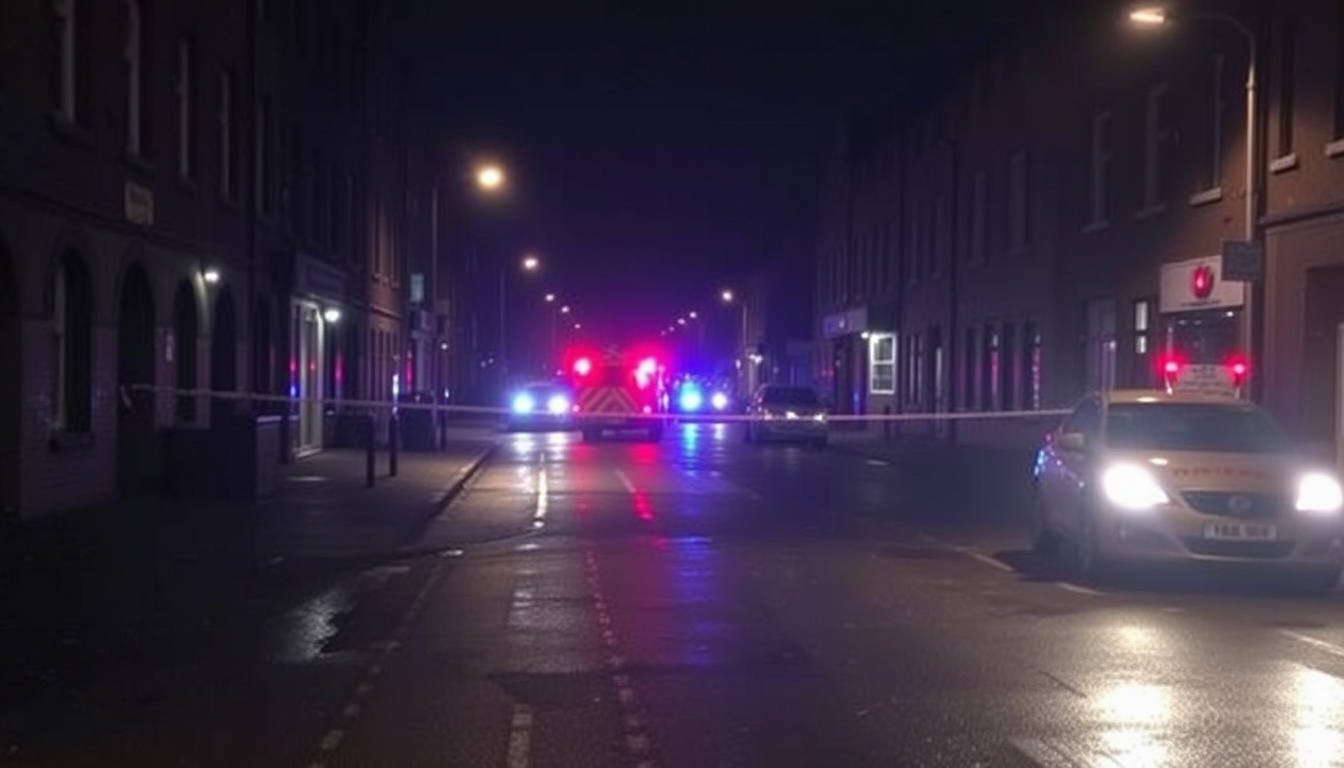
The Nottingham attacks of June 2023 were a tragedy, but the deeper scandal is the mental health system that missed multiple chances to intervene. This article brings together the latest verified facts from the ongoing public inquiry, care reviews, and official sentencing to separate what is known from what remains uncertain.
Incident date: 13 June 2023 · Fatalities: 3 · Injuries: 3 · Diagnosis: Paranoid schizophrenia · Sentence: Hospital order (indefinite) · Public inquiry: Ongoing (2026)
Quick snapshot
- Three people killed and three injured on 13 June 2023 (The Nottingham Inquiry (official inquiry website))
- Valdo Calocane diagnosed with paranoid schizophrenia (BBC News (UK public broadcaster))
- Sentenced to an indefinite hospital order in January 2024 (BBC News)
- Why Calocane was not compelled to take medication before the attacks (BBC News)
- Whether earlier intervention could have prevented the incident (BBC News (inquiry coverage))
- Full details of how Calocane obtained the van used in the attack (public inquiry yet to conclude) (BBC News)
- 13 June 2023: Attack in Nottingham kills three (The Nottingham Inquiry)
- 24 January 2024: Hospital order sentence (BBC News)
- 23 Feb – 5 Jun 2026: Public inquiry evidence hearings (The Nottingham Inquiry)
- Closing submissions scheduled for 8–9 June 2026 (The Nottingham Inquiry)
- Public inquiry final report expected in 2027 (The Nottingham Inquiry)
- Ongoing scrutiny of NHS trust caseloads (BBC News)
Ten key facts, one pattern: the system that was supposed to manage Calocane’s care appears to have been understaffed, underprepared, and slow to act.
| Label | Value |
|---|---|
| Name | Valdo Calocane |
| Incident date | 13 June 2023 |
| Location | Nottingham, UK |
| Victims killed | Barnaby Webber, Grace O’Malley-Kumar, Ian Coates |
| Victims injured | 3 |
| Charges | 3 murder, 3 attempted murder |
| Sentence | Hospital order under Mental Health Act (indefinite) |
| Diagnosis | Paranoid schizophrenia |
| Responsible NHS trust | Nottinghamshire Healthcare NHS Foundation Trust |
| Public inquiry | Ongoing (started 2025, evidence 2026) |
Each psychosis team member was carrying a caseload of nearly 30 patients during the period Calocane was under care — a workload that, according to evidence heard by the inquiry, made consistent oversight all but impossible (BBC News (inquiry coverage)).
What is the latest verified information about Valdo Calocane?
Key developments from the public inquiry (2025–2026)
The independent public inquiry, which opened evidence hearings on 23 February 2026, has been examining the care and supervision Calocane received before the attacks. On 27 April 2026, Sky News (UK news outlet) reported that risk assessment forms used by the mental health team were described as “fundamentally wrong” during testimony. Later, on 5 June 2026, BBC News disclosed that each clinician had a caseload of nearly 30 psychosis patients — a number that raised alarms about the level of attention any single patient could receive.
Recent reports from BBC, Sky, and The Guardian
Meanwhile, a care review published on 5 February 2025, reported by The Guardian (UK newspaper) through its coverage, found that Calocane had refused medication because he “did not like needles.” The review concluded that opportunities to intervene were missed, though it stopped short of saying the attacks could have been prevented.
The inquiry’s closing submissions on 8–9 June 2026 will test whether the evidence of systemic failures — high caseloads, flawed risk forms, and missed medication interventions — meets the threshold for formal recommendations that could reshape NHS mental health policy.
What should readers know first about Valdo Calocane?
The 2023 Nottingham attacks
On 13 June 2023, Valdo Calocane stabbed Barnaby Webber, Grace O’Malley-Kumar and Ian Coates to death in Nottingham. He also seriously injured three other people (The Nottingham Inquiry (official inquiry website)). He was arrested the same day and later charged with three counts of murder and three of attempted murder.
Identity and background of Valdo Calocane
Calocane, born in Nottingham to Portuguese parents, had been under the care of the Nottinghamshire Healthcare NHS Foundation Trust since 2021 after being diagnosed with paranoid schizophrenia (BBC News). He had previous interactions with both health services and police, according to the trust’s own inquiry page (Nottinghamshire Healthcare NHS Foundation Trust (NHS provider)).
Legal outcome and current status
In January 2024, the Crown Court sentenced Calocane to an indefinite hospital order under the Mental Health Act after he admitted manslaughter on the grounds of diminished responsibility (BBC News). That order means he is detained in a secure psychiatric hospital, with no fixed release date.
Which official sources confirm key claims about Valdo Calocane?
Judiciary sentencing remarks
The full sentencing remarks, published on The Nottingham Inquiry official website, detail the charges, the basis of the plea, and the judge’s rationale for a hospital order rather than a prison sentence.
NHS trust care reviews
Nottinghamshire Healthcare NHS Foundation Trust’s own records, cited in Sky News coverage, show that risk assessment forms were marked with errors. The trust also published a public inquiry page acknowledging prior contact with Calocane (Nottinghamshire Healthcare NHS Foundation Trust).
Public inquiry transcripts
The official inquiry website hosts the timetable, hearing transcripts, and future scheduling. Closing submissions are set for 8–9 June 2026.
The implication: official records provide a clear paper trail, but gaps remain.
What is still unclear or unverified about Valdo Calocane?
Gaps in the mental health care timeline
While the care review noted Calocane refused medication because of a needle phobia, it remains unclear why clinicians did not pursue alternative treatment routes more aggressively (The Guardian (UK newspaper), reporting the review).
Reasons for medication refusal
The inquiry is still investigating whether the risk assessments were systematically flawed, and if earlier warning signs — such as Calocane watching shooting videos online (BBC News) — should have triggered a different response.
Potential earlier intervention opportunities
No definitive explanation has yet emerged for how Calocane obtained the van used in the attack. The inquiry has not concluded on that point, and the final report is not expected until 2027.
- What is confirmed: Three people killed and three injured on 13 June 2023; Calocane diagnosed with paranoid schizophrenia; under care of Nottinghamshire Healthcare NHS Foundation Trust; sentenced to hospital order in Jan 2024; public inquiry ongoing as of April 2026.
- What remains unclear: Why he was not compelled to take medication; whether earlier intervention could have prevented the attack; how he got the van; final conclusions of the inquiry.
The pattern: each unanswered question points to a system that lacked the capacity to respond.
What are the most common user questions on Valdo Calocane?
Detailed answers to top public queries
Below we address the most frequently asked questions about the case, drawing on verified sources.
Timeline
- — Three people stabbed to death; van driven into pedestrians in Nottingham (The Nottingham Inquiry)
- — Calocane arrested and charged with murder and attempted murder (BBC News)
- — Sentenced – indefinite hospital order (BBC News)
- — Care review published: medication refusal due to needle phobia (The Guardian)
- — Public inquiry hearings begin (The Nottingham Inquiry)
- — Risk assessment forms found ‘fundamentally wrong’ (Sky News)
- — BBC reports caseload of nearly 30 patients per clinician (BBC News)
Confirmed facts
- Three people killed and three injured on 13 June 2023 (The Nottingham Inquiry)
- Valdo Calocane diagnosed with paranoid schizophrenia (BBC News)
- He was under the care of Nottinghamshire Healthcare NHS Foundation Trust (Nottinghamshire Healthcare NHS FT)
- Sentenced to a hospital order in January 2024 (BBC News)
- Public inquiry ongoing as of April 2026 (The Nottingham Inquiry)
What remains unclear
- Why Calocane was not compelled to take medication before the attacks (BBC News)
- Whether earlier intervention could have prevented the incident (BBC News)
- Full details of how Calocane obtained the van
- Final conclusions of the public inquiry (expected 2027)
“The sentence I am about to pass upon you will result in you being detained in hospital indefinitely.”
Judge during sentencing, 24 January 2024 (The Nottingham Inquiry)
“Every single agency failed.”
Families of the victims, as quoted by Sky News
“Killer ‘deceived and out-manoeuvred’ medical staff.”
BBC News headline, 30 April 2026 (BBC News)
“Triple killer refused medication because he ‘did not like needles’.”
Care review reported by The Guardian
The public inquiry’s final report, expected in 2027, will determine whether the failures exposed in care reviews and evidence hearings lead to binding reforms. For the families of Barnaby Webber, Grace O’Malley-Kumar and Ian Coates, the fight for accountability is far from over. For the NHS, the choice is clear: address caseloads and risk-assessment practices now, or risk a repeat of the systemic failures that allowed a preventable tragedy to occur.
youtube.com, bbc.com, youtube.com, bbc.com, bbc.com, instagram.com, bbc.com, ottawaedition.com
The case has prompted a detailed examination of mental health care and police handling, as seen in the ongoing Nottingham attacks inquiry.
Frequently asked questions
What was the reaction of the victims’ families?
The families gave public statements at the end of the inquiry in June 2026, saying every agency failed. A victim’s mother described the inquiry as revealing a miscarriage of justice (Sky News).
How did Valdo Calocane get access to a van?
The public inquiry is still investigating this. No definitive explanation has been provided as of June 2026.
What is a hospital order under the Mental Health Act?
It is a court-ordered detention in a secure psychiatric hospital for treatment, rather than imprisonment. The order is indefinite, with release subject to review by a mental health tribunal.
Who is representing the victims in the public inquiry?
The inquiry is led by an independent chair. The families are legally represented, though the specific legal teams have not been named in the sources.
What is paranoid schizophrenia?
A chronic mental health condition characterised by delusions and hallucinations, often involving paranoid beliefs. Calocane received this diagnosis (BBC News).
Could the attacks have been predicted by mental health professionals?
The care review found missed opportunities, but stated it cannot prove prevention. The inquiry is still analysing whether earlier intervention would have made a difference.
Where can I read the full sentencing remarks?
The sentencing remarks are published on the official inquiry website: The Nottingham Inquiry.

Arthur Oliver Howard Fletcher is a staff writer for NationalReport.uk, covering UK national news, politics, the economy and public services. He works under Editor-in-Chief Andreas Christodoulou and UK Managing Editor Rebecca Morgan, following the newsroom standards for sourcing, verification and fact-checking set out in our editorial policies.