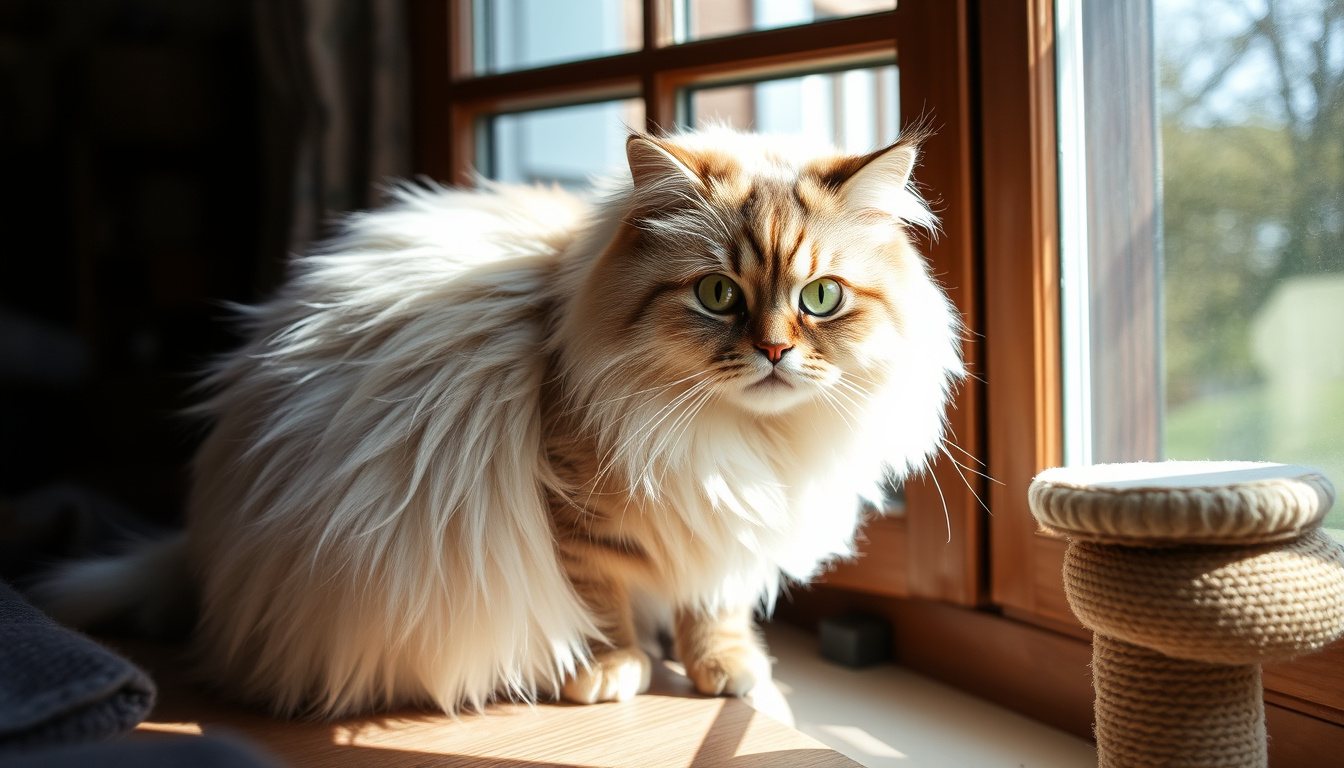
If you’re drawn to the idea of a cat that acts more like a dog—following you from room to room, greeting you at the door—the Siberian cat might already be on your radar. They also produce lower levels of the Fel d1 allergen than most cats (helloBARK! pet blog), which makes the “hypoallergenic” label more than just marketing. This guide digs into the facts so you can decide if this breed is the right fit for your home.
Origin: Russia (Siberian landrace) ·
Size: Medium to large, 4–9 kg ·
Lifespan: 12–15 years ·
Temperament: Affectionate, playful, gentle, dog-like loyalty
Quick snapshot
- Natural landrace breed from Russia (MAXI ZOO Ireland)
- Thick triple coat adapted for cold (Cats.com)
- Lower Fel d1 protein, not fully hypoallergenic (Petful)
- Males larger and more affectionate than females (PetMD)
- Prone to HCM and hip dysplasia (PetMD)
- Exact breed origin date (centuries old) (MAXI ZOO Ireland)
- Whether all Siberians are equally friendly with strangers (varies by individual) (MAXI ZOO Ireland)
- Precise Fel d1 reduction vs. other breeds (no standardized test) (MAXI ZOO Ireland)
- Whether coat color affects allergen levels (not well studied) (MAXI ZOO Ireland)
- Exact grooming frequency needed (varies by cat and season) (MAXI ZOO Ireland)
- Whether all Siberians are equally dog-like in loyalty (individual variation) (MAXI ZOO Ireland)
- Recorded in Russian folk tales for centuries (Wikipedia)
Nine core facts about the Siberian cat, spanning origin, size, coat, temperament, health, and more.
| Origin | Russia (Siberia) |
|---|---|
| Breed type | Natural / landrace |
| Size | Medium-large; males 6–9 kg, females 4–7 kg |
| Coat | Semi-long triple coat, water-resistant |
| Colors | All standard colors, including pointed patterns |
| Lifespan | 12–15 years |
| Temperament | Affectionate, playful, intelligent, gentle |
| Hypoallergenic status | Lower Fel d1, not fully hypoallergenic |
| Popularity | Top 10 in breed registries (TICA, CFA) |
Is a Siberian cat a good pet?
For the right household, absolutely. Siberian cats are known for their affectionate, dog-like loyalty (BetterPet). They enjoy being held and often follow owners around the house.
Do Siberian cats like to be held?
- Most Siberian cats enjoy being held and cuddled, especially if socialised early.
- They may climb onto shoulders or curl in laps when seeking affection.
Are Siberian cats good with children?
- Yes, they are generally gentle and tolerant with children (PetHelpful).
- Their playful but not hyperactive nature suits families.
Do Siberian cats get along with other pets?
- They adapt well to homes with dogs and other cats.
- Proper introductions are still recommended.
The implication: This breed rewards commitment with loyalty but punishes neglect with restlessness, so households should match their availability.
What is so special about Siberian cats?
Three traits set them apart: a truly unique coat, a hypoallergenic reputation backed by science, and a slow-maturing personality that stays kitten-like for years.
Are Siberian cats hypoallergenic?
- They produce less Fel d1 protein than typical cats.
- However, the term “hypoallergenic” is misleading: no cat breed is allergen-free.
- Individual human reactions vary widely.
What makes their coat unique?
- Siberians have a triple coat: guard hairs, awn hairs, and a woolly undercoat.
- The coat is water-resistant and sheds heavily during seasonal blows.
The same coat that protects them from Russian winters also means daily brushing during shedd seasons. For allergy-sensitive owners, lower Fel d1 helps but doesn’t eliminate reactions.
The pattern: Natural adaptations that make the breed hardy in cold climates also create the grooming and allergen trade-offs owners must accept.
What is the difference between a Siberian cat and a Norwegian forest cat?
Three key contrasts separate these two large, fluffy natural breeds from cold climates.
| Aspect | Siberian Cat | Norwegian Forest Cat |
|---|---|---|
| Face & build | Rounded face, compact body | Angular face, longer body (Wikipedia) |
| Coat & grooming | Triple coat, sheds heavily, brush 2–3×/week | Double coat, more water-repellent, similar grooming needs |
| Personality | Outgoing, dog-like, vocal, playful | More reserved with strangers, quieter |
What this means: If you want a cat that greets visitors and loves to talk, choose Siberian. If you prefer a more independent, low-key companion, the Norwegian Forest Cat may suit better.
Can Siberian cats be indoor cats?
Yes, they adapt well to indoor life if given enough stimulation.
Can you leave a Siberian cat alone for 8 hours?
- They can handle 8 hours alone with toys and perches, but prefer company.
- Boredom may lead to scratching furniture or overgrooming.
How much exercise do indoor Siberian cats need?
- Moderate: 15–20 minutes of interactive play daily.
- Cat trees and puzzle feeders help meet their mental stimulation needs.
Siberians are social and energetic. If left alone for long stretches without enrichment, they can become restless or develop behavioural issues.
The implication: Owners who work long hours must invest in enrichment tools or risk damage to furniture and the cat’s well-being.
What are the cons of a Siberian cat?
Even the most affectionate breed has downsides. Here are the main trade-offs to weigh before bringing one home.
Shedding and grooming requirements
- Heavy shedding year-round, with massive coat blows in spring and autumn (Almonte Cats).
- Need brushing 2–3 times per week, daily during sheds.
Health issues and cost
- Hypertrophic cardiomyopathy (HCM) is a known risk in the breed.
- Hip dysplasia also occurs.
- Kitten prices range from $1,000 to $3,000.
- Health insurance and HCM screening add to ongoing costs.
Female vs male comparison
- Males: larger (6–9 kg), more affectionate, often described as “dog-like”.
- Females: smaller (4–7 kg), more independent, sometimes territorial.
Upsides
- Affectionate, loyal, often dog-like
- Gentle with children and other pets
- Moderate energy, not hyperactive
- Lower Fel d1 helps many allergy sufferers
Downsides
- Heavy shedding, high grooming demands
- Expensive to buy and maintain
- Not fully hypoallergenic despite myth
- Needs daily attention; may suffer if left alone often
The pattern: The same traits that make Siberians affectionate and engaging also create the highest barriers—grooming time, cost, and social need.
The Siberian is a centuries-old landrace, a natural breed that developed in the cold forests of Russia. Their triple coat—guard hairs, awn hairs, and a woolly undercoat—is a direct adaptation to the harsh Siberian climate.
Their extravagant fur coats and Russian beauty make them a striking companion, but behind the glamour is a highly social, energetic cat that needs plenty of playtime and interaction.
— MAXI ZOO Ireland
These cats braved bone-chilling cold in Russia thanks to their thick, water-resistant coats—a heritage that makes them equally capable climbers and swimmers.
— MAXI ZOO Ireland
The implication is clear: the Siberian cat is a companion that demands both time and grooming commitment but rewards owners with a deeply affectionate, interactive personality that few other breeds offer. For Irish families considering this breed, the choice depends on how much shedding and daily interaction you can accommodate.
For a comprehensive overview of this fluffy Russian native, check out this Siberian cat breed guide that covers temperament, care, and pros and cons.
Frequently asked questions
How much does a Siberian cat cost?
Kittens from reputable breeders in Ireland typically cost $1,000–$3,000 (€900–€2,700). Adoption fees are lower but rare.
Do Siberian cats shed a lot?
Yes, they shed heavily year-round and have massive coat blows twice a year.
Are Siberian cats good with kids?
Yes, they are gentle and playful with children when properly socialised.
What is the lifespan of a Siberian cat?
12–15 years on average, with many reaching 16–18 years with good care.
Do Siberian cats need special grooming?
They need brushing 2–3 times per week, daily during sheds, plus occasional baths.
Are Siberian cats vocal?
They are moderately vocal and known for a distinctive chirping sound.
Can Siberian cats live with dogs?
Yes, they typically get along well with dogs if introduced properly.
Do Siberian cats require a lot of exercise?
Moderate exercise is needed: 15–20 minutes of interactive play daily.
Related reading

Arthur Oliver Howard Fletcher is a staff writer for NationalReport.uk, covering UK national news, politics, the economy and public services. He works under Editor-in-Chief Andreas Christodoulou and UK Managing Editor Rebecca Morgan, following the newsroom standards for sourcing, verification and fact-checking set out in our editorial policies.