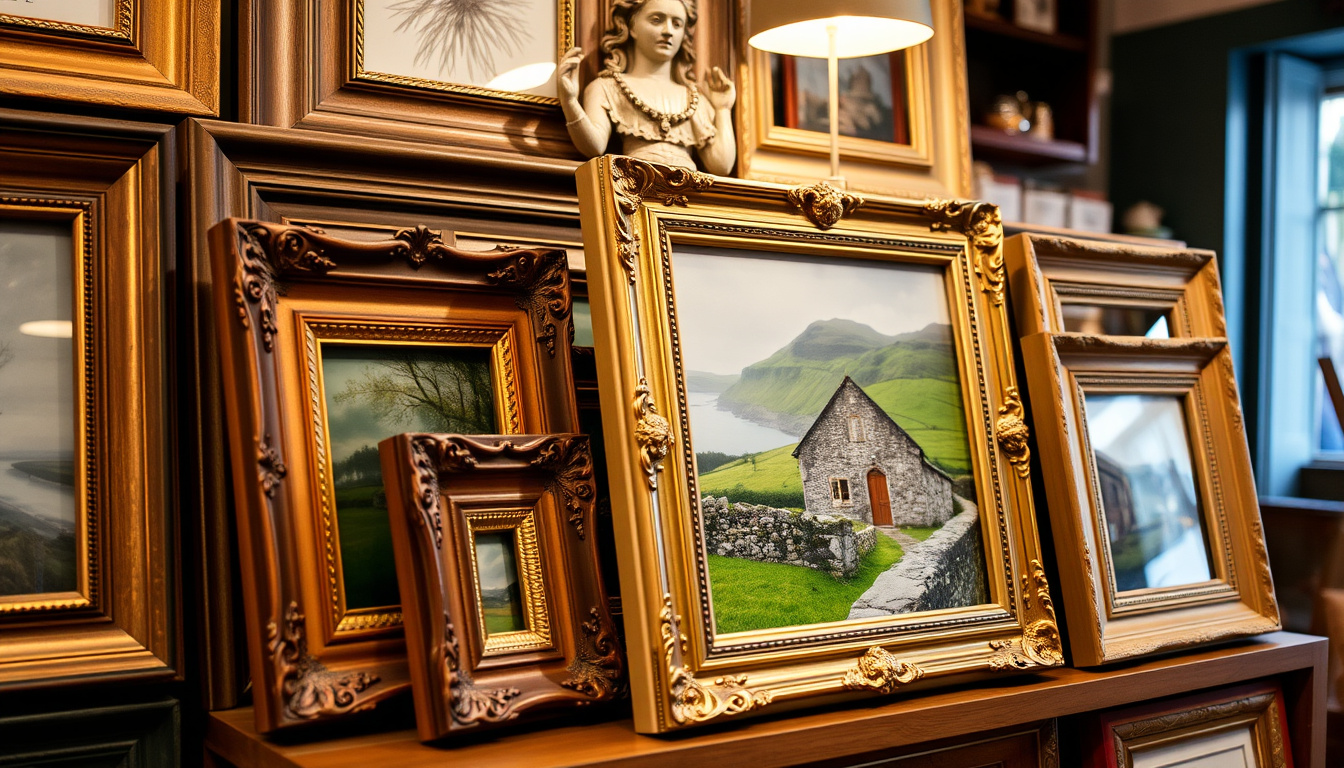
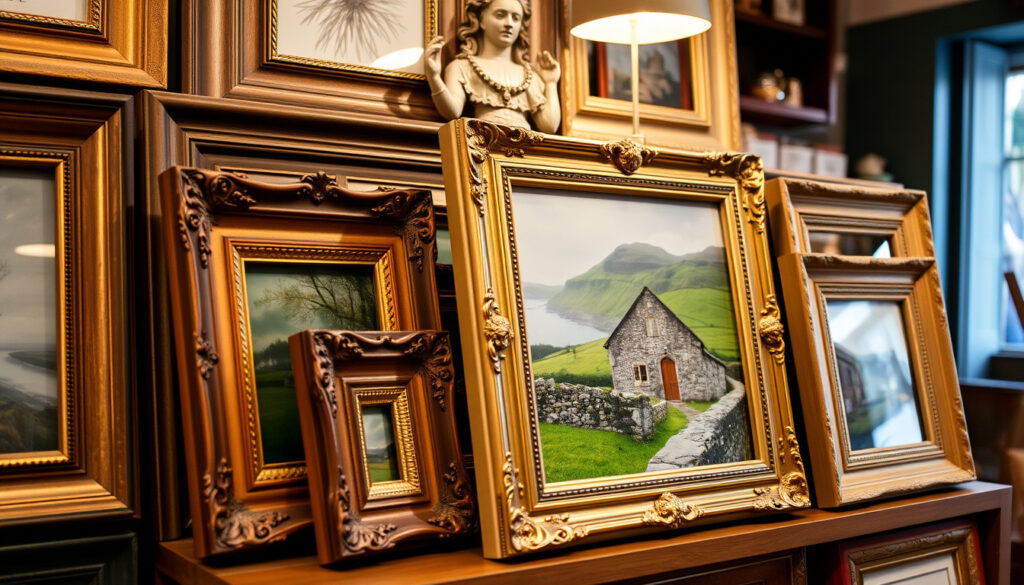
You’ve had that favourite photo on your phone for months, or maybe you finally found the perfect print to fill that blank wall — but when it’s time to put it in a frame, the choices can feel endless. This guide walks through the key decisions in Ireland, from over 10,000 frames in stock to local custom framers, so you can pick a frame that fits your photo, your wall, and your pocket.
Frames in stock (bgastore.ie): 10,000+ ·
Common frame materials: wood, metal, plastic ·
Standard photo sizes: 4×6, 5×7, 8×10, A4 ·
Irish online stores: 5+ major retailers
Quick snapshot
- Standard photo frames
- Poster frames
- Canvas frames
- Collage frames
- Wood
- Metal
- Plastic
- Bamboo
- 4×6
- 5×7
- 8×10
- A4
- A3
- Online stores
- High street shops
- Custom framers
Before diving into the details, here are some key numbers to help you decide.
| Attribute | Detail |
|---|---|
| Number of frame styles at top Irish retailer | 10,000+ |
| Most popular frame colour | Black and white |
| Average price range for standard frame | €5–€30 |
| Common frame material by weight | Wood: heavy; Metal: medium; Plastic: light |
What types of picture frames are available?
Standard photo frames
- Standard frames are the most common — they fit typical snapshot sizes like 4×6 and 5×7 and are widely stocked by retailers such as Frame USA (one of the largest US frame retailers), which sells frames for every size, style, and budget.
“We sell picture frames for every size, style, and budget.”
Frame USA, online retailer
Poster frames
- Poster frames are designed for larger artwork and often include snap-in clips or toggles instead of a traditional mount. They typically accommodate sizes from A3 up to 24×36 inches.
Canvas frames
- Canvas frames (also called floater frames) hold stretched canvas prints and leave a small gap between the canvas edge and the frame, creating a floating effect. Many custom framers, including Pictureframes.com (online custom framing specialist), offer sizes starting from 5×7 inches.
Collage frames
- Collage frames contain multiple openings for several photos in one frame — common configurations are 2×2, 3×3, or a mix of portrait and landscape pockets.
Digital photo frames
- Digital photo frames are screens that cycle through images stored on a memory card or synced from your phone. While not a traditional frame, they are a popular modern alternative for displaying many photos without printing.
Physical frames give you a tangible, decorative object; digital frames offer variety without the clutter but need power and regular updates. For anyone buying frames in Ireland, the choice often comes down to space vs. rotation.
The variety of frame types means you can match the frame to the item — rigid standard frames for snapshots, clip-together frames for posters, and floating canvas frames for finished art. The implication: one size does not fit all, so matching the frame style to the print medium is a buyer’s first filter.
How do I choose the right picture frame size?
Measuring your artwork
- Measure the exact width and height of the artwork or photo, not the mat or mount. Frame Destination (custom framing specialist) instructs customers to measure the exact dimensions of the artwork when ordering a custom frame.
- If you plan to add a mat (mount board), include the mat’s dimensions in your final measurement — Frame Destination notes that the mat’s dimensions must be included in the final size selection.
Understanding standard sizes
- Standard photo sizes in Ireland follow the same conventions as the UK: 4×6 inches, 5×7 inches, 8×10 inches, and the A-series like A4 (210×297 mm) and A3 (297×420 mm).
- These sizes are widely stocked by Irish retailers such as bgastore.ie (Irish framing and craft retailer), which carries over 10,000 frame options.
Custom sizing options
- When your artwork is non‑standard (e.g., a 12×16 print or an odd-shaped poster), custom framing is the answer. Services like Frame It Easy (online custom framing service) allow you to upload dimensions and choose profiles, glazing, and mats online.
- Custom frames cost more, but they give a professional finish. Framebridge (custom framing retailer with online and retail stores) offers custom framing starting at $50.
Key takeaway: Standard sizes save money, but custom framing fits odd sizes exactly. Measure accurately, include mat dimensions, and budget accordingly.
What this means: if your photo or print is a standard size, buy off the shelf and save money. If it’s irregular or you want a museum-quality look, custom framing is the better path — but budget accordingly.
Where can I buy picture frames in Ireland?
Online retailers in Ireland
- bgastore.ie — based in Dublin, stocks over 10,000 frames in wood, metal, and plastic, with delivery across Ireland.
- pictureframes.ie — Irish-framing-specific site offering both standard and bespoke frames.
- eframe.ie — online framing service with Irish delivery.
High street stores
- JYSK — Scandinavian home retailer with frame sections in many Irish towns.
- Homestore & More — offers a large selection of affordable frames in standard sizes.
Custom framers
- Specialist shops in Dublin, Cork, and Galway provide bespoke framing. American Frame (custom-cut museum-quality framing supplier) — though US-based — also ships to Ireland and is used by Irish artists for high-end work.
- FinerWorks (custom framing service with wholesale pricing) reports offering over 200 frame styles and can ship to Ireland for larger orders.
Irish buyers have solid online options with local delivery, but for very large or bespoke frames, importing from UK or US specialists may be necessary — factor in shipping and customs.
Key takeaway: Online stores offer the broadest range, high street shops let you see colours and textures, and custom framers deliver a tailored fit for unique pieces.
The pattern: online stores offer the broadest range and convenience, while physical shops let you see the colour and texture before buying. If you want something truly custom, a local framer or a specialist online service is your best bet — but expect to pay a premium.
What materials are picture frames made from?
Four common materials dominate the picture frame market in Ireland. Here’s how they compare on key attributes:
| Attribute | Wood | Metal | Plastic (Acrylic) |
|---|---|---|---|
| Weight | Heavy | Medium | Light |
| Typical price range (standard 8×10) | €15–€40 | €10–€25 | €5–€15 |
| Durability | Good; can warp in humidity | Excellent; resists bending | Good; may scratch if handled roughly |
| Aesthetic | Classic, warm, available in many finishes | Modern, slim profiles, silver/black/brass | Minimal, often matte black or white |
| Environmental impact | Natural renewable resource (if FSC‑certified) | Recyclable metal | Non‑renewable; less eco‑friendly |
| Suitability for large frames (A2+) | Good with adequate depth | Good with thicker aluminium profiles | Less rigid, may sag |
Upsides of Custom Framing
- Perfect fit for non‑standard artwork
- Professional museum‑quality finish
- Wide choice of profiles, glazing, and mats
Downsides of Custom Framing
- Higher cost (often €25–€50+ for small pieces)
- Longer turnaround time
- Shipping and customs fees if ordering from abroad
“We offer a wide range of price points while maintaining material integrity and build quality — our frames are made from solid wood or aluminum, not plastic composites.”
American Frame, custom-cut museum-quality picture frame manufacturer
The trade-off: wood looks premium but costs more and is heavier; metal is modern and holds up well; plastic is the budget-friendly pick. If you’re hanging many frames on one wall, the weight difference adds up quickly.
How do I hang a picture frame properly?
Choosing the right wall anchor
- For lightweight plastic or small metal frames, a simple nail or picture hook works.
- For medium-sized wood frames, use drywall plugs or toggle bolts to ensure the frame stays put.
- For heavy frames (over 5 kg), drill into wall studs or use heavy-duty anchors rated for the weight.
Leveling and alignment
- Use a spirit level or a laser level to avoid crooked frames. Place the level on top of the frame rail, not the glass.
- For multi-frame galleries, measure equal gaps between frames and use painter’s tape to mark positions on the wall.
Safety for heavy frames
- Secure large frames with two hooks placed apart for stability — this prevents rotation and reduces strain on the wall.
- Consider using security hangers that lock the frame to the wall, especially in earthquake-prone zones or homes with small children.
- Measure and mark the top position of the frame on the wall.
- Install the hook/anchor at the correct height.
- Attach the hanging wire (if your frame uses wire) and tighten so the frame hangs level.
- Check alignment with a spirit level before pressing the hook into the wall.
Using the wrong anchor for a heavy frame can damage the wall and risk the frame falling — especially in rented properties where patching holes is a hassle. Always over-specify the anchor weight rating by 50%.
Proper hanging techniques prevent damage and keep your display looking professional.
Confirmed facts & what remains unclear
Confirmed facts
- Standard photo sizes include 4×6, 5×7, 8×10 (bgastore.ie)
- Frames are sold by multiple Irish retailers, online and in-store
- Custom framing is available but costs more (starting around €25–€50 for small pieces)
- Wood frames are generally heavier than metal or plastic frames
- Digital photo frames exist as an alternative to physical frames
What’s unclear
- Which frame material lasts the longest in Ireland’s humid climate — data on long-term durability is anecdotal
- Exact market share of online vs offline frame sales in Ireland — no recent public survey
- Whether custom framing from overseas (e.g., American Frame) is cost-effective when shipping to Ireland
- Customer satisfaction ratings for Irish frame retailers are not publicly compiled
- The carbon footprint of different frame materials is not widely reported
Summary
Buying the right picture frame in Ireland comes down to matching the material and size to your photo and budget. Off-the-shelf frames from bgastore.ie or JYSK work well for standard prints, while custom framers like Frame It Easy or Framebridge deliver a tailored fit for odd sizes or high‑quality presentations. For anyone buying frames in Ireland, the choice is clear: if your photo fits a standard size, buy local and save; if it doesn’t, invest in a custom frame, or resize the image to a standard format before printing.
Frequently asked questions
What is the difference between a photo frame and a picture frame?
In common usage they’re the same. Some retailers use “photo frame” for standard snapshot sizes and “picture frame” for larger art or poster frames, but there is no industry distinction.
How do I choose a frame for a canvas print?
Canvas prints usually need a floater frame that leaves a small gap between the canvas edge and the frame — this creates a floating effect. Measure the canvas depth too, because floater frames come in different rail depths.
Can I reuse a picture frame for a different photo?
Yes, if the new photo fits the existing frame size and depth. If you add a mat, the visible opening of the mat must match the new photo’s dimensions. Replace the backing board if it’s damaged.
What depth of frame do I need for a mounted print?
A frame with at least 1.5 cm (0.6 in) of internal depth can usually hold a print with a standard mount board. For triple mounts or thicker art, look for frames labelled “deep” or “shadow box”.
How do I remove a picture from a frame without damage?
Lay the frame face down on a soft cloth. Carefully bend the metal tabs or pry out the staples using a flathead screwdriver. Slide the backing board out gently, then remove the photo. For glue‑backed frames, cut around the edge with a utility knife.
Are picture frames with glass or acrylic better?
Glass is scratch‑resistant and cheaper but heavy and breakable. Acrylic (plexiglass) is lighter, shatter‑resistant, and better for shipping, but can scratch easily. For large frames or children’s rooms, acrylic is safer; for high‑quality display, use museum‑glass (UV‑protective) if available.
What is the best frame for a black and white photo?
Black, white, or natural wood frames are classic choices. A white mat can enhance the contrast of a black‑and‑white print. Metal silver frames also work well for contemporary interiors.

Arthur Oliver Howard Fletcher is a staff writer for NationalReport.uk, covering UK national news, politics, the economy and public services. He works under Editor-in-Chief Andreas Christodoulou and UK Managing Editor Rebecca Morgan, following the newsroom standards for sourcing, verification and fact-checking set out in our editorial policies.