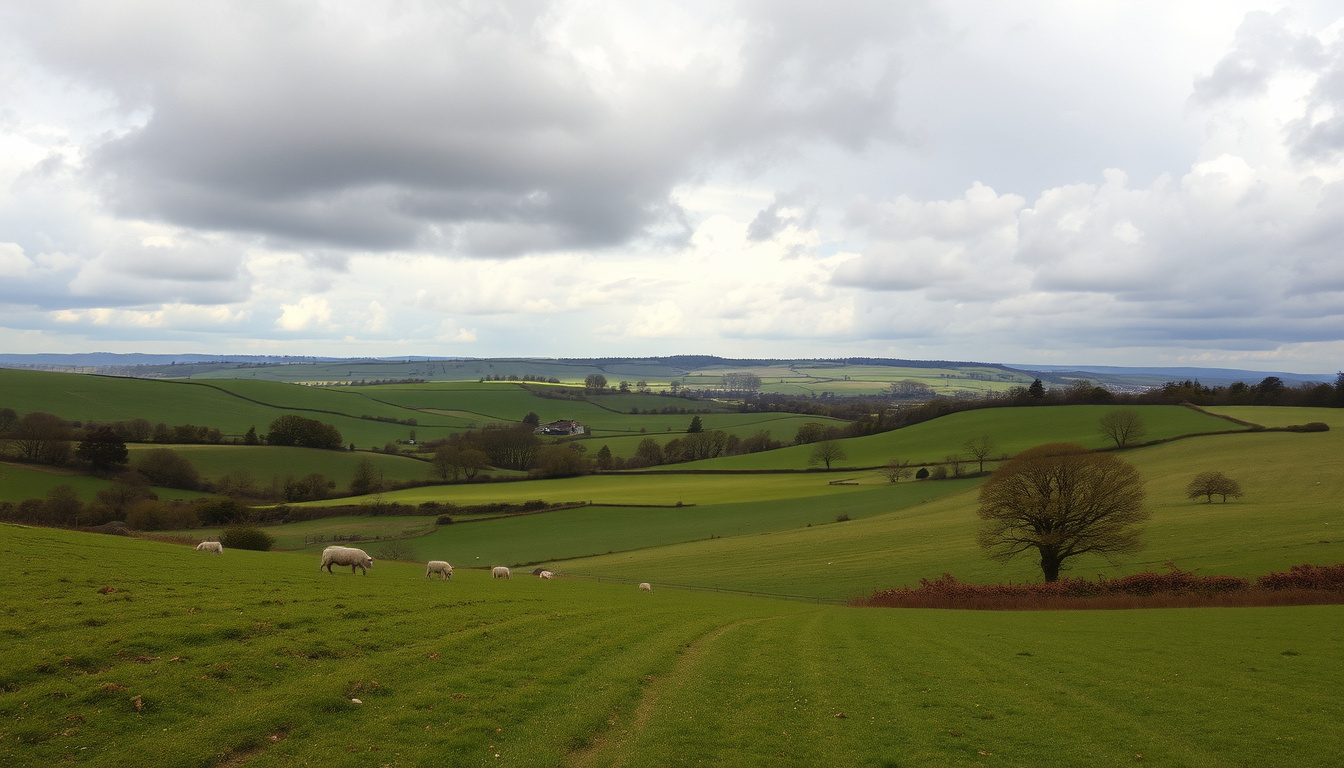
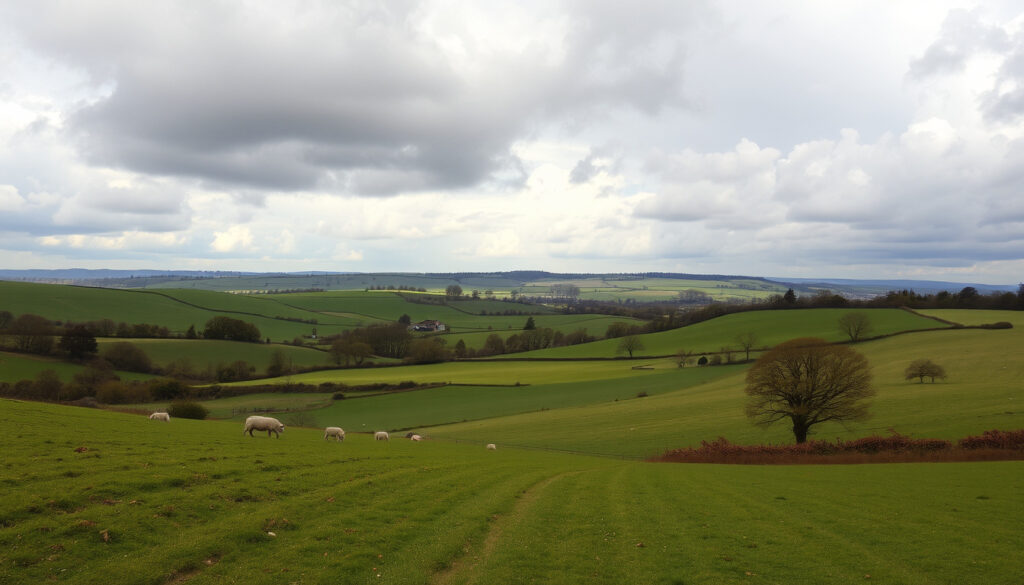
For much of the English-speaking world, the countryside arrives pre-packaged: church spire, slow river, a plough team in the distance. John Constable is a big reason why: between his birth in 1776 and his death in 1837, he turned a working Suffolk landscape into an enduring emotional image, and Tate (the national collection of British art) argues his paintings helped shape how the English countryside is imagined and romanticised.
Life & Career
- Born 11 June 1776 in East Bergholt, Suffolk (Tate’s artist biography).
- Entered the Royal Academy Schools (Tate Kids).
- Devoted much of his life to the landscape around Dedham Vale and the Stour Valley (Tate audio description).
Family
- Married Maria Bicknell (Tate’s artist biography).
- Seven children, including Charles Golding Constable (Tate’s artist biography).
- His wife’s death in 1828 deeply affected him (Tate’s artist biography).
Artworks
- The Hay Wain (1821) is his most reproduced painting (Tate collection page).
- He made expressive oil sketches directly in front of the motif (Tate collection page).
- His later canvases engage Titian, Claude Lorrain and Rubens (Tate “Nature and Nostalgia” guide).
Legacy & Value
- His art became a benchmark for nineteenth-century naturalists in Europe and America (Tate’s publishing arm).
- The Lock set a record auction price of £22.4 million in 1990 (market record).
- Tate displays his work in connection with Turner (Tate display notes).
John Constable at a glance: the essentials
The headline biography is well documented, and the rows most often repeated in galleries and market reports keep returning to the same few landmarks.
| Full name | John Constable |
|---|---|
| Born | 11 June 1776, East Bergholt, Suffolk |
| Died | 31 March 1837, London; buried in Hampstead |
| Nationality | English |
| Known for | Landscape painting; The Hay Wain |
| Spouse | Maria Bicknell |
| Children | Seven, including Charles Golding Constable |
| Style | Romantic, naturalistic landscapes |
| Most famous painting | The Hay Wain (1821) |
| Record auction price | £22.4 million, The Lock (1990) |
What this means: the rows are the public record, but the arguments about Constable happen where the public record leaves gaps.
What was John Constable known for?
Constable was known principally for landscape paintings of Dedham Vale, the Suffolk area now often called “Constable Country” (Tate audio description). He painted outdoors in oils and made expressive oil sketches on the spot—a practice Tate singles out as radical (Tate’s artists series).
“The scenes of my careless boyhood,” Constable wrote, were the source that “made me a painter.”
John Constable, quoted in Tate’s artist biography
- His subjects were personal, often tied to home and memory (Tate’s “Nature and Nostalgia” guide).
- His mature work used bolder technique and references to earlier masters such as Titian and Claude Lorrain (Tate’s “Nature and Nostalgia” guide).
The implication: his fame rests on a strange blend of close observation and private feeling, and neither works without the other.
Why is John Constable still so famous?
The Constable effect
Fame has a strange engine. Constable rarely travelled far, yet his name became shorthand for a whole version of England.
- He became a benchmark for naturalist painters across Europe and America during the nineteenth century, according to Tate’s art-publishing and retail arm.
- He shaped how the English countryside is imagined and romanticised, as Tate’s British-art collection argues in its display notes.
- He chose subjects with personal meanings and associations, a point made in Tate’s “Nature and Nostalgia” guide.
The result is a painter who belongs as much to memory as to museums. When the market, popular prints and national culture all agree on one painter, the consensus itself becomes part of the art.
“Constable’s paintings helped shape how the English countryside is imagined and romanticised.”
Tate, British art collection display notes
Why this matters
Constable’s present-day fame was never a foregone conclusion. The key fact is not that he painted rural life, but that he made rural life feel like private memory.
The pattern: Constable’s fame is not a consensus that happened by accident; it was built from paintings that still hold personal meaning for viewers.
What is John Constable’s most famous painting?
To call The Hay Wain Constable’s most famous painting is almost redundant. The real question is why the other works remain less famous to a general public.
The one everyone remembers
- The Hay Wain (1821): the painting most often reproduced in art books, posters and prints.
- Location on the wall: now part of the British national collection’s own hang, as Tate’s curatorial guide makes clear.
- Effect: the image is now so familiar it is easy to read it as documentary, yet Tate’s material emphasises how deliberately constructed the scene was.
Beyond the signature canvas
Constable’s mature work used a bolder technique and engaged directly with earlier masters, as Tate’s Turner–Constable exhibition guide points out.
- He made expressive oil sketches directly on the spot, a practice Tate’s national collection singles out as radical.
- He lifted details from the landscape and re-arranged them for emotional effect, rather than simple topographical record.
- His later canvases engage with earlier greats such as Titian and Claude Lorrain, a point repeated across the Tate literature.
The trade-off
Because one image became a global icon, the experimental Constable—the painter who made anxious, light-filled oil sketches—can get lost in the glow of the brand.
What this means: the iconic canvas is not the whole achievement; it is the gate that leads towards a stranger, more restless body of work.
Why Constable’s art matters
A radical way of working
- Working directly in front of the motif was not simply a study method; it was a commitment to immediate observation.
- These open-air sketches have been credited with anticipating a more modern way of painting, a point frequently echoed in Tate’s collection guide.
- His subject matter was personal—“home”, in a way that wasn’t fashionable at the height of the Grand Tour.
Nature and nostalgia
Why do Constable’s landscapes still feel like England, even when they are full of working boats and wet clouds?
- Tate’s curatorial language explicitly links Constable to “nature and nostalgia”.
- The paintings do not simply record Suffolk; they turn it into an idea of home that later audiences adopted as national temperament.
- By the 1830s, this synthesis of observation and emotion made him a benchmark for younger naturalists across Europe and America, as Tate’s publishing arm puts it.
The upshot
Constable’s importance is not that he painted rural life, but that he taught a later world how to feel about it.
What this means: the comfort and the experiment are two sides of the same practice.
What happened to John Constable?
Constable’s career followed a slow, uneven arc. He married Maria Bicknell in 1816, was elected a full Royal Academician in 1829, and died on 31 March 1837; he is buried in Hampstead (Tate’s artist biography).
Was John Constable wealthy?
He struggled financially for much of his career and found public acceptance late; the values attached to his paintings today are far higher than the prices he saw.
Where is Constable buried?
He is buried in Hampstead, London (Tate’s artist biography).
The catch
The artist who now anchors the British landscape tradition spent much of his career waiting for acceptance.
The implication: the late recognition made the private meanings in his paintings even more central.
Were Turner and Constable friends?
They knew one another and both exhibited at the Royal Academy during the same decades, according to Tate’s exhibition guide on the two painters.
Friends, colleagues or rivals?
- They knew one another, according to Tate’s exhibition guide on the two painters.
- Both exhibited at the Royal Academy during the same decades.
- They were not rivals in a hostile sense. The difference was in ambition and geography.
Tate’s framing puts the contrast neatly.
Constable vs Turner: a tale of two painters
Constable focused mainly on the English countryside, while Turner travelled across Britain and Europe in search of subjects.
| Dimension | John Constable | J.M.W. Turner |
|---|---|---|
| Primary subject | Mainly the English countryside | Subjects across Britain and Europe |
| Royal Academy | Exhibited; knew Turner | Exhibited; knew Constable |
| Tate’s framing | Nature and nostalgia | Travel and transformation |
Constable’s desire was not to travel for more exotic scenery but to go deeper into the place he already loved. Turner needed the rest of the world in order to see light differently.
The catch
Constable is often remembered as the more provincial painter, yet the comparison misses how ambitious he was in his own terms: he wanted to make the local feel universal.
The pattern: their pairing lets the local and the cosmopolitan remain distinct ideas of British art.
What are Constable’s paintings worth today?
The £22.4 million moment
A work tied to Constable’s market record changed understanding of how the art market now values the artist. The Lock is usually the figure quoted when people ask whether Constable belongs in the top tier of old masters.
Beyond the record
- The market rewards rarity, as with most old-master works.
- Institutional interest in Constable has remained strong since the 1987–90 boom years.
- For most visitors, the largest “value” is not in the auction room but in a museum gallery where the works are held in trust.
If you cannot afford a painting, the most reliable point of contact is what Tate publishes: catalogues, prints and other materials offer a way to live with Constable’s eye without a seven-figure budget.
What to watch
A Constable “record” is not really a forecast about the artist’s future, but a judgement about the present: a reminder that even familiar landscapes can hold surprises in the pricing rooms.
The pattern: the auction record is a current judgement, not a permanent ceiling.
Did John Constable have children?
Yes. Constable married Maria Bicknell in 1816, and the couple had seven children, including Charles Golding Constable (Tate’s artist biography).
Constable’s people, followers and the archive
Seven children and a family presence
- Constable married Maria Bicknell, and the couple had seven children.
- One son, Charles Golding Constable, became a point of continuity in the family record.
- Domestic closeness runs through the artist’s letters and through later biography.
The family line is important because Constable’s own art was so attached to home. The repeated appearance of his children in the documentation helps explain why “loss” became such a persistent theme in his last years.
Who followed in his footsteps?
Constable did not run a formal atelier with named pupils in the way that some later artists did. But his influence was real.
- Nineteenth-century naturalist painters treated him as a benchmark, a claim recorded by Tate’s book and print team.
- Later European painters absorbed his example of working directly in front of the motif.
- His paintings became institutionalised again in the twentieth century as “heritage”, which was precisely why later curators went back to look for the radical artist.
Confirmed facts and open questions
- Confirmed: He exhibited at the Royal Academy and knew Turner (Tate’s exhibition guide).
- Confirmed: He had seven children, including Charles Golding Constable (Tate’s artist biography).
- Confirmed: Tate records his subjects as personal and nostalgic (Tate’s “Nature and Nostalgia” guide).
- Open: The available sources do not name a famous pupil or formal school.
- Open: The sources stop short of listing living direct descendants, even though the family line is recorded.
- Open: The exact number of his oil paintings varies by estimate, and top-tier institutional pages do not give a single official count.
The archive
Constable’s legacy is unusual because it was built from a mix of public institutions, market record and family luck. The elements interact more strongly than for almost any other British painter.
The implication: no single institution or market force controls Constable’s legacy; the private and the public records keep feeding each other.
Where are John Constable’s paintings?
Major public holdings are concentrated in UK institutions—Tate Britain, the National Gallery and the Victoria and Albert Museum—with Tate’s collection page showing a substantial body of Constable works. Secondary commentary has estimated around 150 artworks at Tate, though the exact count is not confirmed in the top-tier source (Shafe / Tate Britain walk-through PDF).
Where can I buy John Constable prints?
Prints and reproductions are widely available from museum shops and online galleries; Tate’s publishing arm sells posters and catalogues of his work.
John Constable paintings for sale
Original works appear at auction houses from time to time, but most major pieces remain in public collections. The implication: for most people, the practical way to live with Constable is not the auction room but the print shop and the museum wall.
Still curious? The essential Constable answers
Here are the questions that come up most often in museum and market research.
Did Constable have famous students?
The source record does not describe a formal atelier or a star pupil. What the sources show is influence: nineteenth-century naturalist painters across Europe and America were measured against him as a benchmark.
What made Constable a Romantic painter?
He was an English Romantic landscape painter who worked primarily in naturalistic scenes. His Romanticism was visible in the emotional charge of the landscape rather than in melodramatic subjects.
Why does the market treat “The Lock” as special?
Works from Constable’s “Lock” series have been treated as standout commercial moments. The standard market record for the work is £22.4 million at auction in 1990.
Which museum shows the most Constable work?
Tate displays Constable in contexts that connect him to Turner and to changing ideas of British landscape. The most useful single location for an online orientation remains Tate’s own collection pages.
Is “The Hay Wain” Constable’s greatest painting?
It is certainly his most famous painting. Many museum professionals would argue that the oil sketches are the more radical achievement, which means the same artist is praised for two different successes.
Did any of Constable’s descendants carry on painting?
The family record identifies seven children, but the archives do not support a claim that one of his children matched his reputation as a painter.
The pattern: Constable’s public legacy depends less on a brand than on a set of deeply personal paintings that audiences keep turning into shared memory.
tate.org.uk, tate.org.uk, tate.org.uk, shop.tate.org.uk, tate.org.uk, astrofella.wordpress.com, tate.org.uk, odp.org

Arthur Oliver Howard Fletcher is a staff writer for NationalReport.uk, covering UK national news, politics, the economy and public services. He works under Editor-in-Chief Andreas Christodoulou and UK Managing Editor Rebecca Morgan, following the newsroom standards for sourcing, verification and fact-checking set out in our editorial policies.