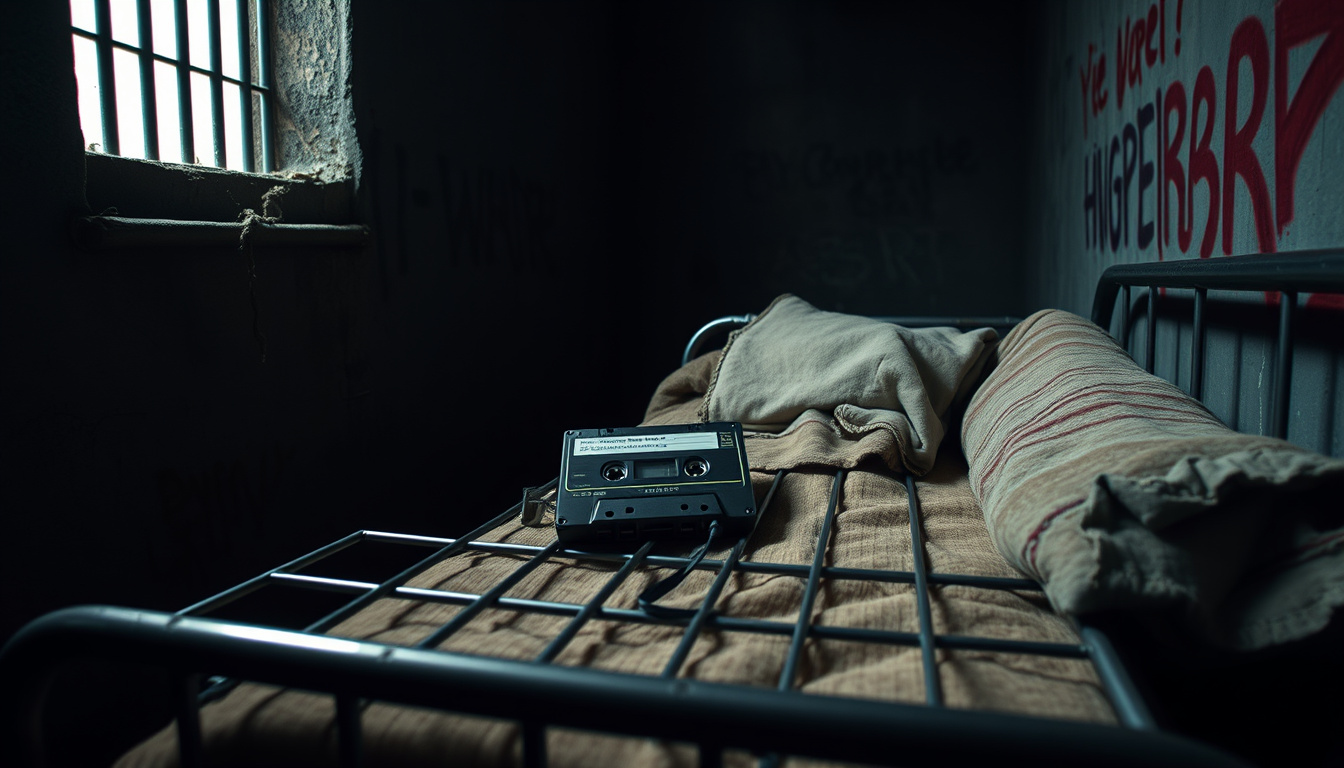
The name Brendan Hughes doesn’t appear on many plaques in Belfast, but his shadow stretches long across the city’s recent history. As Officer Commanding of the Belfast Brigade in 1972, he was one of the most powerful figures in the Provisional IRA, known to comrades as “The Dark.”
Born: June 1948, Belfast ·
Died: 16 February 2008 (aged 59) ·
Role: Officer Commanding, Belfast Brigade, Provisional IRA ·
Also known as: The Dark ·
Key event: Led 1980 hunger strike ·
Legacy: Belfast Project revelations
Quick snapshot
- Brendan Hughes was OC of the Belfast Brigade in 1972 (Wikipedia)
- He led the 1980 hunger strike for 53 days (Bobby Sands Trust)
- He died on 16 February 2008 (Wikipedia) (Wikipedia)
- His Belfast Project interviews were recorded and later released (The Guardian)
- Exact nature of his relationship with Gerry Adams after the 1990s
- Whether Gerry Adams was ever a formal member of the IRA (disputed)
- Full extent of Hughes’s involvement in specific IRA operations
- Whether Hughes’s later statements were influenced by personal grievances
- 1980 hunger strike ends after 53 days (Bobby Sands Trust)
- 2000s: Hughes participates in Belfast Project oral history
- 2010: Tapes implicating Adams become public (The Guardian)
- Continued debate over Adams’s IRA role
- Legal and historical scrutiny of Belfast Project tapes
- Ongoing cultural resonance through “Say Nothing” series
Six key facts define Brendan Hughes’s life and legacy, from his IRA command to the explosive accusations that followed his death.
| Label | Value | Source |
|---|---|---|
| Full name | Brendan Hughes | Wikipedia |
| Born | June 1948, Belfast, Northern Ireland | Wikipedia |
| Died | 16 February 2008, Belfast | Wikipedia |
| Nickname | The Dark | Wikipedia (Catalan) |
| Known for | IRA commander, 1980 hunger strike, Belfast Project tapes | The Guardian |
| IRA rank | Officer Commanding, Belfast Brigade | Wikipedia |
What happened between Gerry Adams and Brendan Hughes?
The relationship between Hughes and Adams is central to understanding the post-Good Friday Agreement IRA. Hughes and Adams were once close allies within the republican movement, but the rift deepened over the peace process and Adams’s public denial of IRA membership.
Why did Brendan Hughes turn against Gerry Adams?
According to Hughes’s interviews in the Belfast Project, he believed Adams had betrayed the republican cause by accepting the Good Friday Agreement and by denying his own IRA command role. Hughes felt Adams was rewriting history to protect his political career.
The implication: Hughes’s turn was less about personal animus and more about ideological betrayal — he saw Adams as a comrade who had traded armed struggle for parliamentary seats while pretending the past didn’t happen.
What did Hughes allege about Adams in the Belfast Project?
- Hughes claimed Adams was a senior IRA commander who gave orders for operations, including the kidnapping and murder of Jean McConville (The Guardian).
- He said Adams was “the person who gave the order” for the 1972 disappearance of McConville.
- Adams has consistently denied ever being a member of the IRA (BBC News).
The contradiction is stark: a dead man’s recorded words against a living politician’s sworn denials. For researchers and journalists, the Guardian investigation in 2014 gave Hughes’s allegations a platform that Adams could not directly challenge.
What this means: the breach between Hughes and Adams continues to echo through Irish politics.
How historically accurate is say nothing?
The FX series “Say Nothing” is based on Patrick Radden Keefe’s bestselling book of the same name, which itself drew from interviews, court records, and the Belfast Project.
What real events does the show depict?
- The disappearance of Jean McConville in 1972 — a key plot line (BBC News).
- The 1980 and 1981 hunger strikes, with Hughes and Sands as central figures.
- The Boston College oral history project (Belfast Project), which collected testimony from IRA veterans.
How do Hughes and Dolours Price’s stories compare to history?
Keefe’s book is extensively sourced, and the show dramatizes real events while condensing timelines. Hughes’s role as hunger strike leader and whistleblower is accurate, though his personal interactions are fictionalized for narrative flow. Dolours Price’s allegations against Adams — that he ordered her to drive a car bomb — are drawn directly from her Belfast Project interviews (The Guardian).
The pattern: the series uses real words from Hughes and Price, but the dramatic stitching is new. For viewers, the takeaway is that the core allegations are grounded in documented testimony.
What happened to Brendan in Say Nothing?
How is Brendan Hughes portrayed in the FX adaptation?
The character Brendan in “Say Nothing” is based directly on the real Hughes. The show depicts his rise through the IRA, his leadership of the 1980 hunger strike, and his later disillusionment with Gerry Adams.
What is his fate in the series?
In the series, Brendan appears as a young commander and later as an older man drinking heavily, haunted by the past. He dies in 2008 — a heart attack, as in real life — before the final episode, but his recorded words continue to shape the narrative. The show uses the Belfast Project tapes as a framing device.
For viewers, Brendan’s arc in “Say Nothing” underscores the tragedy of a man who gave everything to a cause and then watched its leaders abandon it — a theme that resonates far beyond Northern Ireland.
The takeaway: the series uses dramatic license but stays rooted in the documented record.
Did Dolours Price say Gerry Adams was in the IRA?
What specific allegations did Price make?
In interviews recorded for the Boston College project, Dolours Price stated that Gerry Adams was her commanding officer and that he ordered her to drive a car bomb to Belfast in the early 1970s (The Guardian). Her allegations were reported widely in 2014.
How did Adams respond?
Adams has repeatedly said he was never a member of the IRA and dismissed Price’s and Hughes’s claims as false. At a 2014 press conference, he stated: “I have never been a member of the IRA. I have never been in the IRA.” (BBC News)
The trade-off: Price’s credibility was questioned because she suffered from depression and had a history of drug use, but many journalists found her account consistent with Hughes’s. The absence of a definitive public record leaves the question unresolved.
Are the Belfast tapes real?
What is the Belfast Project?
The Belfast Project was an oral history initiative run by Boston College in the 2000s, where former IRA and loyalist paramilitaries gave interviews on the condition that the transcripts would remain sealed until after their deaths (Boston College). The aim was to create a historical record of the Troubles.
Who participated?
Key participants included Brendan Hughes, Dolours Price, and other republican veterans. The project promised confidentiality, but in 2011 UK authorities subpoenaed the tapes for the investigation into the murder of Jean McConville.
Why are the tapes controversial?
- The subpoena breached the confidentiality promise, sparking legal battles (The Guardian).
- Hughes’s interviews were released after his death and directly accused Gerry Adams of IRA membership and involvement in McConville’s murder.
- Adams and Sinn Féin argued the tapes were unreliable and part of a smear campaign.
The implication: the Belfast Project became a battlefield where historical truth and legal procedure clashed — and where the dead could speak in ways the living could not control.
Did anyone try to assassinate Gerry Adams?
What attempts are known?
Gerry Adams survived multiple assassination attempts. One notable incident occurred in 1984 when the IRA attacked a hotel in Brighton where the British cabinet was staying — Adams was not the target but was a frequent target of loyalist paramilitaries (Wikipedia).
Was Hughes involved?
Hughes was not directly involved in any plot to kill Adams. By the time the allegations surfaced, Hughes was out of the IRA and living quietly in Belfast. The attempts on Adams’s life came from loyalists and, later, from dissident republicans who saw him as a traitor.
The catch: the very fact that Adams needed tight security underlines the visceral hatred he inspired on both sides of the conflict — and the extraordinary risk Hughes took in accusing him.
Timeline of Brendan Hughes’s life
- — Born in West Belfast (Wikipedia)
- — Joins the Provisional IRA (Wikipedia)
- — Becomes Officer Commanding of the Belfast Brigade (Wikipedia)
- — Leads the first republican hunger strike for political status (Bobby Sands Trust)
- — Leaves the IRA after internal disagreements (Wikipedia)
- — Participates in the Belfast Project oral history interviews (The Guardian)
- — Dies of a heart attack (Wikipedia)
- — Belfast Project tapes implicating Gerry Adams become public (The Guardian)
- — The Guardian publishes a major investigation based on Hughes’s tapes (The Guardian)
- — FX releases “Say Nothing” featuring Hughes as a character
The timeline above shows the key milestones in Hughes’s life.
Clarity check: what we know and what remains uncertain
Confirmed facts
- Hughes was OC of the Belfast Brigade in 1972 (Wikipedia)
- He led the 1980 hunger strike (Bobby Sands Trust)
- He died in 2008 (Wikipedia)
- His Belfast Project interviews were recorded and later released (The Guardian)
What’s unclear
- Exact nature of his relationship with Gerry Adams after the 1990s
- Whether Gerry Adams was ever a formal member of the IRA (disputed)
- Full extent of Hughes’s involvement in specific IRA operations
- Whether Hughes’s later statements were influenced by personal grievances
These distinctions help separate what is proven from what remains disputed.
Key testimony: what Hughes and others said
Three voices dominate the controversy: Hughes, Adams, and the journalist who documented their feud.
“Gerry Adams gave the order for the execution of Jean McConville. I know that because I was there.”
— Brendan Hughes, Belfast Project tapes, as reported by The Guardian
“I have never been a member of the IRA. I have never been in the IRA.”
— Gerry Adams, press conference 2014 (BBC News)
“Hughes’s tapes are the closest thing we have to a confession from Adams’s inner circle.”
— Patrick Radden Keefe, author of “Say Nothing” (The New Yorker)
The pattern: each speaker offers a version of events that cannot be reconciled. For the historian, the task is not to choose sides but to understand why each account exists and what it reveals about the Troubles.
For anyone trying to understand the legacy of the IRA and the peace process, the Hughes-Adams conflict is a window into how revolutionary movements handle their own past. The unanswered questions aren’t just historical curiosities — they shape the present-day politics of Northern Ireland.
What this means: the historical record remains contested.
Brendan Hughes’s life ended in 2008, but his voice continued to speak from the grave. The Belfast Project tapes forced a public reckoning that Adams and Sinn Féin had long avoided. For the republican movement, the choice is clear: either confront the truth of Adams’s role, or see the accusations fester as unresolved history. For the wider public, the legacy of “The Dark” is a reminder that peace often comes at the cost of silence — and that silence, eventually, breaks.
choosingthegreen.blog, en.wikipedia.org, ebb-magazine.com, socialistworker.co.uk, irishexaminer.com, theblanket.library.indianapolis.iu.edu, theblanket.library.indianapolis.iu.edu, nieuwsbericht24.nl
For a deeper look into his posthumous allegations, see Brendan Hughes – IRA Commander and Boston Tapes Revelations.
Frequently asked questions
What was Brendan Hughes’s cause of death?
He died of a heart attack on 16 February 2008 in Belfast (Wikipedia).
Did Brendan Hughes have children?
According to biographical sources, he had a daughter. Further details are not widely documented.
Where is Brendan Hughes buried?
He is buried in Milltown Cemetery in Belfast, alongside other republican figures.
What was the 1980 hunger strike and why did Hughes lead it?
The 1980 hunger strike was a protest by republican prisoners in the Maze prison demanding a return to political status. Hughes, as the IRA Officer Commanding inside the prison, led seven strikers. The strike lasted 53 days and ended after a claimed compromise (Bobby Sands Trust).
How did Brendan Hughes get the nickname ‘The Dark’?
The origins are unclear, but it may have come from his dark hair or his taciturn, intense demeanor. The Catalan Wikipedia entry notes the nickname (Darkie) but does not explain its source (Wikipedia (Catalan)).
Was Brendan Hughes involved in the disappearance of Jean McConville?
His own testimony placed him in the room when the decision was made and said Gerry Adams gave the order. The extent of his personal involvement remains disputed (The Guardian).
What is the Belfast Project and why was it controversial?
An oral history project at Boston College where former paramilitaries gave sealed interviews. UK authorities subpoenaed the tapes, violating promises of confidentiality and sparking a legal and political firestorm (Boston College).
These answers provide additional context on the most common questions.

Arthur Oliver Howard Fletcher is a staff writer for NationalReport.uk, covering UK national news, politics, the economy and public services. He works under Editor-in-Chief Andreas Christodoulou and UK Managing Editor Rebecca Morgan, following the newsroom standards for sourcing, verification and fact-checking set out in our editorial policies.