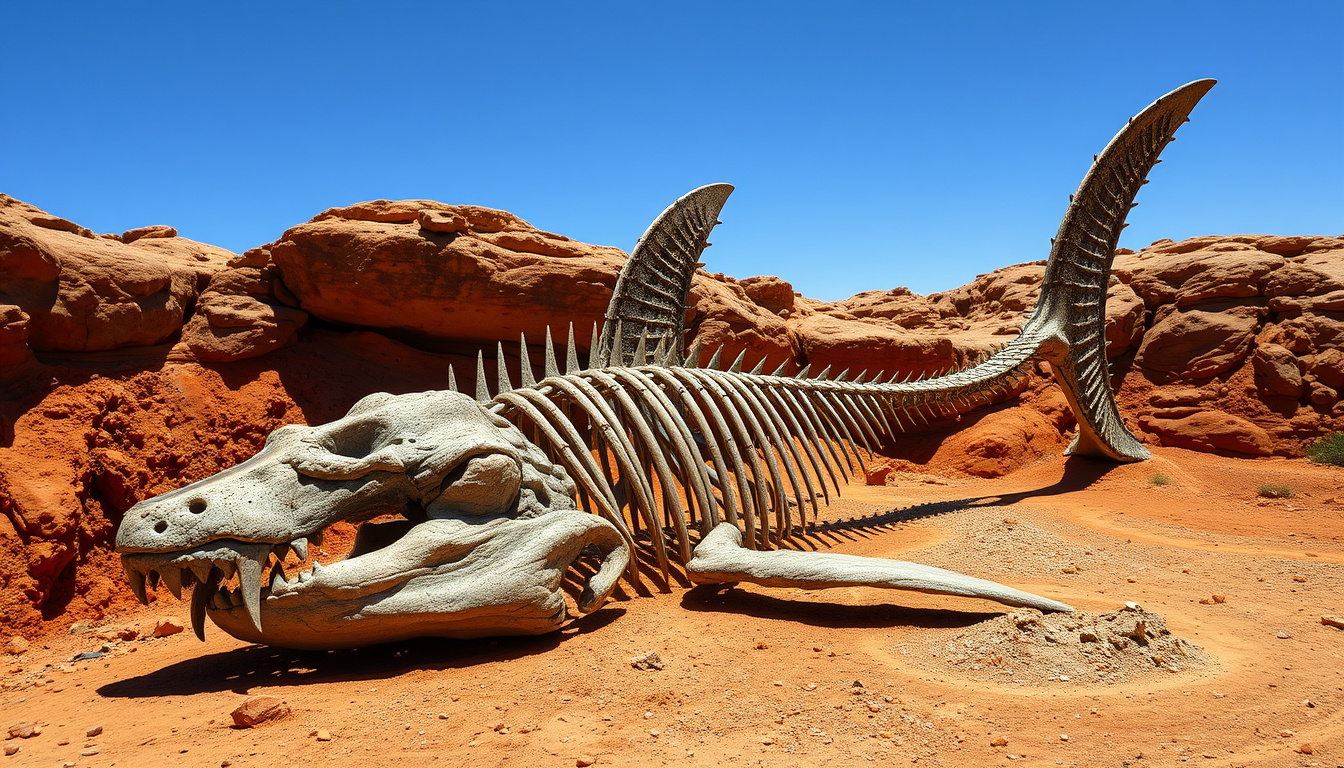
When five massive vertebrae washed up on a beach in northern Australia, few would have guessed they belonged to one of the most significant shark fossils ever found. The bones belonged to a shark that prowled ancient seas 115 million years ago—and new research reveals it was no ordinary predator. Vertebrae up to 12.6 centimeters across, from an animal estimated at 6 to 8 meters long, are forcing scientists to rewrite the evolutionary history of Earth’s largest sharks.
Age of Fossil: 115 million years ·
Number of Vertebrae Found: 5 ·
Estimated Shark Length: 6-8 meters ·
Location: Australia ·
Shark Type: Lamniform (mackerel shark)
Quick snapshot
- Five vertebrae from a cardabiodontid lamniform shark discovered on a beach near Darwin, Australia (Discover Magazine)
- Dating to 115 million years ago in the upper Aptian stage of the Early Cretaceous from the Darwin Formation (Phys.org)
- Estimated body length 6-8 meters, weight exceeding 3 tons, comparable to a city bus (Communications Biology)
- Exact species name of the shark remains to be determined
- Precise body length requires additional fossils for validation
- Limited comparative data from other Early Cretaceous sites globally
- Lamniforms first appear ~135 Ma as 1-meter hunters
- 115 Ma: This gigantic shark in Australia
- Study published in Communications Biology in 2025
- More Aptian-era excavations planned in Australia
- Researchers anticipate finding additional cardabiodontid fossils
- Further analysis of vertebral growth patterns underway
| Attribute | Value |
|---|---|
| Fossil Age | 115 million years old |
| Shark Length | 6 to 8 meters |
| Vertebrae Count | Five |
| Shark Order | Lamniform |
| Discovery Site | Australian beach, Darwin Formation |
Have megalodon remains ever been found?
No complete megalodon skeleton exists. The species—estimated at up to 18 meters—left behind mostly teeth and scattered vertebrae, since cartilage rarely survives fossilization. Teeth reaching 18 centimeters in slant height are the most abundant evidence, and researchers have used scaling models based on great white shark proportions to estimate body size. However, the absence of a full skeleton means gaps remain in our understanding of this ocean giant that dominated marine ecosystems until roughly 3.6 million years ago.
No complete skeletons
Megalodon’s known fossil record consists primarily of teeth and isolated vertebrae. The species is estimated to have reached lengths of 15-18 meters based on scaling models using great white sharks as living analogs (Sci.News). The recent 115-million-year-old Australian discovery predates megalodon by roughly 100 million years, demonstrating that gigantism in the lamniform lineage extends far deeper into the fossil record than megalodon itself.
Estimates from teeth: 15-18 meters
Researchers estimate megalodon body dimensions by comparing tooth serration patterns and root structures with modern sharks of known size. This method suggests adult megalodons exceeded 17 meters—significantly larger than the 6-meter maximum for great white sharks. The comparison table below illustrates where megalodon falls relative to other apex predators.
For paleontologists, every new vertebra find adds critical data. The Australian fossil shows gigantism emerged 15 million years before megalodon appeared, reshaping when mega-predatory sharks actually evolved—not when the famous apex predator took the stage.
Was a megalodon shark found recently?
No megalodon was found in the recent discovery. Five enormous vertebrae from a gigantic lamniform shark were uncovered on an Australian beach near Darwin in late 2025, but the fossil dates to approximately 115 million years ago—far older than megalodon. The remains belong to the extinct family Cardabiodontidae, not the Otodus genus that includes megalodon. Researchers estimate the shark measured 6 to 8 meters long, comparable to a city bus, and weighed over 3 tons.
Recent lamniform shark discovery
The fossil was found on a beach in the Darwin Formation along the coastline of the Northern Territory, Australia (Discover Wildlife). Each vertebral centrum measured up to 12.6 cm across—larger than the 8 cm typical of adult great white sharks (Sci.News). “These sharks were massive, and they lived in shallow coastal waters,” said Dr. Mikael Siversson of the Western Australian Museum (Sci.News).
Not megalodon
“Our results show that mega-body size is an ancient lamniform trait, with the Australian cardabiodontid being around 6-8 m and over 3 tons,” according to the study published in Communications Biology (Communications Biology). The discovery pushes the earliest appearance of gigantic lamniforms back by 15 million years—from around 100 million years ago to 115 million years ago. “But this has pushed the time envelope back of when we’re going to find absolutely enormous cardabiodontids,” said Benjamin Kear of the Swedish Museum of Natural History (Phys.org).
What’s bigger, a T-rex or a megalodon?
Megalodon exceeded 17 meters in length, while T-rex stretched to approximately 12 meters—making megalodon the larger predator. But comparing these extinct giants reveals more than just size: T-rex dominated terrestrial ecosystems for roughly 2 million years, whereas megalodon ruled the oceans for over 13 million years before vanishing around 3.6 million years ago.
| Species | Maximum Length | Estimated Weight | Time Period |
|---|---|---|---|
| Otodus megalodon | 17-18 meters | 30-60 metric tons | 23-3.6 million years ago |
| Cardabiodontid (Australian fossil) | 6-8 meters | >3 tons | 115 million years ago |
| Tyrannosaurus rex | 12 meters | 8-14 metric tons | 68-66 million years ago |
| Great white shark (modern analog) | Up to 6 meters | ~2 metric tons | Present |
Cardabiodontid sharks evolved to 6-8 meters 115 million years ago—long before megalodon appeared—proving that gigantism in the lamniform lineage predates both T-rex and megalodon by tens of millions of years. The trajectory from 1-meter hunters to 6-meter predators took roughly 20 million years, setting the evolutionary stage for everything that followed.
Size comparison details
The Australian fossil’s vertebrae measure 12.6 cm in centrum diameter, compared to 8 cm in adult great white sharks—a 57% increase in cross-sectional size. Size estimates were derived from regression models using vertebral centrum diameters from modern lamniforms like great whites and threshers (Communications Biology). Previous largest Cretaceous lamniform vertebrae came from Albian formations in Texas (11 cm diameter) and Kansas (14-17 cm extrapolated)—but the Australian find predates them all (Communications Biology).
Megalodon length vs T-rex
While megalodon clearly exceeds T-rex in length, comparing these predators requires considering their environments. T-rex reached approximately 12 meters and 8-14 metric tons on land, while megalodon dominated shallow marine environments with an estimated body mass of 30-60 metric tons. The Australian discovery shows that lamniform sharks achieved substantial body sizes 15 million years earlier than previously documented, rivaling the largest coeval marine reptiles like plesiosaurs and ichthyosaurs.
What killed the last megalodon?
No single cause explains megalodon’s extinction 3.6 million years ago. Climate shifts, evolving prey species, and competition from great white sharks and orcas likely combined to end its reign. The species survived for over 13 million years before vanishing—longer than T-rex existed—but could not adapt to changing ocean conditions and new predatory rivals.
Extinction theories
- Ocean cooling: Megalodon may have struggled as global temperatures dropped and prey migrated to colder waters
- Prey evolution: Many of the whale species megalodon hunted began smaller and faster, reducing available food sources
- Competition: Great white sharks and early orcas may have outcompeted megalodon for resources
- Climate-driven extinction of megalodon’s primary prey species around 3-4 million years ago
Megalodon’s demise parallels other megafauna extinctions: a shifting climate combined with competition from better-adapted species. The pattern holds for apex predators across eras—size doesn’t guarantee survival when ecosystems transform faster than species can adapt. Mosasaur dominance during 80-66 million years ago suppressed giant lamniforms to just 3-4 meters, proving this pressure isn’t new.
When was the last megalodon shark found?
The youngest confirmed megalodon fossils date to roughly 3.6 million years ago, though some evidence suggests possible survival until around 2.6 million years ago. In 2023, researchers reported associated megalodon remains with scales, providing additional data on the species’ final populations. The fossil record shows no credible evidence of megalodon surviving beyond the Pliocene epoch.
Fossil records timeline
- ~135 million years ago: Early lamniforms first appear as small, 1-meter-long hunters (Sci.News)
- ~115 million years ago: Gigantic cardabiodontid shark lives in Australian seas (Darwin Formation)
- ~100 million years ago: Previous earliest cardabiodontids; shark diversity increases
- 80-66 million years ago: Mosasaur dominance suppresses giant lamniforms; sharks stay 3-4 meters
- 23 million years ago: Otodus megalodon first appears in the fossil record
- 3.6 million years ago: Last confirmed megalodon fossils
- 2025: Study on Darwin fossils published in Communications Biology
“The ancient ocean stretched from Gondwana (Australia) to Laurasia (Europe), now coastal mudflats near Darwin.”
— Phys.org reporting on the Darwin Formation location
The fossil record of lamniform sharks spans over 400 million years of evolution (Phys.org). The Darwin Formation preserves a mix of marine reptiles, fish, and now this shark, offering insight into early Cretaceous ecosystems where these massive predators competed with plesiosaurs and ichthyosaurs (Phys.org).
Related reading: shark evolution timeline
Frequently asked questions
What type of shark were the mega remains from?
The five vertebrae belonged to a member of the extinct family Cardabiodontidae, part of the Lamniformes order that includes modern great white sharks. This specific shark reached 6-8 meters in length—making it roughly the size of a city bus and weighing over 3 tons.
Where exactly were the mega shark remains found?
The fossils came from the Darwin Formation on the coastline near Darwin, Northern Territory, Australia. During the Early Cretaceous, this area was part of a shallow sea stretching from Gondwana (Australia) to Laurasia (Europe).
How does this discovery change shark history?
The discovery pushes back the earliest appearance of gigantic lamniform sharks by 15 million years—from around 100 million years ago to 115 million years ago. This reveals that gigantism in the lamniform lineage is an ancient trait, not a late Cretaceous development as previously believed.
Is this the same as megalodon?
No. The Australian shark belongs to Cardabiodontidae, a different extinct family that predates megalodon by nearly 100 million years. Megalodon (Otodus megalodon) didn’t appear until around 23 million years ago and went extinct roughly 3.6 million years ago.
What evidence links it to modern sharks?
The vertebrae are morphologically identical to modern great white sharks but larger, showing the basic lamniform body plan was established by 115 million years ago. Regression models using centrum diameters from modern lamniforms (great whites and threshers) were used to estimate size.
Could megalodon still exist?
No credible evidence supports living megalodon populations. The youngest confirmed fossils date to 3.6 million years ago, and the species required specific ocean conditions and large prey populations that no longer exist. Occasional “sightings” lack scientific documentation.
How was the shark size estimated?
Researchers used regression models comparing vertebral centrum diameters from the fossil to known measurements in modern lamniforms like great white sharks and threshers. Each centrum measured up to 12.6 cm—57% larger than the 8 cm typical of adult great whites—yielding the 6-8 meter estimate.
Related reading
- Communications Biology (Nature) — Primary peer-reviewed study with methods and data
- Phys.org — Detailed reporting with author quotes and context
- Discover Magazine — Comprehensive evolutionary implications
- Sci.News — Expert quotes and size comparisons
- Western Australian Museum — Official institution on Cretaceous predators
- BBC Discover Wildlife — Site and family details

Arthur Oliver Howard Fletcher is a staff writer for NationalReport.uk, covering UK national news, politics, the economy and public services. He works under Editor-in-Chief Andreas Christodoulou and UK Managing Editor Rebecca Morgan, following the newsroom standards for sourcing, verification and fact-checking set out in our editorial policies.