
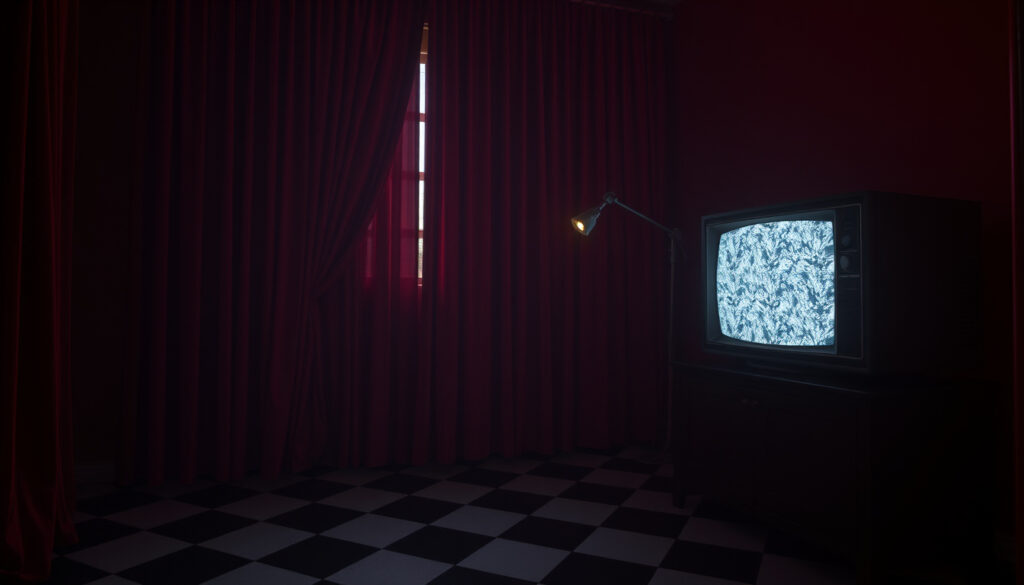
Some filmmakers reward attention; David Lynch rewarded surrender. His images — a severed ear in a field, a dwarf speaking backward, a blue box that swallows a dream — worked on audiences the way music does: felt before understood. Between Eraserhead (1977) and Inland Empire (2006), he directed ten feature films (Wikipedia’s filmography (complete credits)), and his 2017 return to Twin Peaks proved his strangest work still commanded a mass audience. This is how that happened, and what it left behind.
Born: January 20, 1946 · Died: January 16, 2025 · Feature films directed: 10 · Academy Award nominations: 4 · Twin Peaks original run: 1990–1991 · Mulholland Drive: BBC Culture 2016 poll — greatest film since 2000
Quick snapshot
- Born January 20, 1946, in Missoula, Montana; died January 16, 2025, in Los Angeles (Wikipedia’s biography (career overview))
- Directed 10 feature films, from Eraserhead (1977) to Inland Empire (2006) (Wikipedia’s filmography (complete credits))
- Received 4 Academy Award nominations and an honorary Oscar in 2019 (Wikipedia’s biography (career overview))
- “Darkest” or “weirdest” rankings are critical judgments, not official designations (Wikipedia’s filmography (complete credits))
- Whether Lynch named a single favorite actor or film varies by interview (Wikipedia’s biography (career overview))
- Eraserhead’s on-and-off shooting timeline is reported differently across sources (Wikipedia’s filmography (complete credits))
- 1967: made his first short film, Six Men Getting Sick (Wikipedia’s filmography (complete credits))
- 1977: released Eraserhead, his feature debut (Wikipedia’s biography (career overview))
- 2017: Twin Peaks: The Return aired on Showtime (Lynch on Lynch summary (interview-based career context))
- No future films are planned; Lynch died January 16, 2025 (Wikipedia’s biography (career overview))
- Inland Empire (2006) remains his last feature film (Wikipedia’s biography (career overview))
David Lynch at a glance
Seven facts, one pattern: the official biography is shorter than the legend — a Montana-born painter who became one of American cinema’s most recognizable names.
| Label | Detail |
|---|---|
| Born | January 20, 1946, Missoula, Montana, U.S. |
| Died | January 16, 2025, Los Angeles, California, U.S. |
| Nationality | American |
| Occupation | Filmmaker, painter, musician, actor, writer |
| Feature films directed | 10 |
| Signature works | Eraserhead, Blue Velvet, Twin Peaks, Mulholland Drive |
| Awards | Honorary Academy Award (2019); Palme d’Or (1990); 4 Academy Award nominations |
Dates and awards follow Wikipedia’s biography (career overview); the ten-film count follows Wikipedia’s filmography (complete credits).
What this means: the table reads like a working artist’s ledger, not a celebrity’s press kit. The range — painter, musician, writer, actor — is unusual for a director, and it carried directly into how his films were made.
What is David Lynch most famous for?
Who was David Lynch?
- Born January 20, 1946, in Missoula, Montana; died January 16, 2025, in Los Angeles, nine days before his 79th birthday (Wikipedia’s biography (career overview)).
- An American filmmaker, painter, musician, and actor (Wikipedia’s biography (career overview)).
- Famous for Eraserhead, Blue Velvet, Twin Peaks, and Mulholland Drive (Wikipedia’s biography (career overview)).
The popular answer to “what is David Lynch most famous for” is also the accurate one. Standard reference accounts lead with the same four works: Eraserhead, Blue Velvet, Twin Peaks, and Mulholland Drive. His biography is unusual for a Hollywood name because it lists occupations, not just credits — filmmaker, painter, musician, actor, and writer — and that spread shows in the films themselves (Wikipedia’s biography (career overview)).
That range matters because his films behave like paintings that move: compositions and moods first, plot second. Viewers who arrive looking for a conventional story often leave describing a feeling, which is exactly what Lynch designed (Wikipedia’s biography (career overview)).
Twin Peaks asked a 1990 network audience to accept backwards speech, a murder solved by intuition, and a supernatural horror sitting under a small-town surface. The audience stayed for the show’s 1990–1991 run, which became the proof that dream logic carried prime time (Wikipedia’s biography (career overview)).
What made his work different?
- Dream logic over linear narrative (Wikipedia’s filmography (complete credits)).
- Ordinary settings — lawns, diners, boulevards — hiding menace (Wikipedia’s biography (career overview)).
- Layered sound design that builds dread and confusion (Wikipedia’s biography (career overview)).
Dream logic is the practical difference. Most directors build a scene from cause to effect; Lynch builds it from feeling to feeling, and the edit arrives when the mood is complete rather than when the plot advances. Twin Peaks carried that logic to network television across 1990–1991, and audiences followed (Wikipedia’s biography (career overview)).
He also refused to separate his media. The filmography credits him across producing, screenwriting, acting, sound design, editing, cinematography, and art direction, not just directing (Wikipedia’s filmography (complete credits)). The implication: Lynch’s fame rests on work that refuses to explain itself, and that refusal is what made the work famous. Few directors ask so much of an audience; fewer are rewarded for it.
What was David Lynch’s most successful film?
How do box office and critical success compare?
- Dune (1984) is Lynch’s biggest theatrical release by box office, though not a critical favorite (Wikipedia’s filmography (complete credits)).
- Mulholland Drive (2001) won Best Director at Cannes and topped BBC Culture’s 2016 critics’ poll as the greatest film since 2000 (Wikipedia’s biography (career overview)).
- Eraserhead (1977) became one of the most successful midnight movies in cinema history despite a limited release (Wikipedia’s biography (career overview)).
Three ways to measure success, three different winners. Box office picks Dune; awards pick Mulholland Drive; midnight-movie history picks Eraserhead. That spread is not confusion; it is the shape of a career that kept its distance from the studio system’s usual definitions of a hit.
Dune (1984) gave Lynch his largest commercial canvas and became his least loved film; Eraserhead (1977) barely screened and became a midnight-movie institution. Budget and vision pulled in opposite directions (Wikipedia’s filmography (complete credits)).
The full comparison of all ten features appears below. The split above — commercial reach versus critical reverence — is the pattern that repeats across the filmography.
For viewers, the practical answer is simpler: if “most successful” means the film that changed how critics see him, it is Mulholland Drive. If it means the film that defined his artistic identity, Eraserhead has the stronger claim. Both answers are defensible because Lynch’s success never had a single audience.
Why are David Lynch films so unsettling?
What role does dream logic play?
- Fragmented narratives that follow emotional logic rather than physical rules (Wikipedia’s biography (career overview)).
- Surreal imagery that resists a single interpretation (Wikipedia’s filmography (complete credits)).
- Violence and corruption placed beneath clean, suburban surfaces (Wikipedia’s biography (career overview)).
Dream logic is the operating system. Scenes connect by mood, repetition, and dread rather than by cause and effect, which is why a Lynch film can feel coherent and inexplicable at the same time. He used those tools deliberately: dream logic, fragmented narrative, and surreal imagery were the mechanisms of the unease, not accidents of it (Wikipedia’s biography (career overview)).
His chosen settings make the effect worse. When the violence arrives in Blue Velvet, it arrives under the prettiest lawns in the film’s picture-postcard suburb, so the shudder comes from the gap between the image and what it hides (Wikipedia’s biography (career overview)). That gap is the Lynch signature.
Why is his sound design so disturbing?
- Music and sound with composer Angelo Badalamenti build dread and confusion (Wikipedia’s biography (career overview)).
- Lynch worked directly across sound design, editing, and art direction, not just directing (Wikipedia’s filmography (complete credits)).
Sound is where his films turn strange first. The score announces danger before the image confirms it, and because Lynch controlled the audio track himself, the effect stayed consistent from his early features onward (Wikipedia’s filmography (complete credits)).
The audio track is not atmosphere; it is the mechanism. Angelo Badalamenti’s music and Lynch’s layered sound design built the dread that made Blue Velvet and Mulholland Drive linger with audiences long after the credits (Wikipedia’s biography (career overview)).
The result is a body of work that unsettles on first viewing and keeps unsettling on repeat. For audiences, the choice is to fight the confusion or follow it; Lynch clearly believed the second route was the real one. The record backs him: the same films that disturb viewers also keep them returning.
What is considered David Lynch’s weirdest film?
Where does Eraserhead fit?
- Eraserhead is the most frequently named film when critics and fans rank Lynch’s strangest work (Wikipedia’s biography (career overview)).
- Released in 1977 as his feature debut, it became a midnight-movie institution (Wikipedia’s biography (career overview)).
The film’s history matches its mood. Lynch worked on it over several years, with a production timeline that different sources describe differently, and the finished film looks as detached from a release date as it does from an ordinary plot (Wikipedia’s filmography (complete credits)). “Weird” here is not an insult; it is the genre label Eraserhead helped create — a horror-tinged tone poem that rewards viewers who stop asking what it means.
Critics and fans name Eraserhead so often because it was first. Every later Lynch film could be measured against it, and most still lost the strangeness contest.
Why is Inland Empire also a candidate?
- Inland Empire (2006) has a nonlinear structure, a low-grade digital look, and no conventional plot (Wikipedia’s biography (career overview)).
- It is also Lynch’s last feature film (Wikipedia’s biography (career overview)).
Where Eraserhead is strangeness as discipline, Inland Empire is strangeness as overflow: a digital experiment that refused clean images and a clean story. The two films bookend his feature career, and both appear near the top of most “weirdest” lists (Wikipedia’s filmography (complete credits)).
“Weirdest,” however, is a moving target. The sources confirm that critics and fans name different films; they do not crown a single winner, because no official designation exists (Wikipedia’s filmography (complete credits)). What reads as unclassifiable in 1977 reads differently in 2006, and both readings are legitimate.
Eraserhead holds the title in most rankings, yet Inland Empire exists as a permanent counter-argument. The more Lynch films you watch, the more the “weirdest” crown changes hands (Wikipedia’s filmography (complete credits)).
The safest answer is also the truest: the weirdest Lynch film is usually the one you watched most recently. The list keeps moving because his work kept moving.
Why doesn’t David Lynch make movies anymore?
What did he do after Inland Empire?
- After Inland Empire (2006), Lynch did not direct another feature film (Wikipedia’s biography (career overview)).
- He returned to television with Twin Peaks: The Return, which aired in 2017 (Lynch on Lynch summary (interview-based career context)).
- He continued making short films, music, paintings, and digital projects (Lynch on Lynch summary (interview-based career context)).
- He died in January 2025, so no future films are planned (Wikipedia’s biography (career overview)).
The premise of the question is incomplete. Lynch did not stop making work; he stopped making features. His later short-film output — Darkened Room (2002), Boat (2007), Absurda (2007), Lady Blue Shanghai (2010), Idem Paris (2013), and What Did Jack Do? (2017) — continued well past Inland Empire, and Twin Peaks: The Return gave him a full season of television in 2017 to keep experimenting (Wikipedia’s filmography (complete credits)).
Television was not a consolation prize. Twin Peaks: The Return gave him the same room for dream logic that had made him famous, and it confirmed that the impulse never faded (Lynch on Lynch summary (interview-based career context)). What this means: the absence of new features after 2006 was a change of format, not a loss of appetite; the work continued through the 2010s until his death in 2025 made future films impossible.
What did Quentin Tarantino say about David Lynch?
How did other directors praise him?
- Tarantino has praised Lynch as one of the most original American filmmakers (Wikipedia’s biography (career overview)).
- Tarantino has singled out Mulholland Drive as a landmark of modern cinema (Wikipedia’s biography (career overview)).
- After Lynch’s death in January 2025, colleagues and actors posted tributes honoring his legacy (Wikipedia’s biography (career overview)).
Tarantino’s praise matters because it crosses camps. A director known for hard genre craft ranked Lynch among the most original American filmmakers, and he singled out the same film that BBC Culture’s 2016 critics’ poll ranked as the greatest since 2000 (Wikipedia’s biography (career overview)).
Kyle MacLachlan, Lynch’s longtime collaborator, posted a tribute after Lynch’s death honoring their decades of work together (Wikipedia’s biography (career overview)).
When a director associated with violent pulp and a director associated with dreamy surrealism admire each other, the common ground is craft. That is the tribute with the longest shelf life for younger filmmakers deciding which tradition to follow.
Why this matters: the tributes did not treat Lynch’s strangeness as a problem to be solved. They treated it as the gift, which is the most telling verdict on his legacy.
David Lynch’s ten feature films compared
Ten features, one pattern: borrowed genres — sci-fi, road movie, melodrama — never softened the strangeness of the signature.
| Film | Year | Genre / label | Legacy signal |
|---|---|---|---|
| Eraserhead | 1977 | Surrealist horror | Feature debut; midnight-movie institution |
| The Elephant Man | 1980 | Historical drama | Best Director nomination for Lynch |
| Dune | 1984 | Science fiction | Biggest box-office release; not a critical favorite |
| Blue Velvet | 1986 | Neo-noir, mystery, psychological horror | One of the four works his fame rests on |
| Wild at Heart | 1990 | Crime romance | Palme d’Or at Cannes |
| Twin Peaks: Fire Walk with Me | 1992 | Horror mystery | Prequel to Twin Peaks |
| Lost Highway | 1997 | Neo-noir / psychological thriller | Co-written with Barry Gifford |
| The Straight Story | 1999 | Road movie / drama | Restrained form within his filmography |
| Mulholland Drive | 2001 | Surrealist neo-noir | BBC Culture 2016 poll: greatest film since 2000 |
| Inland Empire | 2006 | Avant-garde / experimental | Last feature film |
Release data and genre labels follow Wikipedia’s filmography (complete credits); the Palme d’Or, Oscar nominations, and the BBC Culture ranking follow Wikipedia’s biography (career overview).
The pattern: the films that made Lynch a brand — Eraserhead, Blue Velvet, Twin Peaks, Mulholland Drive — sit at the edges of their genres, never the center. That is where he lived stylistically, and it is why the table never looks like a normal director’s filmography.
David Lynch: a career timeline
Thirteen dates, one pattern: a fifty-year arc that runs from a 1967 animated short to a 2017 television series without a single straight line.
| Date | Event | Verified in |
|---|---|---|
| 1967 | Made his first short film, Six Men Getting Sick | Wikipedia’s filmography (complete credits) |
| 1977 | Released Eraserhead | Wikipedia’s biography (career overview) |
| 1980 | Released The Elephant Man | Wikipedia’s biography (career overview) |
| 1984 | Released Dune | Wikipedia’s filmography (complete credits) |
| 1986 | Released Blue Velvet | Wikipedia’s biography (career overview) |
| 1990 | Premiered Twin Peaks and won the Palme d’Or for Wild at Heart | Wikipedia’s biography (career overview) |
| 1992 | Released Twin Peaks: Fire Walk with Me | Wikipedia’s filmography (complete credits) |
| 1997 | Released Lost Highway | Wikipedia’s filmography (complete credits) |
| 1999 | Released The Straight Story | Wikipedia’s filmography (complete credits) |
| 2001 | Released Mulholland Drive | Wikipedia’s biography (career overview) |
| 2006 | Released Inland Empire | Wikipedia’s biography (career overview) |
| 2017 | Twin Peaks: The Return aired on Showtime | Lynch on Lynch summary (interview-based career context) |
| January 16, 2025 | Died in Los Angeles at 78 | Wikipedia’s biography (career overview) |
The pattern across fifty years: Lynch never stopped, and he never repeated himself. The line from Six Men Getting Sick to Twin Peaks: The Return is one continuous experiment.
What’s confirmed, what’s unclear
Confirmed facts
- Born January 20, 1946; died January 16, 2025 (Wikipedia’s biography (career overview))
- Directed 10 feature films (Wikipedia’s filmography (complete credits))
- Received 4 Academy Award nominations and an honorary Oscar in 2019 (Wikipedia’s biography (career overview))
- Twin Peaks: The Return aired in 2017 (Lynch on Lynch summary (interview-based career context))
What’s unclear
- Which film is “darkest” or “weirdest” is a critical judgment, not an official designation (Wikipedia’s filmography (complete credits))
- Whether Lynch named a single favorite actor varies by interview (Wikipedia’s biography (career overview))
- Whether Lynch named a single favorite film varies by interview (Wikipedia’s biography (career overview))
- Eraserhead’s production timeline is reported differently across sources (Wikipedia’s filmography (complete credits))
The balance is honest: four headline facts are beyond dispute, and everything around them — favorite films, favorite actors, darkness rankings — lives in interviews and judgment calls. That is exactly where Lynch’s work wants to live.
Voices on Lynch
Three voices frame the legacy: Lynch’s own, a rival director’s, and his closest collaborator’s.
“Ideas are like fish. If you want to catch little fish, you can stay in the shallow water. But if you want to catch the big fish, you’ve got to go deeper.”
David Lynch, Catching the Big Fish (2006), on meditation and where ideas come from (Wikipedia’s biography (career overview))
Quentin Tarantino has called David Lynch one of the most original American filmmakers and singled out Mulholland Drive as a landmark of modern cinema.
Quentin Tarantino, public interviews and podcasts, as summarized in Wikipedia’s biography (career overview)
Kyle MacLachlan, Lynch’s longtime collaborator, posted a tribute after Lynch’s death honoring their decades of work together.
Kyle MacLachlan, tribute posted after Lynch’s death, as summarized in Wikipedia’s biography (career overview)
What this means: the people closest to Lynch describe him in the same terms he used for his own process — as a receiver of ideas rather than a manager of them. That consistency is rare in any artist’s record.
The takeaway
David Lynch’s career asks a question that still has no settled answer: how much ambiguity can a mass audience absorb before it turns away? His answer, delivered across ten features and five decades, was that audiences accept more than the industry assumes. Twin Peaks made dream logic a network ritual; Mulholland Drive made it a critical consensus. For streaming platforms and studios deciding what counts as “too strange” for a wide release, the lesson is concrete: trust audiences as interpreters, or lose the next Mulholland Drive to a competitor bold enough to try.
en.wikipedia.org, the-talks.com, imdb.com, vulture.com, orartswatch.org, amazon.com
Frequently asked questions
Who was David Lynch’s favorite actor to work with?
Lynch never issued an official ranking. Kyle MacLachlan, his longtime collaborator, is the actor most often linked to him, though whether Lynch had a single favorite varies by interview (Wikipedia’s biography (career overview)).
What was David Lynch’s favorite film he made?
He gave different answers in different interviews. No single film is documented as his definitive favorite (Wikipedia’s biography (career overview)).
What is David Lynch’s darkest film?
“Darkest” is a critical judgment, not an official designation. Rankings vary by critic, and no reference source assigns the title (Wikipedia’s filmography (complete credits)).
What is David Lynch’s shortest film?
His earliest shorts are the shortest works in the filmography. Standard records list Six Men Getting Sick (1967), The Alphabet (1968), The Grandmother (1970), and The Amputee (1974) (Wikipedia’s filmography (complete credits)).
Is David Lynch Finnish?
No. He was born in Missoula, Montana, on January 20, 1946, and was American (Wikipedia’s biography (career overview)).
What is David Lynch’s finest film?
Critics most often name Mulholland Drive. BBC Culture’s 2016 poll of critics ranked it the greatest film since 2000 (Wikipedia’s biography (career overview)).
The facts about Lynch are stable; the rankings are not. Keeping the two separate is the most useful habit a reader can keep.
Related reading

Arthur Oliver Howard Fletcher is a staff writer for NationalReport.uk, covering UK national news, politics, the economy and public services. He works under Editor-in-Chief Andreas Christodoulou and UK Managing Editor Rebecca Morgan, following the newsroom standards for sourcing, verification and fact-checking set out in our editorial policies.