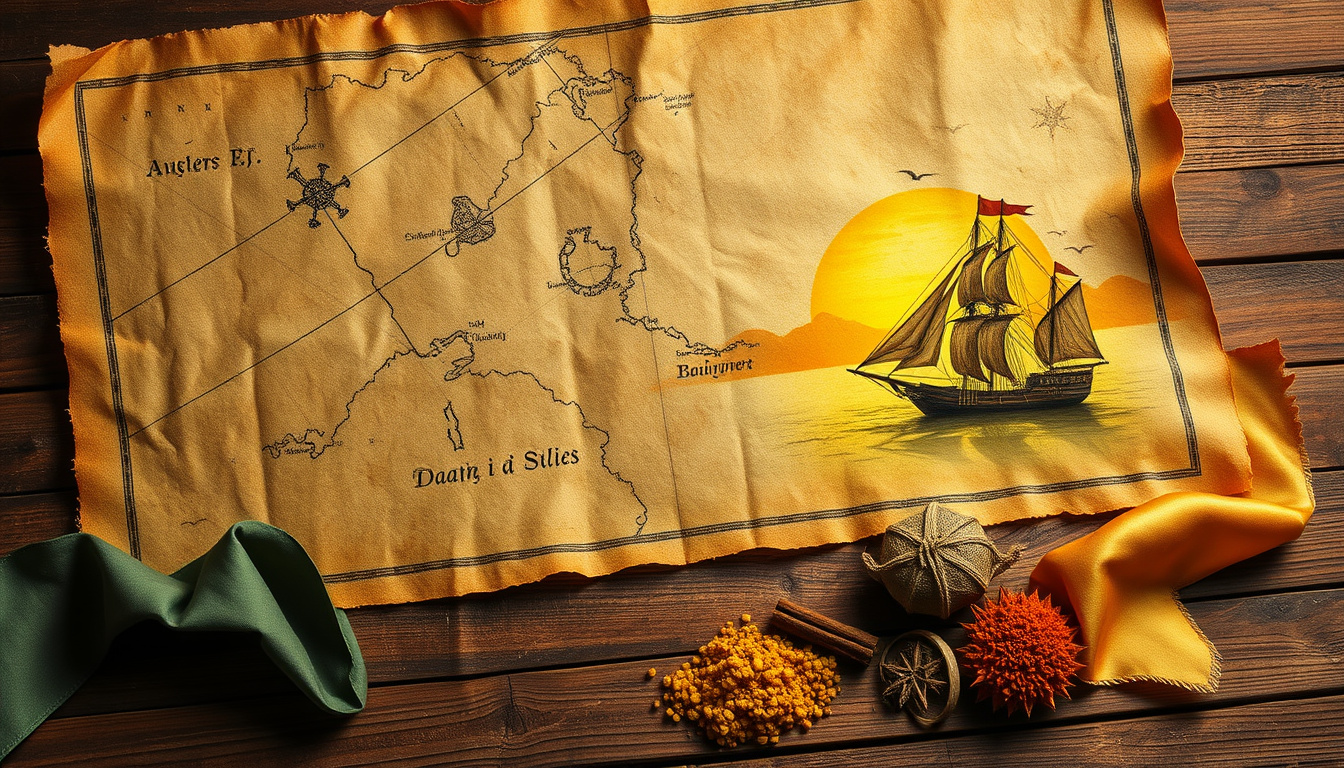
Every few centuries, a name crosses from history into legend so thoroughly that the man blurs into myth. This article sifts through the historical record, separating documented facts from the legends that have grown around the Travels of Marco Polo.
Born: 1254, Venice | Died: Jan 8, 1324, Venice | Traveled: 1271–1295 via Silk Road | Book: The Travels of Marco Polo | Civil Service: Served Kublai Khan 17 years | Influence: Shaped European exploration
Who Was He?
- Venetian merchant and adventurer (Encyclopaedia Britannica)
- Born around 1254 (Britannica)
- Traveled the Silk Road 1271–1295 (Britannica summary)
What Did He Do?
- Served Kublai Khan for 17 years (Britannica Kids)
- Wrote ‘The Travels of Marco Polo’ (Britannica)
- Influenced European exploration (Britannica summary)
Key Facts
- Born in Venice (or maybe Korčula) (Britannica)
- Married Donata Badoer (Britannica)
- Had three daughters (Britannica)
Controversy
- Did he really go to China? (Britannica summary)
- No mention in Chinese records (Britannica summary)
- Omissions like the Great Wall (Britannica summary)
Below is a quick reference of key details about Marco Polo’s life and legacy.
| Field | Details |
|---|---|
| Full Name | Marco Polo |
| Occupation | Merchant, Traveler, Writer |
| Notable Work | The Travels of Marco Polo (also known as Il Milione or The Book of Marco Polo) |
| Travels | Asia, including the Silk Road, China, and the court of Kublai Khan |
| Role in Asia | Commissioned by Kublai Khan to serve as a messenger and fact-finder |
| Born | 1254, Venice, Republic of Venice |
| Died | January 8, 1324, Venice, Republic of Venice |
| Civil Service | Messenger, customs inspector, and governor (likely) in China |
| Influence | Shaped European cartography and inspired later explorers, including Columbus |
What Was Marco Polo Famous For?
Marco Polo is best known as a Venetian merchant who traveled the Silk Road and spent 17 years in the service of Kublai Khan. His book The Travels of Marco Polo introduced Europe to the riches and customs of China, influencing future explorers like Christopher Columbus. The pattern: his fame rests on a single book that became a medieval bestseller, yet many of the popular stories about him—like introducing pasta to Italy—are myths. (Encyclopaedia Britannica)
What Happened to Marco Polo in Real Life?
Marco Polo was born in Venice around 1254. He traveled with his father Niccolò and uncle Maffeo across the Silk Road, reaching the court of Kublai Khan in the 1270s. After serving the Khan for about 17 years, he returned to Venice in 1295. He was later captured in a naval battle and imprisoned in Genoa, where he dictated his story to Rustichello da Pisa. He died in Venice on January 8, 1324. (Britannica)
Did Marco Polo Have a Wife or Children?
Marco Polo mentioned his wife, Donata Badoer, in his will, and he had three daughters. He probably met her upon his return to Venice. Yet, while his will is detailed about property and the manumission of his slaves, it contains no mention of his wife’s final resting place or of any love letters. That absence makes for an important reality check.
- There is a persistent legend that he had a Chinese wife or lover, a story heavily romanticized in the 2007 film Marco Polo.
- In reality, Polo never mentioned a romantic love affair in his extensive writings.
- His travelogue, which is often rich in detail about customs and geography, is almost completely silent on matters of the heart.
- There’s a popular myth that she was the daughter of Kublai Khan — that’s a fictional invention.
Who Was Rustichello da Pisa?
Rustichello da Pisa was the man who wrote down Marco Polo’s book. A fellow prisoner of war, he met Polo in a Genoese jail in 1298. Polo had been captured during a naval battle, and Rustichello was a professional writer of romances. Without him, it is likely the oral tales of Polo’s adventures would have died with him on the battlefield of a forgotten war.
Their collaboration was a stroke of fortune. Rustichello used his literary skills to punch up the narrative, making it a bestseller of its time. The result was The Travels of Marco Polo, a book that shaped European perceptions of the East for centuries.
“Without him, it is likely the oral tales of Polo’s adventures would have died with him on the battlefield of a forgotten war.”
— Rustichello da Pisa (as recounted in The Travels of Marco Polo)
Is There Any Evidence That Marco Polo Went to China?
No Chinese source from the Yuan Dynasty mentions Polo. Marco Polo’s book does not mention the Chinese writing system, tea, or foot-binding, which has led some historians to question whether he actually traveled to China. Yet, Encyclopaedia Britannica (renowned reference publisher, naturalized expert in history) asserts that Kublai Khan repeatedly sent Polo on fact-finding missions across the empire and that he governed Yangzhou from 1282 to 1287.
According to Britannica Kids (educational resource focused on young readers), Polo worked for the emperor for about 17 years. That’s an impressive amount of time to be embedded in a foreign bureaucracy without leaving a trace in local records.
Silence in the Imperial Archives
- “No mention in Chinese records” is the standard counter-argument.
- His book lacks details about the Great Wall (which was not yet visible in its current form), tea, or Chinese script.
- Some scholars suggest his descriptions of Yangzhou are too generic.
The absence of evidence is not always evidence of absence. But the silence is deafening enough that we must weigh probabilities.
Yet, despite these gaps, historians generally agree that the map of Polo’s travels is more accurate than any other European narrative of the time. He describes the postal system, the use of paper money, and the burning of black stones (coal) — all details that would have been difficult to fake in the 13th century. The question is less about whether he went, and more about what he actually saw versus what he embellished for his ghostwriter.
“Kublai Khan repeatedly sent Polo on fact-finding missions across the empire.”
— Encyclopaedia Britannica
Did Marco Polo Really Meet Genghis Khan?
No, Marco Polo could not have met Genghis Khan because Genghis Khan died in 1227, before Polo was born. Polo’s interactions were with Kublai Khan, Genghis’s grandson. This is a common confusion in popular culture. (World History Encyclopedia)
What Happened to Kublai Khan?
Kublai Khan founded the Yuan dynasty in China and ruled as its first emperor. He died in 1294 at the age of 80. His death led to a period of decline for the Mongol Empire, and the Yuan dynasty was eventually replaced by the Ming dynasty in 1368. (Encyclopaedia Britannica)
Did Marco Polo Introduce Pasta to Europe?
No, and he didn’t introduce the compass, gunpowder, or paper money to Europe either. Those are all myths. The claim about pasta is a widespread falsehood often repeated in the West, but it’s likely that the strengthened or dried noodle dish traveled via Arabic merchants long before the Polos arrived in China.
His book does mention “a kind of pasta” made from wheat, but that doesn’t mean he brought the recipe home. In fact, the idea that he introduced it to Italy is a 19th-century nationalist-tinged myth that persists today. The truth is more boring: pasta existed in Italy before he was born.
Did Marco Polo Say “I Did Not Tell Half of What I Saw”?
“I did not tell half of what I saw.”
— Legend, not verified
That’s the most famous quote attributed to him. But here’s the issue: this quote is not verified. There is no contemporary account of him saying this at his deathbed, and the story only appears in much later sources.
It is, however, a beautiful sentiment. It speaks to the paradox of attempting to describe a world vastly different from your own. The fact that this quote is almost certainly fake doesn’t dilute its power as a summary of the traveler’s problem: you couldn’t make it up, and if you did, nobody would believe you.
Are There Any Descendants of Marco Polo Alive Today?
No direct paternal line is documented. While some living people claim descent, no proof exists. The name “Polo” was a common one in Venice, and the direct male line died out. The historical evidence simply does not allow us to trace a direct line from Marco to anyone alive today.
Some Venetian families have historically claimed lineage, but these claims have not been substantiated by genealogical records. In stark contrast, we find entire genealogies preserved for less famous figures of the era. The reality check: if a direct descendant existed, they would be a celebrity, and they would likely have produced the family tree by now.
Summary: A Man for All Seasons, or a Walking Contradiction?
Marco Polo is both a pioneer and a fabrication, a man whose name evokes the Silk Road but whose actual footprint in the historical record is surprisingly light. He was likely a merchant and a messenger, and his book was a hit. He may have been a governor, or he may have been a compiler of second-hand stories. What remains indisputable is the book’s impact: it remained a primary reference for Silk Road history for centuries. As we move forward, the imperative is to read his book with equal parts wonder and skepticism. Because the real value isn’t in proving whether he went, but in understanding the world he opened up to a European audience, and recognizing that the legend, while partly fictional, is built on a foundation of genuine encounters.
For more legendary figure deep dives, see Santa Claus Real Story and Captain Hook: Origins, Character Analysis, and Famous Quotes.
en.wikipedia.org, silkroadfoundation.org, britannica.com, britannica.com, history.com, kids.britannica.com, study.com, newworldencyclopedia.org
Frequently Asked Questions
Are there any descendants of Marco Polo alive today?
No direct paternal line is documented. While some living people claim descent, no proof exists, and the name “Polo” was common in Venice.
Is there any evidence that Marco Polo went to China?
The primary evidence is his own book, which details the postal system, paper money, and coal. However, no Chinese source mentions him, and he omits Chinese writing, tea, and foot-binding, leaving the issue debated.
Did Marco Polo have a wife or children?
Yes, he married Donata Badoer and had three daughters. There is no historical evidence of a Chinese love interest.
Did Marco Polo say ‘I did not tell half of what I saw’?
This quote is not verified and is not historically documented. It likely originated from later sources.
Did Marco Polo introduce pasta to Europe?
No, that is a myth. The historical record shows that noodles existed in the Mediterranean world well before his travels, and he simply described a food that was already present.
Why did Marco Polo’s book omit Chinese writing, tea, and foot-binding?
This omission is a core part of the “doubt” argument. Some historians suggest he might not have visited southern China, or he may have relied on Persian sources or information from his own experiences in the northern courts, where these practices were less dominant.
What was Marco Polo’s role in Asia?
According to Encyclopaedia Britannica, he governed Yangzhou from 1282 to 1287. Britannica Kids also states he worked for the emperor for about 17 years. This suggests he was a high-ranking official and trusted messenger, not just a merchant.

Arthur Oliver Howard Fletcher is a staff writer for NationalReport.uk, covering UK national news, politics, the economy and public services. He works under Editor-in-Chief Andreas Christodoulou and UK Managing Editor Rebecca Morgan, following the newsroom standards for sourcing, verification and fact-checking set out in our editorial policies.