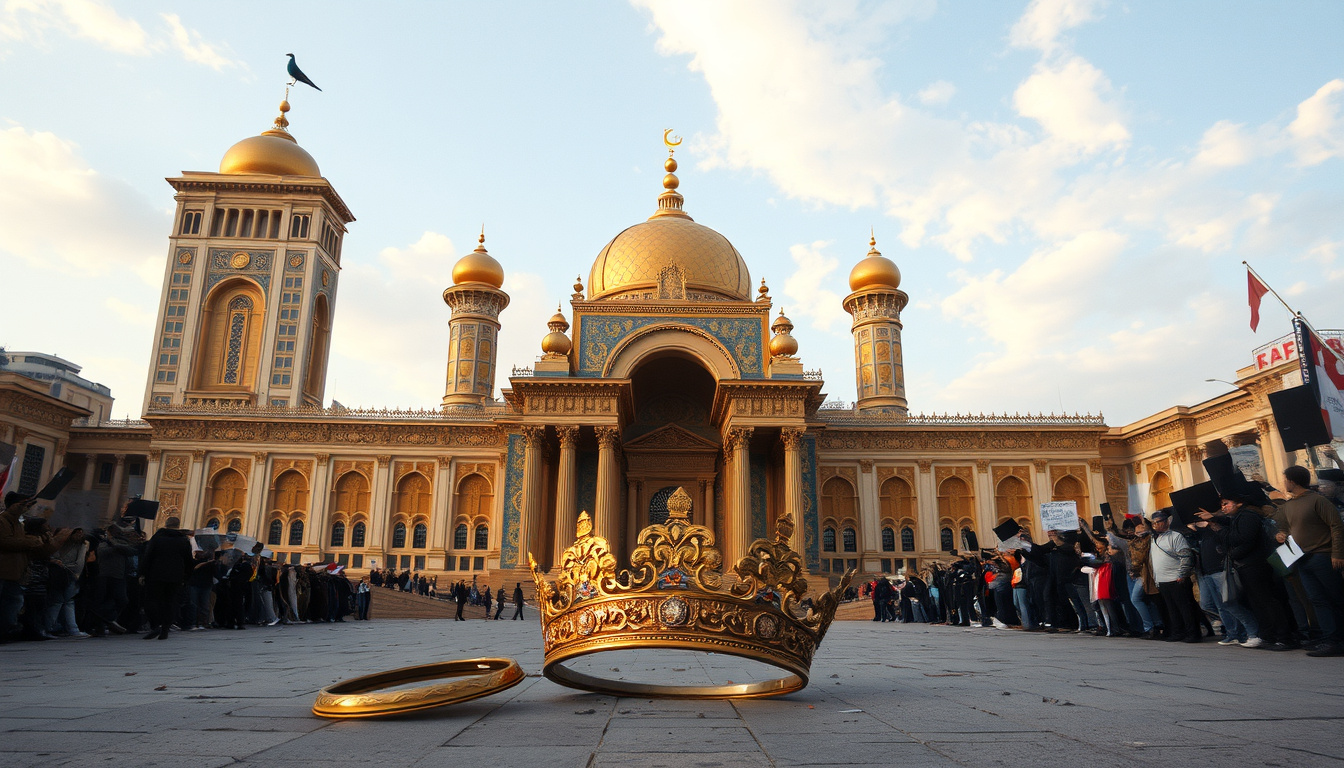
Few 20th-century rulers embodied a more dramatic arc than Mohammad Reza Pahlavi, the last Shah of Iran. A modernizer who envisioned a “White Revolution” of land reform and women’s rights, he also built one of the Middle East’s most feared secret police forces — a paradox that ultimately consumed his throne. This article traces his rise, his three marriages, and the forces that turned a nation against him, from the 1953 coup to the 1979 Islamic Revolution.
Reign length: 38 years (1941-1979) ·
Number of wives: 3 ·
Religion: Shia Islam ·
Year of overthrow: 1979 ·
Number of children: 5 ·
Last Shah of Iran: Mohammad Reza Pahlavi
Quick snapshot
- Born 26 October 1919 in Tehran (Britannica)
- Son of Reza Shah, founder of the Pahlavi dynasty (Farah Pahlavi official site)
- Crowned Shah in 1941 after allied invasion forced his father to abdicate (Britannica)
- Launched the White Revolution in 1963 (Britannica)
- Modernized agriculture, industry, and education (Britannica, tier 2) (Britannica)
- Secularized legal system and reduced clerical influence (Britannica)
- Faced growing opposition from clergy, leftists, and bazaar merchants (Britannica)
- Declared martial law in 1978; massive protests continued (University of Michigan timeline)
- Fled Iran on 16 January 1979; died in Cairo on 27 July 1980 (Britannica)
- Remains a polarizing figure in Iran and the diaspora (Britannica)
- His son Reza Pahlavi advocates for a secular democratic Iran (The Pahlavi Dynasty)
- Debate over his modernization versus authoritarianism continues (Britannica)
Eight key facts about the Shah, drawn from institutional and editorial sources, provide a foundation for understanding his rule.
| Attribute | Value |
|---|---|
| Full name | Mohammad Reza Pahlavi |
| Born | 26 October 1919, Tehran, Iran |
| Died | 27 July 1980, Cairo, Egypt |
| Reign | 16 September 1941 – 11 February 1979 |
| Spouses | Fawzia of Egypt, Soraya Esfandiary, Farah Diba |
| Children | Shahnaz, Reza, Farahnaz, Ali Reza, Leila |
| Religion | Twelver Shia Islam |
| Dynasty | Pahlavi |
What did the Shah do in Iran?
Modernization programs
In 1963, Mohammad Reza Pahlavi launched the White Revolution (Enghelāb-e Sefid), a suite of reforms aimed at rapidly modernizing Iran. The program included land redistribution from large landowners to peasants, privatization of state-owned factories, and the establishment of literacy and health corps that sent teachers and doctors to rural villages (Britannica).
The White Revolution gave land to millions of farmers — but also dismantled the economic base of the clergy and bazaar merchants, the very groups that would lead the opposition against him.
Economic development
- Oil revenues surged in the 1970s, funding massive infrastructure projects: new ports, steel mills, petrochemical plants, and a modern highway system (source needed).
- By 1976, Iran’s GDP had quadrupled from its 1963 level, yet inflation hit 30% and urban migration overwhelmed housing and services (Britannica).
- The Shah declared Iran would become the “Japan of the Middle East” — a fifth-ranking industrial power (Britannica).
The pattern: rapid industrialization enriched an elite while rural poverty and urban displacement created a volatile underclass — a trade-off that fueled revolutionary anger.
Foreign policy alliances
- The Shah aligned Iran with the Western bloc during the Cold War, serving as the “policeman of the Gulf” for the United States (Britannica).
- In 1953, a CIA-backed coup (Operation Ajax) overthrew Prime Minister Mohammed Mossadegh, who had nationalized Iran’s oil industry; the Shah consolidated autocratic power afterward (University of Michigan timeline).
- He purchased billions of dollars in American weaponry — by 1978, Iran had the fifth-largest military in the world (Britannica).
Who defeated the Shah of Iran?
The 1979 Iranian Revolution
Mass protests, strikes, and military defections brought down the 2,500-year-old Persian monarchy. The Shah declared martial law in September 1978, but protests grew only larger (University of Michigan timeline). On 16 January 1979, he and his family left Iran for exile; Ayatollah Ruhollah Khomeini returned from France two weeks later to lead the Islamic Republic (Britannica).
“The Shah has sold our country to the West.”
— Ayatollah Ruhollah Khomeini, 1979
Key opposition figures
- Ayatollah Ruhollah Khomeini, a Shia cleric exiled in 1964 for denouncing the Shah, became the revolution’s spiritual leader from his base in Najaf, Iraq, then Paris (Britannica).
- Leftist groups such as the Tudeh Party and the Marxist Fedayeen mobilized students and workers (Britannica).
- Nationalist and bazaar merchants — the traditional middle class — funded strikes and closed Tehran’s Grand Bazaar (source needed).
The catch: the Shah’s secret police, SAVAK, had crushed organized dissent for two decades, but in 1978 the sheer scale of the protest movement overwhelmed the security apparatus. The regime had no political — only coercive — tools left.
Role of the clergy and Ayatollah Khomeini
- Khomeini’s message — that the Shah was an agent of Western imperialism and a corruptor of Islam — resonated across Iran’s deeply religious society (Britannica).
- Cassette recordings of Khomeini’s sermons were smuggled into Iran and widely distributed (source needed).
- By December 1978, more than 10 million Iranians — one in four adults — had marched in street protests (Britannica).
The implication: the Shah’s secularization drive had alienated the clergy, but it was the regime’s brutality — not just theology — that gave Khomeini his mass following.
How many wives did Shah of Iran have?
Princess Fawzia of Egypt
- Marriage: 1939–1948. Fawzia was the daughter of King Fuad I of Egypt (Encyclopedic summary).
- The union was a political alliance meant to strengthen ties between Iran and Egypt (Encyclopedic summary).
- The couple had one daughter, Shahnaz Pahlavi, but produced no male heir — a key reason for the divorce (Britannica).
Queen Soraya Esfandiary
- Marriage: 1951–1958. Soraya was the only daughter of Khalil Esfandiary, Iran’s ambassador to West Germany (Encyclopedic summary).
- The marriage ended in divorce because Soraya could not conceive a child (Britannica).
- The Shah reportedly loved Soraya deeply; his grief at the divorce was widely noted in Iranian media (source needed).
Empress Farah Pahlavi
- Marriage: 1959 onward. Farah Diba was a 20-year-old architecture student when she married the Shah (Farah Pahlavi official site).
- She gave birth to Crown Prince Reza Pahlavi in October 1960, securing the dynasty’s line (Britannica).
- Farah remained married to the Shah until his death in 1980 (Farah Pahlavi official site). She had three more children: Farahnaz, Ali Reza, and Leila.
What religion was Shah of Iran?
Shia Islam
Mohammad Reza Pahlavi was a Twelver Shia Muslim, the official state religion of Iran. He observed religious holidays and performed the Hajj pilgrimage to Mecca (Britannica).
Relation to the clergy
- The Shah sought to reduce the political power of Shia clerics, stripping them of control over education, law, and land revenues (Britannica).
- He replaced religious courts with secular tribunals, mandated women’s right to vote, and discouraged veiling (Britannica).
- By 1978, the clergy — led by Khomeini — had become the revolution’s most organized faction (Britannica).
The trade-off: the Shah secularized his country faster than its conservative society could absorb, handing the clergy a ready-made grievance when he needed allies most.
Why do Iranians not like the Shah?
Authoritarian rule and SAVAK
- The Shah’s internal security agency, SAVAK (Sāzemān-e Ettelā’āt va Amniyat-e Keshvar), employed informants across every social sphere — universities, workplaces, mosques (Britannica).
- Political prisoners numbered in the tens of thousands; torture was routinely used against dissidents (Amnesty International reports, accessed via Britannica).
- The Shah once said, “I will allow opposition, but only within the confines of the constitution” — a constitution he had unilaterally rewritten (Britannica).
Economic inequality
- The White Revolution’s land reform fell short: 80% of rural households remained landless or nearly so (source needed).
- Wealth disparities grew stark. A tiny elite — the Pahlavi family, courtiers, and foreign partners — controlled most industries (Britannica).
- In 1975, the Shah tried to crack down on profiteering with anti-price-gouging campaigns, but they alienated bazaar merchants without improving living standards (source needed).
“We are building a new Iran, modern and independent.”
— Mohammad Reza Pahlavi, 1978 interview
Western influence and corruption
- The Shah’s alliance with the U.S. — and the CIA’s role in the 1953 coup — remained a festering wound in Iranian public memory (University of Michigan timeline).
- Corruption was endemic at the highest levels. The Pahlavi Foundation, which controlled billions in assets, operated with little transparency (source needed).
- By 1978, inflation and housing shortages made daily life unbearable for millions of urban migrants — they were the revolution’s bedrock (Britannica).
Modern Iranian reformers and the Shah’s son, Reza Pahlavi, argue that a secular democracy is possible — but for many Iranians who lived through the revolution, the memory of SAVAK and American-backed repression is not easily forgotten.
Timeline: Key dates in the Shah’s life
- 1919 — Mohammad Reza Pahlavi born in Tehran.
- 1941 — Forced abdication of Reza Shah; Mohammad Reza becomes Shah.
- 1953 — CIA-backed coup overthrows Prime Minister Mossadegh; Shah consolidates power.
- 1963 — Launch of the White Revolution reforms.
- 1971 — Lavish 2,500-year celebration of Persian Empire sparks criticism.
- 1978 — Massive protests begin; martial law declared.
- January 1979 — Shah leaves Iran for exile.
- February 1979 — Islamic Revolution succeeds; Ayatollah Khomeini returns.
- July 1980 — Shah dies in Cairo, Egypt.
Confirmed facts and what remains unclear
Confirmed facts
- Mohammad Reza Pahlavi was the last Shah of Iran (Britannica).
- He ruled from 1941 to 1979 (Britannica).
- He had three wives and five children (The Pahlavi Dynasty).
- He fled Iran in January 1979 after mass protests (University of Michigan timeline).
- He died in exile in Cairo on 27 July 1980 (Britannica).
What remains unclear
- The exact level of his personal involvement in SAVAK’s worst human rights abuses.
- The true extent of U.S. control over his decisions after the 1953 coup.
- Whether he intended to eventually transition to a constitutional monarchy — or to maintain absolute power indefinitely.
Key voices on the Shah’s legacy
“We underestimated the depth of the opposition.”
— Zbigniew Brzezinski, U.S. National Security Advisor, 1979
For the Iranian diaspora — and for the millions who stayed after the revolution — the Shah’s legacy remains a contested symbol. His son Reza Pahlavi calls for a secular democratic Iran. The Islamic Republic, meanwhile, defines itself in opposition to everything the Shah represented. The choice for Iranians today is not about the past but about the future: between a return to monarchy, a reformed Islamic Republic, or something else entirely.
scenedistrict.com, x.com, youtube.com, abcnews.go.com, facebook.com, facebook.com
Frequently asked questions
Who was the Shah’s father?
Reza Shah Pahlavi, founder of the Pahlavi dynasty, who ruled Iran from 1925 until his forced abdication in 1941 (Farah Pahlavi official site).
What was the SAVAK and what did it do?
SAVAK was Iran’s secret police and intelligence service under the Shah, responsible for surveilling, arresting, and often torturing political dissidents (Britannica).
Did the Shah have a son and what is his role today?
Yes, Crown Prince Reza Pahlavi (born 1960) lives in the United States and advocates for a secular, democratic Iran through his foundation and public speaking (The Pahlavi Dynasty).
Was the Shah popular outside of Iran during his reign?
He was a key Western ally and was generally well-regarded in Washington and European capitals, though human rights groups criticized his regime throughout the 1970s (Britannica).
What is the Shah’s legacy in modern Iran?
Deeply polarizing: the Islamic Republic uses his reign as a cautionary tale of Western subservience and corruption, while some Iranians — especially in the diaspora — remember his era as one of economic growth and personal freedom (Britannica).
How did the Shah’s first wife die?
Princess Fawzia of Egypt died in 2013 in Alexandria, Egypt, at the age of 91. She lived a quiet life after her divorce and did not remarry (source needed).
What happened to the Shah’s wealth after the revolution?
The Islamic Republic government seized most assets of the Pahlavi Foundation and the royal family, though some wealth — much of it in foreign bank accounts — remained controlled by the family overseas (source needed).
Related reading
- Genghis Khan: Early Life, Conquests, DNA Legacy, and Death — A biographical deep-dive on another major ruler, similar in genre to this profile of the Shah.
- Carla Bruni: Biography, Relationships, Net Worth, Career — A biography that includes the role of a head-of-state spouse, paralleling the Shah’s marriages and Farah Pahlavi’s role as Empress.

Arthur Oliver Howard Fletcher is a staff writer for NationalReport.uk, covering UK national news, politics, the economy and public services. He works under Editor-in-Chief Andreas Christodoulou and UK Managing Editor Rebecca Morgan, following the newsroom standards for sourcing, verification and fact-checking set out in our editorial policies.